
Foothpad with Willow and a Village on the Horizon — History & Facts
It holds the promise of serenity, inviting the viewer into a world suspended in time, where every brushstroke echoes tranquility and contemplation. Focus on the gentle curve of the footpath that leads the eye toward the horizon, inviting exploration. Notice how light warms the palette, bathing the willows in soft greens and amber hues. The distant village, cloaked in a delicate mist, beckons quietly, while the expansive sky looms above with brushed strokes of blue.
The composition teeters on the edge of realism and impressionism, capturing a moment that feels both intimate and expansive. Yet, beneath this calm surface, contrasts emerge. The sturdy willow trees, steadfast in their roots, stand in stark contrast to the evanescence of the village, suggesting the fleeting nature of human life against the permanence of nature. The subtle interplay between light and shadow creates a sense of depth, implying that within this serene landscape lies a complex narrative of solitude and companionship.
As your gaze wanders, you may feel a profound connection to the earth, the very essence of stability in a world that is forever changing. In 1891, Richard Nicolaüs Roland Holst painted this piece during a transformative time in the Dutch art scene. At this point in his life, he was heavily influenced by the ideals of the Arts and Crafts Movement, which emphasized craftsmanship and the beauty of nature. His work began to reflect a desire for harmony and simplicity, mirroring a broader quest for meaning in an industrializing world.
More Artworks by Richard Nicolaüs Roland Holst
Browse all →
Corner of a Pond near Breukelen
Richard Nicolaüs Roland Holst

Kale beuk op een weide met schapen en een paard
Richard Nicolaüs Roland Holst

Landscape by Moonlight
Richard Nicolaüs Roland Holst
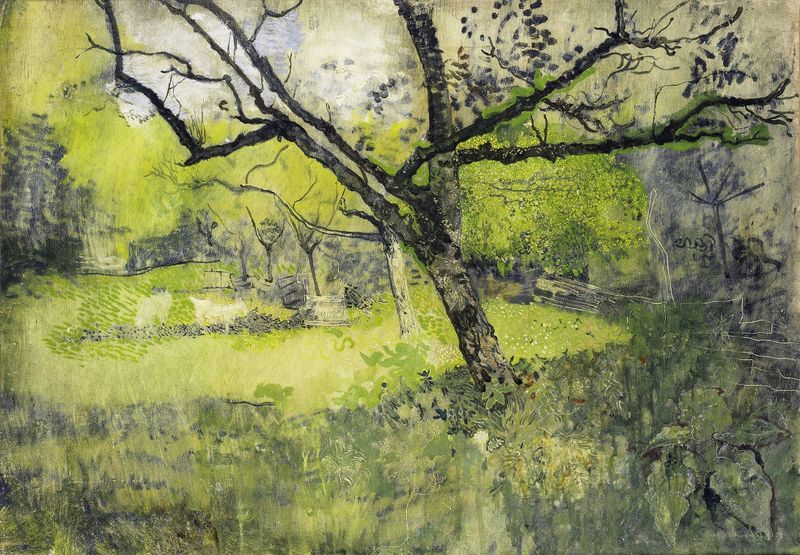
Orchard at Eemnes
Richard Nicolaüs Roland Holst
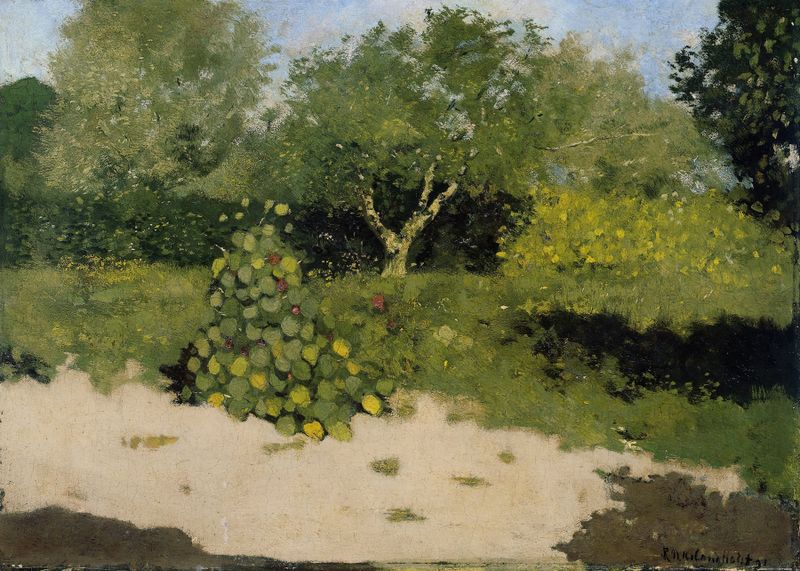
Corner of a Garden with Nasturtiums
Richard Nicolaüs Roland Holst
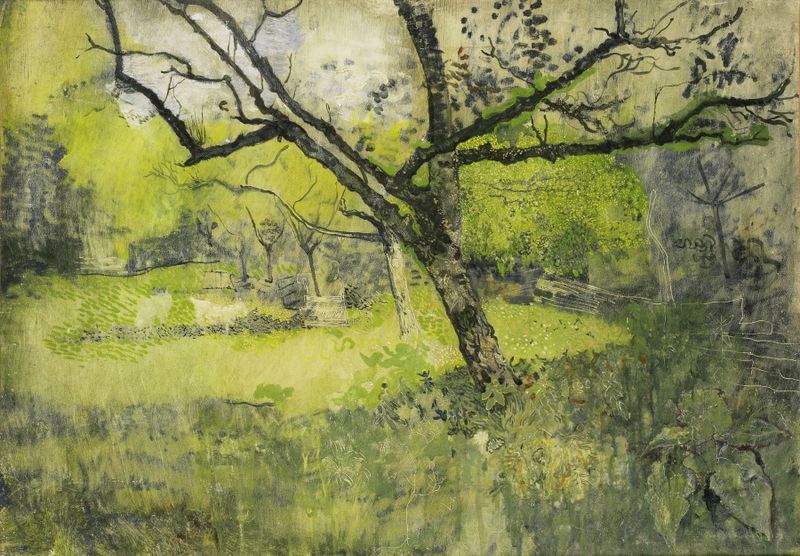
Orchard at Eemnes
Richard Nicolaüs Roland Holst





