Corner of a Garden with Nasturtiums — History & Facts
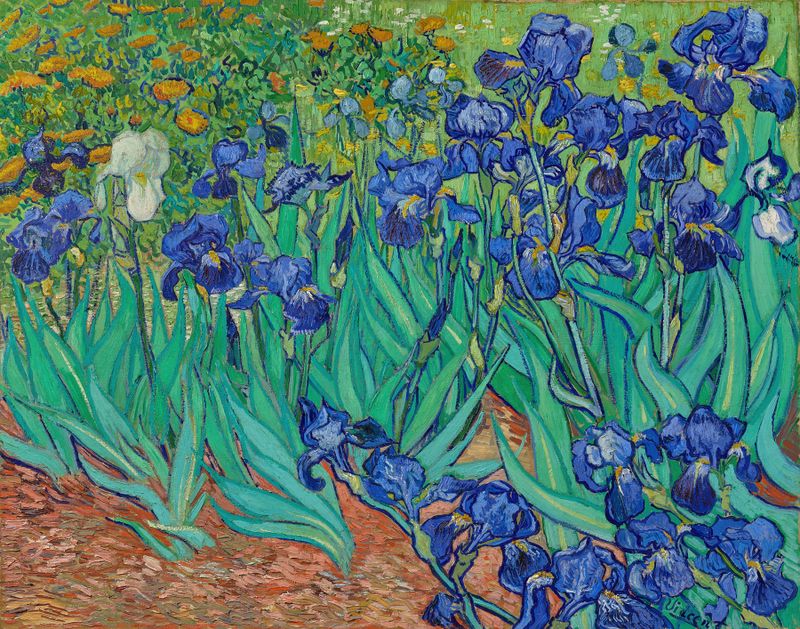
The sun hangs low in the sky, casting a golden hue across a riotous patch of color. A gentle breeze stirs the leaves, causing the vibrant nasturtiums to dance, their orange and yellow petals glowing like embers amidst the greenery. In this tranquil moment of nature, time seems to pause, inviting one to step closer and lose themselves in the garden's embrace. Look to the lower left corner, where the rich, textured brushstrokes bring the flowers to life.
Each bloom emerges with a vividness that captures the viewer’s gaze, while the dappled light filtering through the leaves creates a play of shadow and illumination. Notice how the artist wove a tapestry of greens, from deep emerald to muted olive, harmonizing the surrounding foliage, which serves as a backdrop to the explosion of color before you. The juxtaposition of bright nasturtiums against the subdued greens evokes a sense of joy and vitality, yet there lies an undercurrent of melancholy in the abandoned garden, suggesting a moment frozen between life and decay. The interplay of light and shadow hints at the passage of time, where nature's beauty is both celebrated and fleeting.
Each petal, a reminder of impermanence, invites reflection on the cycles of growth and decline. In 1891, amidst the rise of the Symbolist movement in art, the artist found inspiration in the quiet charm of nature while living in the Netherlands. This period marked a transition in his work, as he began to explore how light could evoke emotion and mood. The calm of the garden echoes the artist's own search for serenity in a rapidly changing world, as he captured a moment that is both a celebration of life and a meditation on its transience.
More Artworks by Richard Nicolaüs Roland Holst
Browse all →
Corner of a Pond near Breukelen
Richard Nicolaüs Roland Holst

Kale beuk op een weide met schapen en een paard
Richard Nicolaüs Roland Holst

Landscape by Moonlight
Richard Nicolaüs Roland Holst
Orchard at Eemnes
Richard Nicolaüs Roland Holst
Orchard at Eemnes
Richard Nicolaüs Roland Holst
Foothpad with Willow and a Village on the Horizon
Richard Nicolaüs Roland Holst