Landscape during Storm — History & Facts
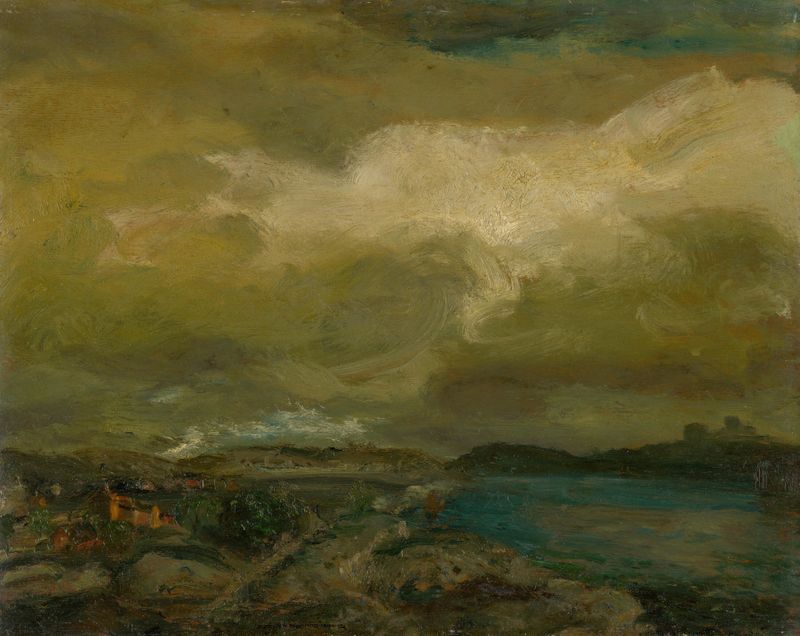
Memory drips like rain from the clouds overhead, nostalgia swirling in the winds of time. It lingers in the air, heavy yet fleeting, as nature’s fury lifts the mundane into a realm of sublime beauty. Look to the horizon, where tumultuous clouds collide in a dramatic embrace of dark grays and deep blues. The twisted trees, branches stretched in protest, draw the eye to the swirling dance of wind and rain.
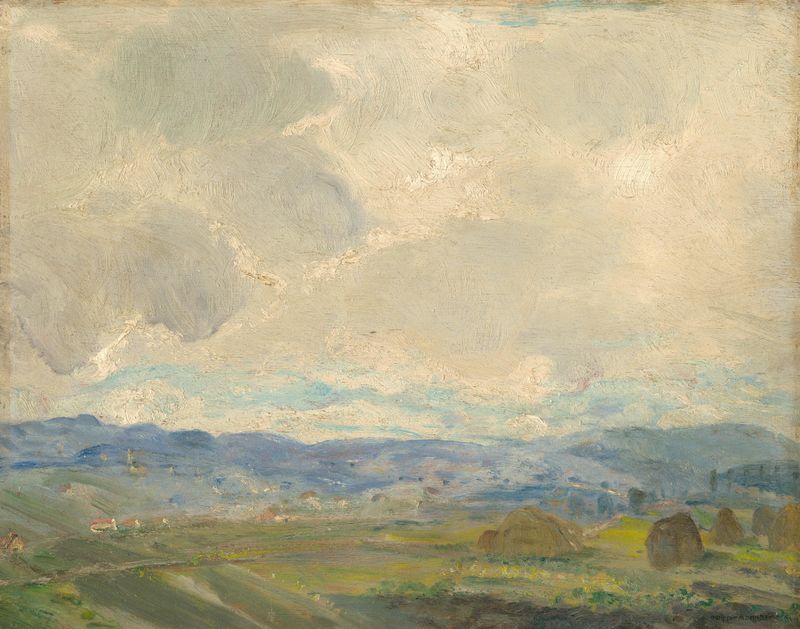
Notice how the artist employs bold, sweeping strokes to convey the storm's energy, allowing vibrant patches of yellow and green to peek through — symbols of resilience amidst chaos. Tension pervades this piece, a delicate balance between destruction and rejuvenation. The storm, while fearsome, also serves as a reminder of nature’s cyclical grace, suggesting that even the most tumultuous moments can lead to renewal. The interplay between light and shadow enhances this duality; hidden corners of the canvas reveal glimpses of color that spark hope against the overwhelming darkness. In 1900, Gusztáv Magyar Mannheimer was immersed in the artistic currents of post-Impressionism, exploring emotional expression through layered techniques.
Living in Hungary, he found inspiration in the tumultuous landscape, mirroring the societal changes occurring at the turn of the century. This work encapsulates not only a moment in nature but also a pivotal time of transformation within the artist’s life and the broader art world.