Landscape during Storm — History & Facts
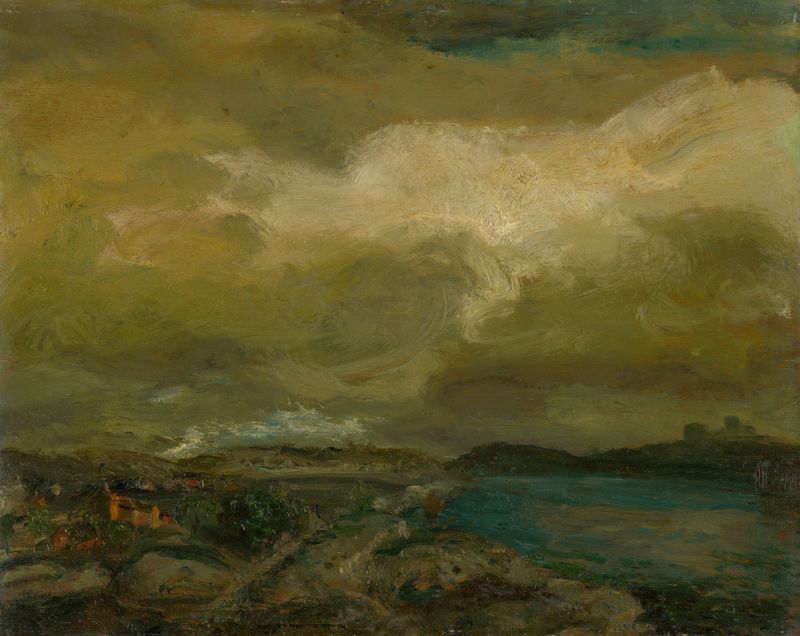
Is this a mirror — or a memory? A tumultuous sky stretches above, swirling with not just clouds but the weight of emotions, as if the very heavens are echoing a forgotten past. The landscape below, painted with rich earthy tones, invites the viewer to ponder the delicate balance between chaos and calm. Look to the center, where the darkened horizon meets a vivid burst of light breaking through the tempest. Notice how the brushstrokes capture the restless movement of the wind, bending the trees into silent prayers.
The palette, dominated by deep blues and grays, contrasts with bright flashes of yellow and white, evoking the fleeting nature of hope amidst despair. Each color choice seems to pulse with the energy of the storm, demanding attention while subtly guiding the eye across the scene. In this dynamic interplay, feelings of vulnerability and resilience emerge. The trees, though battered, stand firm against the storm, symbolizing the strength found in adversity.
Meanwhile, the distant flashes of light suggest a promise of clarity that follows darkness, hinting at moments of revelation that arise from turmoil. Such contrasts resonate deeply, inviting reflections on the inner storms we each endure. In 1910, while creating this piece, Magyar Mannheimer was navigating the complexities of his own artistic journey in Hungary. The art world was teetering on the brink of modernity, influenced by the shifting tides of expressionism.
Caught in this transitional moment, the artist’s work straddled traditional landscapes and the emerging avant-garde, capturing not only a scene but also a profound meditation on the nature of existence itself.