Landscape from Foldalen — History & Facts
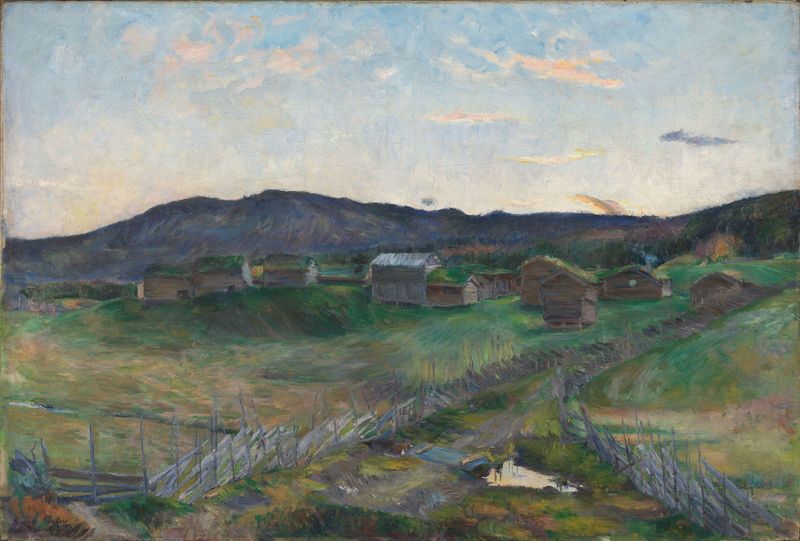
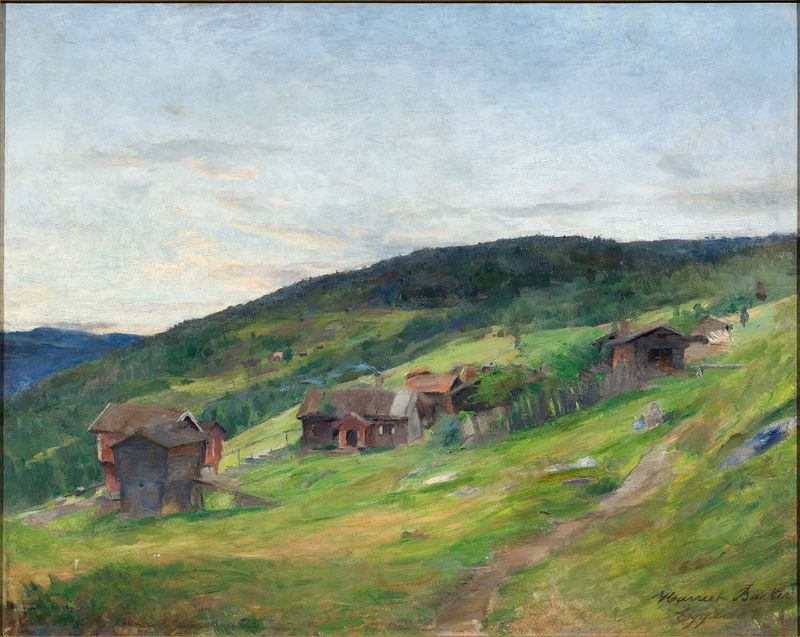
When did color learn to lie? Perhaps it was on that fateful day in 1894, when an artist ventured into the vibrant depths of a Norwegian landscape, wrestling with the madness of color’s truth. Look to the foreground, where vivid greens and soft browns dance together, inviting the viewer into the lush embrace of Foldalen. The composition leads the eye upward, past the gentle slope of distant mountains, shrouded in the delicate mist that blurs the line between reality and illusion. Notice how the light plays upon the grass, accentuating its brilliance while simultaneously casting shadows that whisper of an unseen darkness lurking just beyond the canvas's edge. In this piece, contrasts emerge between the idyllic and the ominous; the bright hues evoke a sense of peace, yet the tumultuous brushstrokes hint at an undercurrent of emotional turbulence.
The sky, a tempest of blues and grays, reflects an internal chaos that challenges the serene scene below, embodying the artist’s struggle to reconcile beauty with the madness that often accompanies artistry. Each detail—the flicker of light, the rustling leaves—invokes a tension that invites contemplation of one’s inner landscapes. Harriet Backer created Landscape from Foldalen during a time of great personal and artistic exploration. Living in Norway and influenced by the broader movements of Impressionism, she sought to capture the nuances of light and color in her surroundings.
This period marked a transition in her work, where she aimed to transcend mere representation and delve into the profound emotional experiences that landscapes can evoke.