Landskap fra Bærum — History & Facts
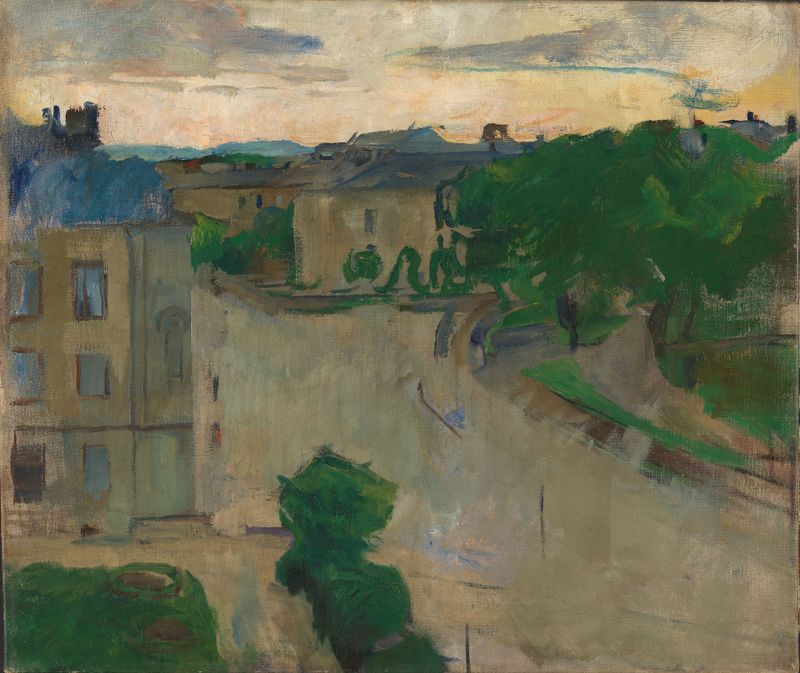
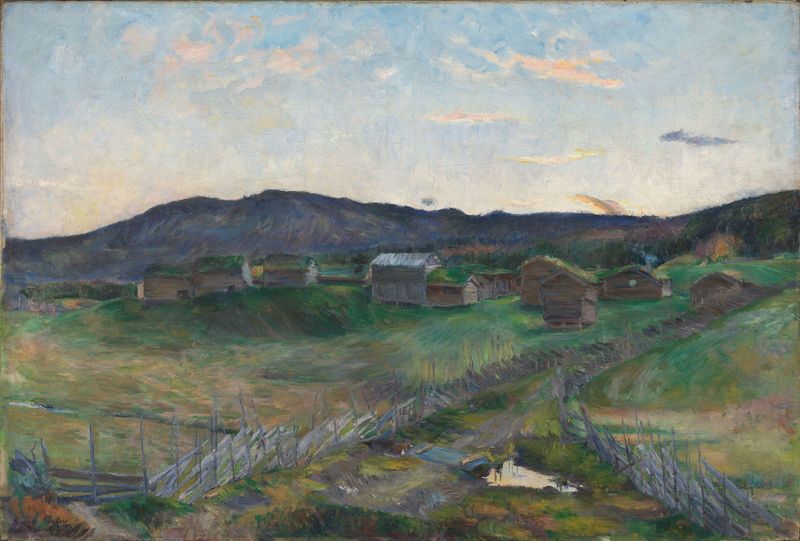
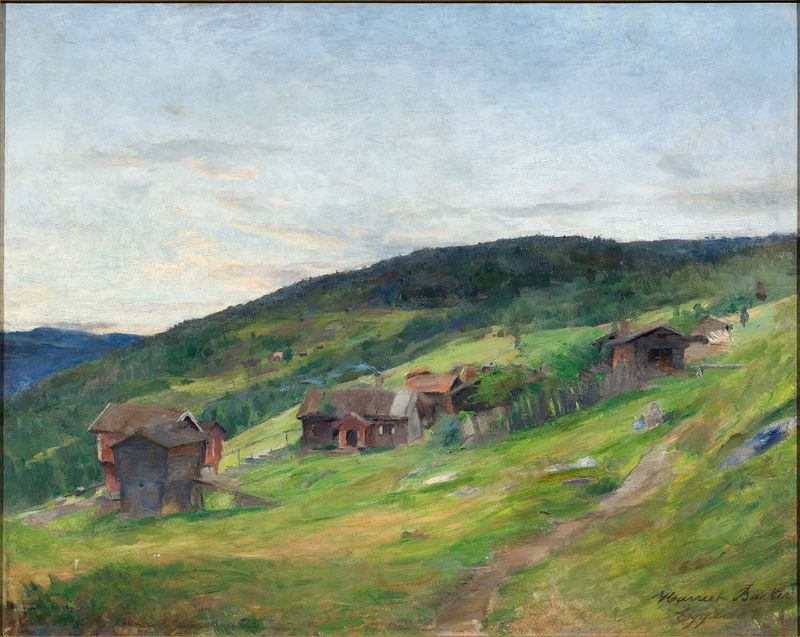
In that quiet space where memory meets the vastness of nature, one finds an echo of both absence and presence. Look closely at the canvas, where the verdant greens of the landscape blend seamlessly into the gentle blues of the sky. Focus on the horizon, where the two meet, creating a soft gradient that pulls your eye across the composition. Notice how the delicate brushstrokes simulate the rustle of leaves, and the interplay of light and shadow gives depth to the rolling hills.
The artist’s choice of muted colors evokes a sense of nostalgia, inviting you to step into a moment caught in time. Hidden within this tranquil setting lies a profound tension—the stillness of nature juxtaposed with an undercurrent of void. The solitary trees, though sturdy, appear almost spectral, hinting at the fragility of life and memory. Each element seems to whisper stories of what once was, as if the landscape itself mourns its own impermanence while celebrating a fleeting beauty.
This poignant contrast draws the viewer deeper, encouraging reflection on both the natural world and the emotions it stirs within us. In 1890, Harriet Backer was living in Norway, engaged with a burgeoning artistic community that was beginning to explore themes of light and the landscape. During this period, she sought to capture the essence of her surroundings, working in a style that combined Impressionist techniques with a uniquely personal vision. This work reflects her profound connection to the Norwegian landscape, even as it speaks to the broader artistic movements of her time, which were grappling with the complexities of modernity and nature.