Landscape from Ogna at Jæren — History & Facts
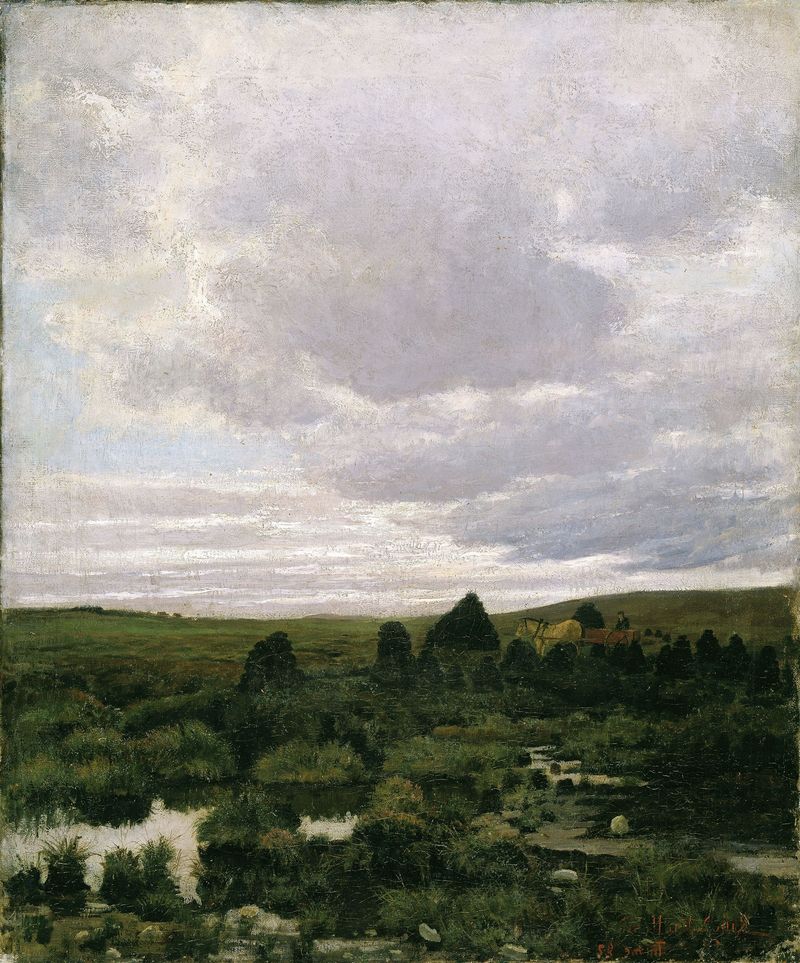
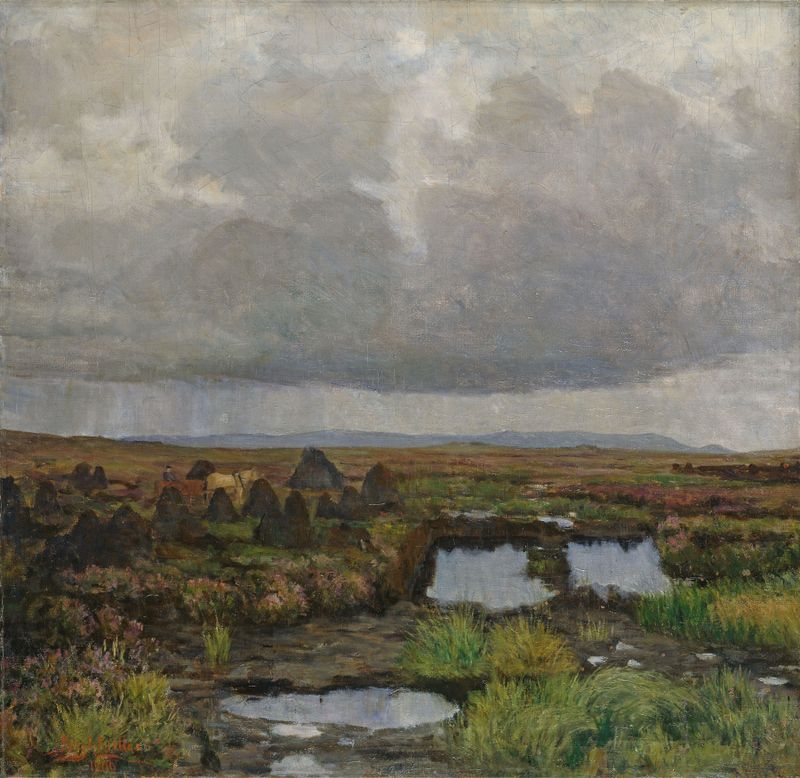
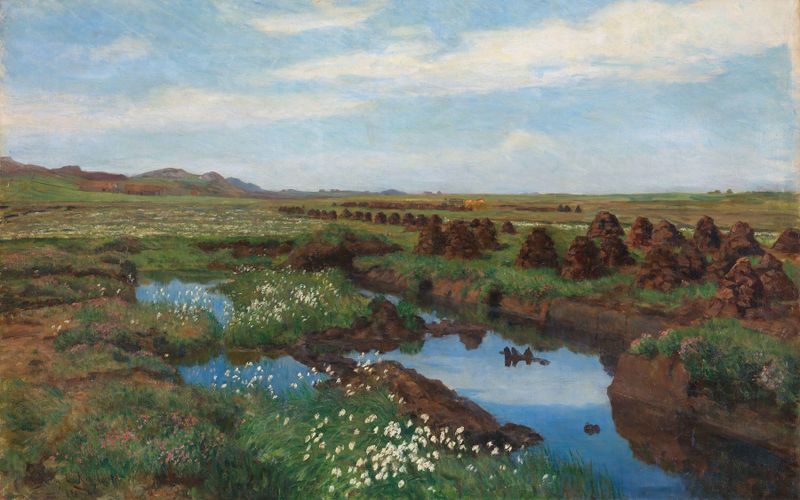
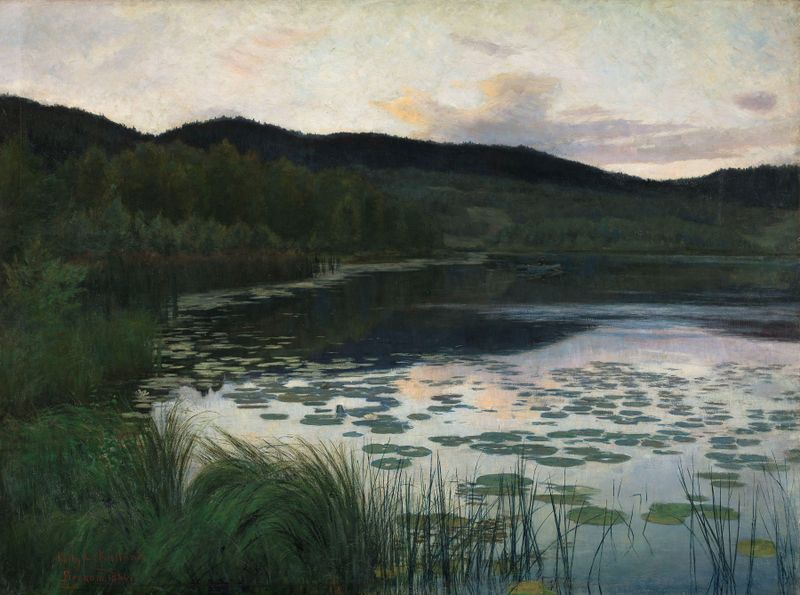
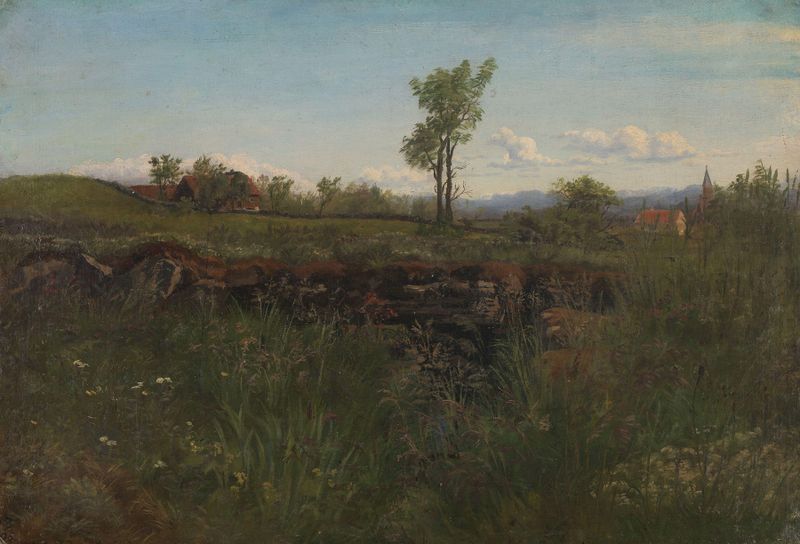
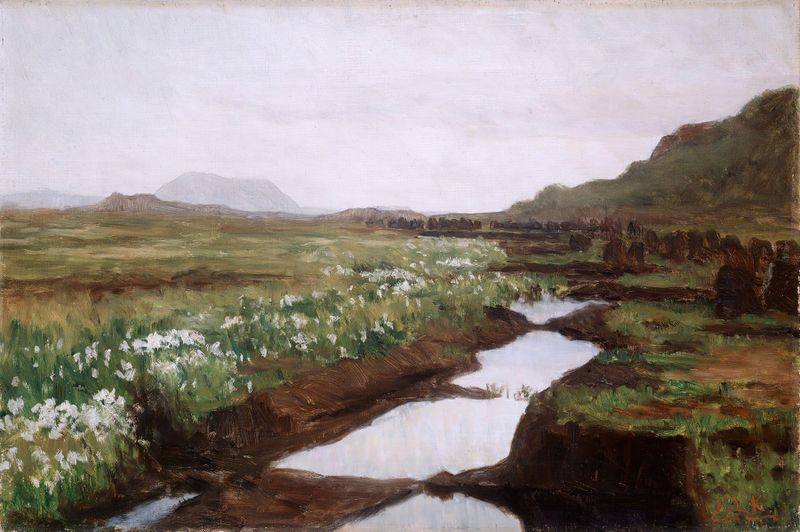
In the realm of art, movement encapsulates the fragility of existence, whispering of life’s transience beneath a tranquil surface. Focus on the horizon, where rolling hills meld seamlessly with an expansive sky. The soft brushstrokes of greens and blues create a sense of undulating rhythm, inviting the viewer’s eye to travel across the landscape. Notice how the light plays upon the grass, each blade catching the sun’s golden hue, illuminating the scene like a moment frozen in time.
The gentle contrast between the vivid colors and the muted undertones suggests an undercurrent of emotion, hinting at the delicate balance between serenity and turmoil. Delve deeper into the painting to uncover the emotional tensions at play. The seemingly peaceful landscape is infused with an almost palpable restlessness, mirrored in the swaying trees that bend towards an unseen breeze. This subtle movement reflects the artist's own struggles with the world around her—capturing both the beauty of the scenery and the weight of her inner experiences.
The juxtaposition of light and shadow hints at the complexity of nature, suggesting that every serene moment is shadowed by the potential for chaos. In 1878, while painting this work in Norway, the artist was navigating the transition of her career amid a burgeoning interest in landscapes. Kielland was influenced by the Impressionist movement, which emphasized capturing fleeting moments in nature. During this period, she sought to express her unique vision of the Norwegian landscape, infusing it with both personal sentiment and broader themes of change and continuity in an evolving world.