Peat Bog on Jæren — History & Facts
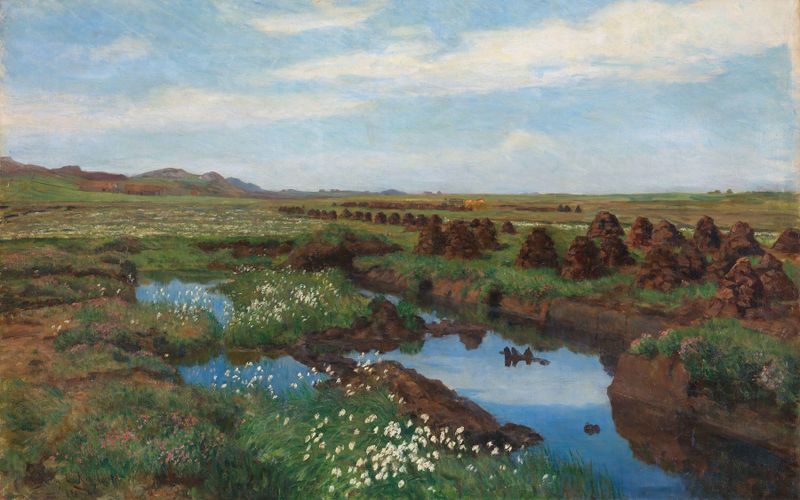
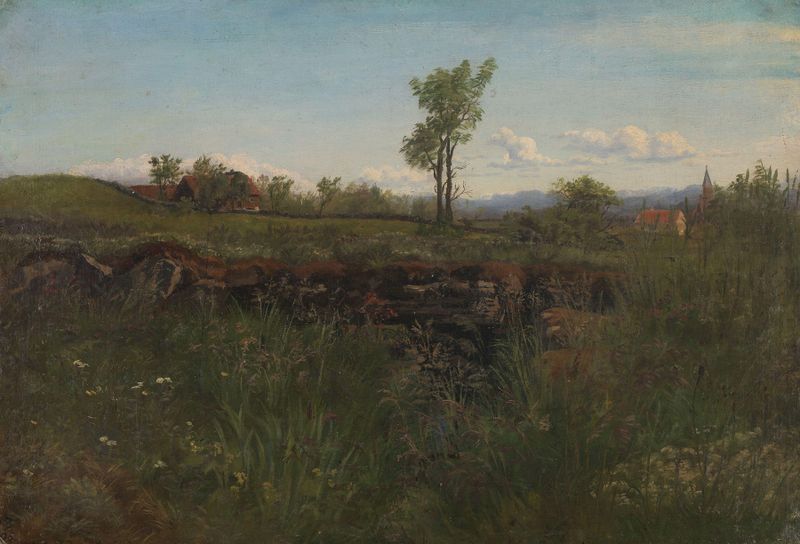
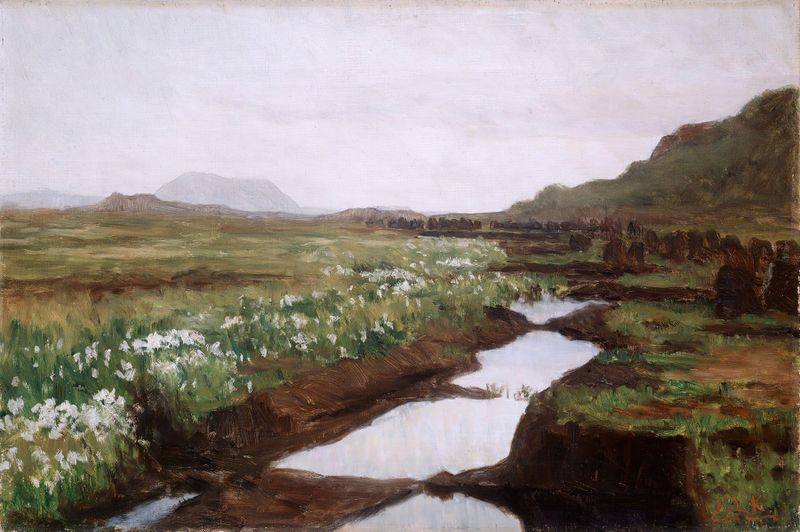
In a world so often dominated by the fleeting, there lies an invitation to pause, to yearn for what is lost and what endures. Look to the center of the canvas, where the deep greens and somber browns of the peat bog intertwine, creating a tapestry of nature that feels both grounding and melancholic. Notice the way the light filters through the clouds, casting a gentle glow over the landscape, emphasizing every texture and contour. The brushwork is deliberate yet fluid, capturing the essence of the terrain with a sense of intimacy that invites contemplation. In the subtle interplay of shadow and light, there emerges a poignant contrast between life and decay.
The stillness of the bog mirrors a quiet longing, evoking deeper emotions of nostalgia and reflection. Tiny wildflowers peek through the dark earth, symbolizing hope amidst an overwhelming sea of stillness. This tension between vibrancy and despondency reveals the artist's profound connection to the land, suggesting that even in stillness, there exists a heartbeat, a memory of what once was. Created in 1900, this work marks a period in Kitty Kielland's career where she was deeply engaged with the natural landscapes of Norway.
At this time, she was drawn to the rough beauty of her homeland, reflecting the broader artistic movement embracing realism and impressionism. The turn of the century saw her refining her techniques and celebrating the intricate relationship between humanity and nature, as her own life was woven with personal loss and the societal shifts of her time.