Landscape Study from the Environs of Carlsruhe — History & Facts
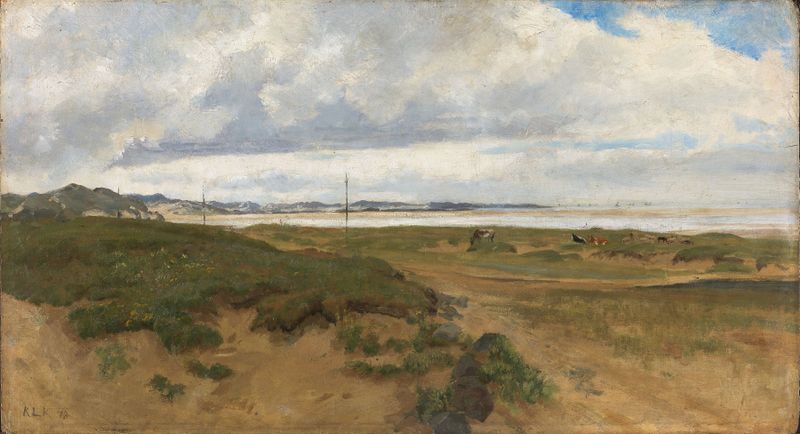
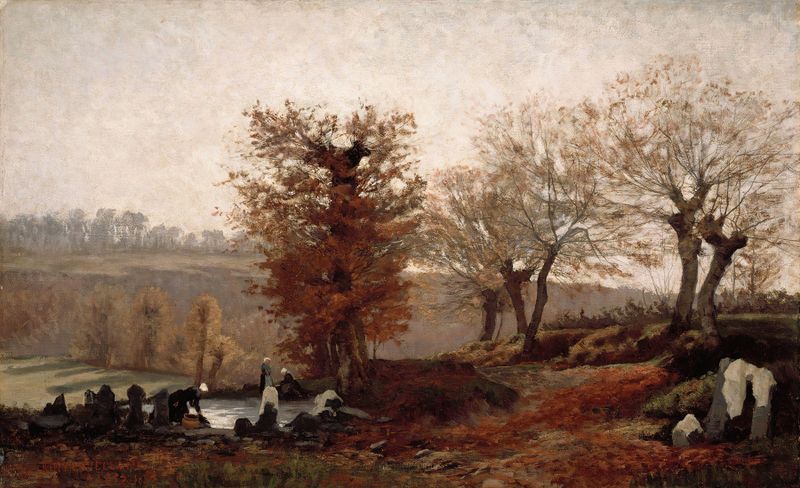
Who listens when art speaks of silence? In Landscape Study from the Environs of Carlsruhe, the stillness of nature resonates with an unsettling tension that flirts with madness, inviting contemplation into the heart of solitude. Look to the lower left of the canvas, where a patch of verdant grass meets the edge of a winding path. The brushstrokes are soft yet deliberate, creating a texture that almost beckons the viewer to step into the scene. Notice how the light filters through the trees, casting dappled shadows that dance upon the ground.
The muted greens and browns blend seamlessly, evoking the essence of a tranquil afternoon—yet there is an undercurrent of unease, as if the tranquility is merely a façade. As you move your gaze across the landscape, observe the juxtaposition of vibrant life against the backdrop of looming trees, their branches reaching outward like skeletal fingers. This contrast speaks to the fragility of existence, where the beauty of nature and the weight of isolation coalesce—a haunting reminder of the madness that can lurk beneath the surface of serenity. The delicate play of light and shadow hints at the duality of joy and despair, inviting an emotional response that is both profound and unsettling. In 1873, during a period of personal exploration and growth, Kielland painted this piece in the quiet outskirts of Carlsruhe.
At this time, she was delving deeper into her artistic identity, embracing the natural world while simultaneously grappling with the complexities of her emotional landscape. The painting not only reflects her surroundings but also embodies the broader trends in the art world, where landscapes became a medium for expressing the human condition and its inherent contradictions.