Landscape from southern France (Saint Tropez) — History & Facts
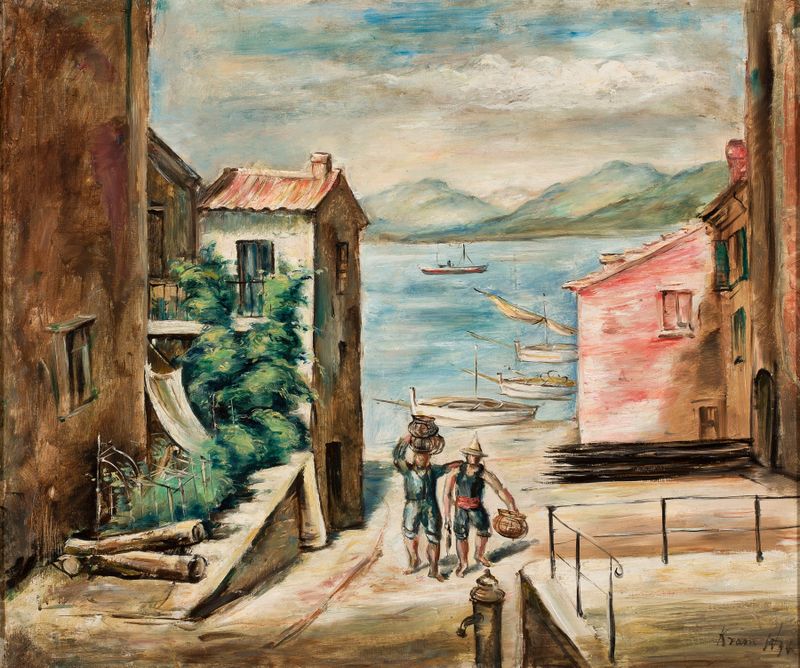
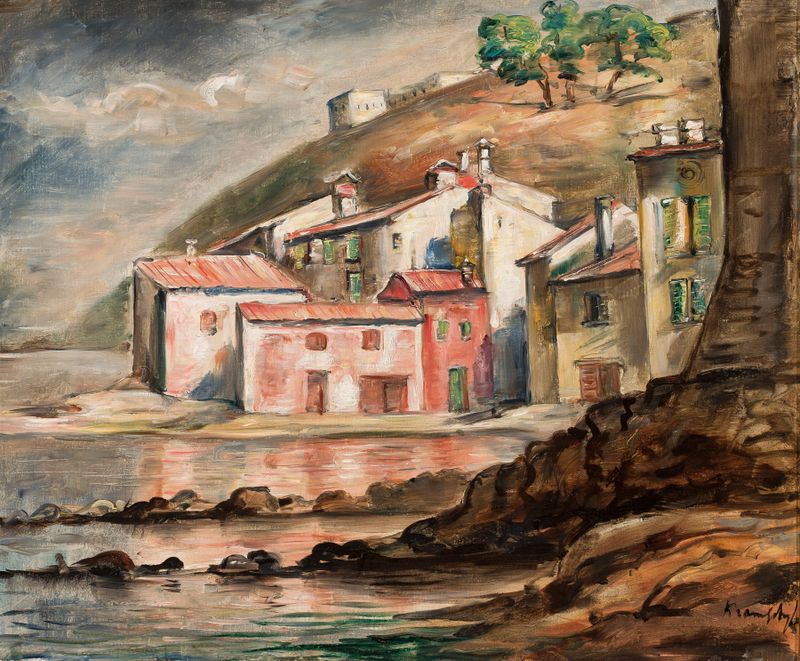
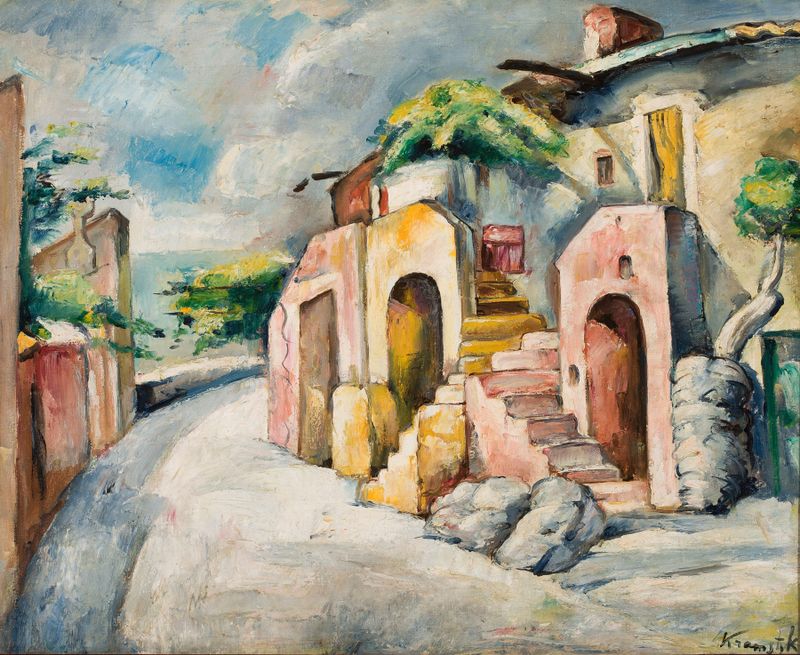
In every brushstroke, there lies a whisper of history, a testament to moments that fade yet linger in memory. Look to the foreground where vivid greens and warm ochres blend seamlessly, defining the contours of rolling hills. The gentle sweep of brushwork invites the eye to meander through the landscape, while soft blues of the sky cradle the scene above, hinting at the expanse beyond. The interplay of light and shadow creates a dance of depth, revealing how time transforms nature, each hue a fleeting impression of a day well-lived. Yet beneath this serene exterior lies a tension between the pastoral tranquility and the pulse of modernity lurking just out of frame.
The meticulous details—a solitary tree leaning against the winds of change, the distant figures resembling echoes of bygone visitors—suggest an intimate conversation with time itself. There is an awareness here, as if Kramsztyk is capturing not just a landscape, but the essence of fleeting moments, the way they rest softly on the canvas, suspended yet perpetually in motion. Created in 1929, this work emerged during a transformative period in Kramsztyk's life, as he settled in France amidst the vibrancy of the avant-garde movement. The world was on the brink of monumental change, with the echoes of the First World War still resonating.
In this environment, Kramsztyk sought new ways to express his artistic vision, merging tradition with modernity, while reflecting the changing landscapes of both nature and society.