Return from a fishing trip (Small town by the water) — History & Facts
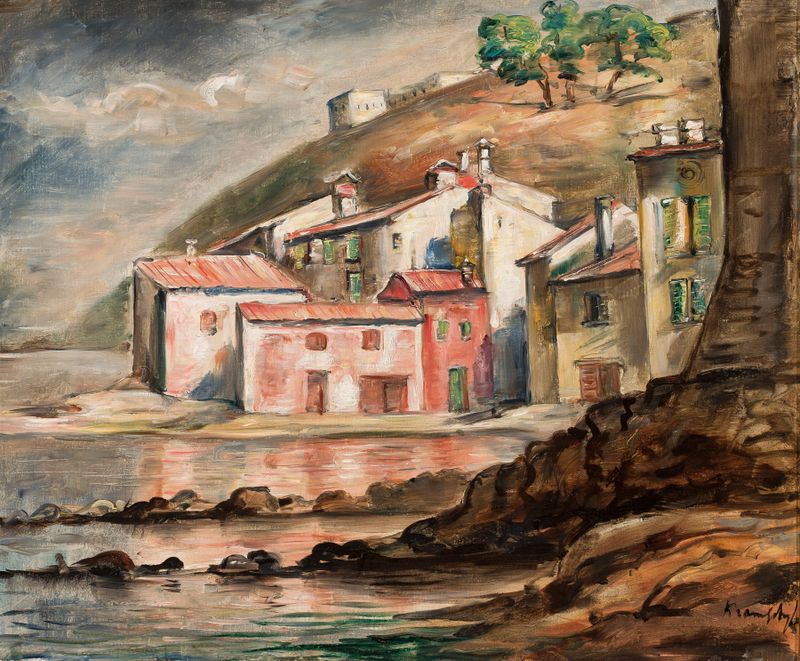
When did color learn to lie? In a world that often blurs the lines between truth and illusion, innocence remains a fragile gem cradled in the heart of experience, waiting to be discovered. Look closely at the vibrant strokes that shape the figures returning from their day by the water. The fishermen, clad in earthy tones, stand in stark contrast to the luminous blues and greens of the lake, guiding your gaze toward the serene horizon. Notice how the sunlight dances upon the water's surface, creating rippling reflections that beckon the eye deeper into the artwork.
Each brushstroke seems deliberate, yet there is an undeniable spontaneity to the composition, revealing the unfiltered joy and weariness of a day's labor. Yet, beneath the surface, a tension lies in the juxtaposition of light and shadow. The fishermen's faces reflect a quiet pride, but there is something more—perhaps a longing for simpler times or a reverence for nature’s bounty. The surrounding landscape, lush and inviting, hints at the untamed beauty of the world, evoking nostalgia for innocence lost.
Each detail, from the delicate ripples to the distant tree line, holds a story that resonates with a collective sense of yearning. In 1930, Roman Kramsztyk painted this work during a period of significant upheaval in Europe, just before the onset of widespread economic challenges. Living in Poland, he immersed himself in the local culture, capturing the essence of everyday life while navigating the complexities of his time. This piece embodies not only a personal reflection of his surroundings but also a broader commentary on the simplicity and beauty that can exist amidst uncertainty.