Landscape in Provence — History & Facts
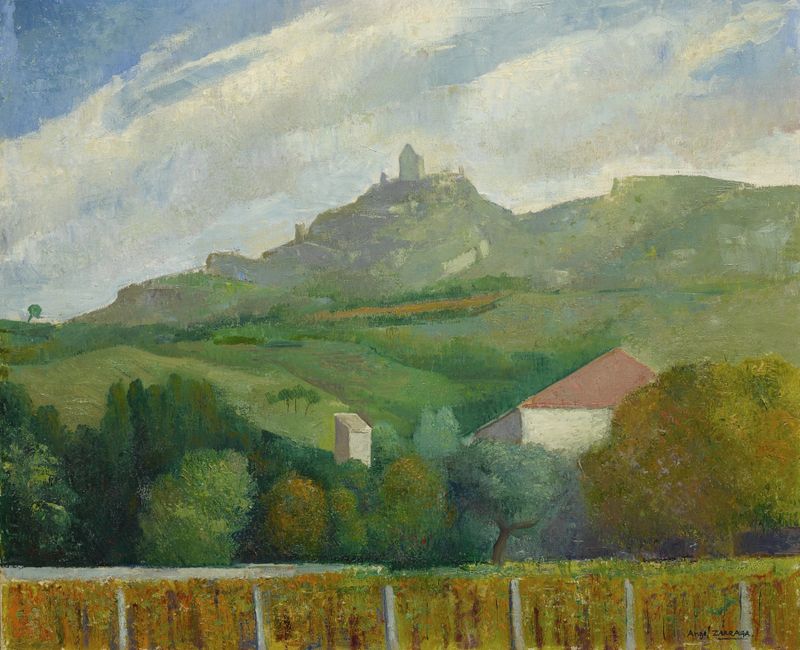
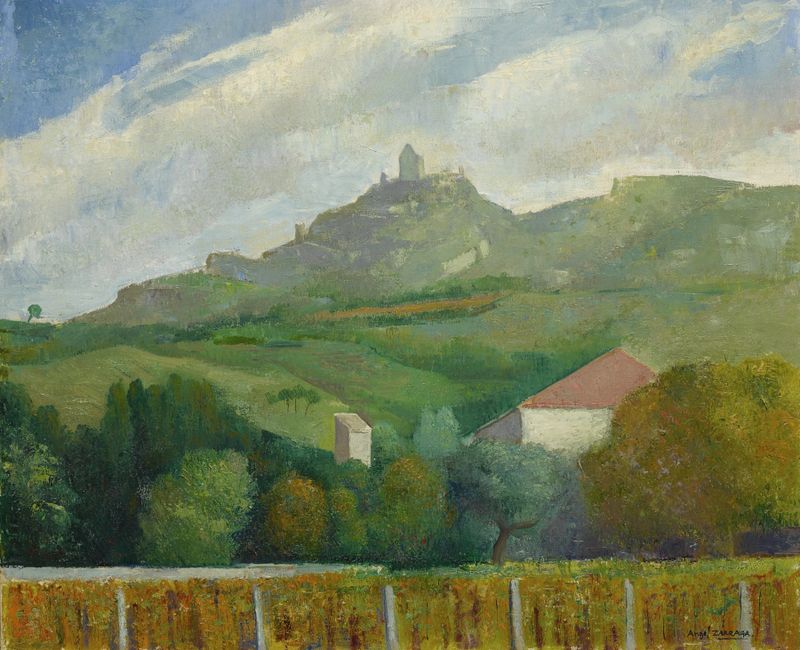
Is this a mirror — or a memory? The canvas invites viewers to wander through a sun-drenched vista that feels at once familiar and elusive, capturing the essence of destiny intertwined with the landscape. Look to the left at the rolling hills, painted with a vibrant palette of greens and blues that breathe life into the scene. Notice how the warm sun graces the foreground with gentle golden hues, illuminating wildflowers that burst forth like laughter in a hushed moment. The brushwork is both dynamic and fluid, leading your eye towards the horizon where it meets a cloud-studded sky, evoking a sense of depth and continuity that beckons the viewer further into the world portrayed. Yet, amid this idyllic serenity, there lies a tension between the vividness of life and the fleeting nature of memory.
The vibrant colors suggest joy, while the horizon's soft blur hints at distance and longing, creating a dialogue between the viewer’s present and an intangible past. Each stroke tells a story of longing, rooted in the emotional weight of the depicted landscape, inviting reflection on the paths we choose and those we leave behind. Created during the early 20th century, this work emerged from Ángel Zárraga’s time in France, a pivotal period for the artist. Immersed in a world of burgeoning impressionism, he sought to fuse the poetic essence of landscapes with personal sentiment.
As Europe grappled with change, Zárraga's brush captured the essence of place and memory, masterfully blending emotion and environment in his art.