Paysage d’été — History & Facts
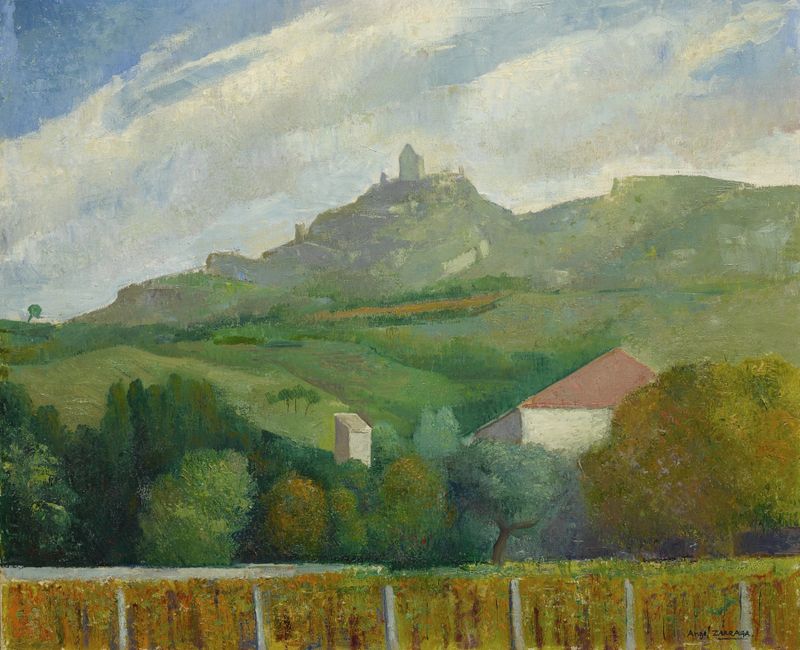
In Paysage d’été, vibrant hues meld into a dynamic interplay, echoing the ceaseless movement of nature itself. The canvas breathes life, inviting reflections on the transience of summer and the fleeting moments we often overlook. Focus first on the bold strokes of green that dominate the foreground, where the trees sway gently, suggesting a whispering breeze. Notice how the light dances across the surface, illuminating patches of yellow and gold that depict a sun-drenched field.
The horizon is kissed with distant blues, while the soft transitions of color create a rhythmic flow that guides your gaze across the scene, enveloping you in a warmth reminiscent of late afternoons. Within this landscape, contrasts emerge: the stillness of nature against the relentless passage of time. The vivid colors signify vitality, yet there’s an underlying sense of impermanence, as if the very essence of summer is caught in a delicate balance. Tiny details, like the fluttering leaves and the gentle ripples in the grass, remind viewers that movement exists even in the quietest moments, evoking nostalgia for seasons lost. In 1921, Ángel Zárraga painted this work in Mexico, when the country was experiencing a vibrant cultural renaissance post-Revolution.
Amidst the burgeoning art movement, he was influenced by modernist tendencies while still embracing traditional themes. This period was pivotal in his career, as he sought to capture the beauty of his homeland, blending personal expression with broader artistic dialogues.