Landscape; Man Carrying Faggots — History & Facts
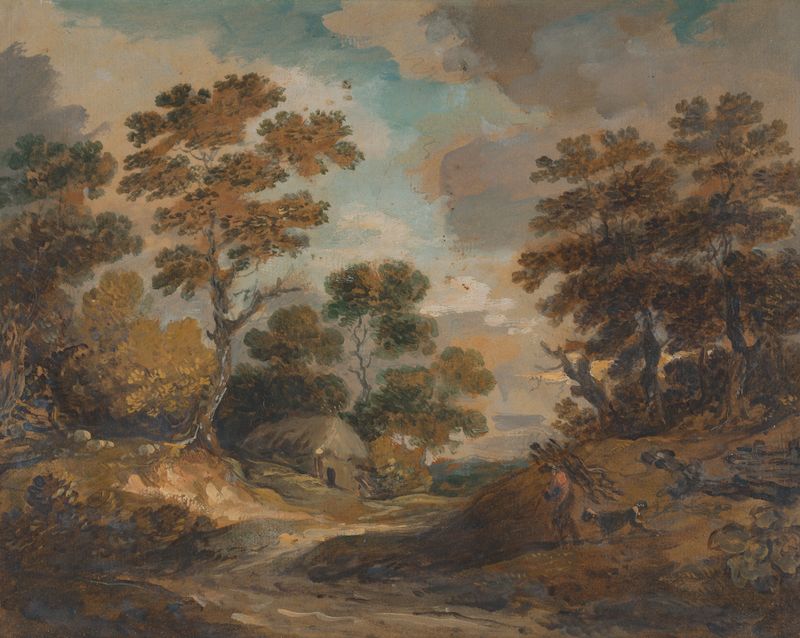
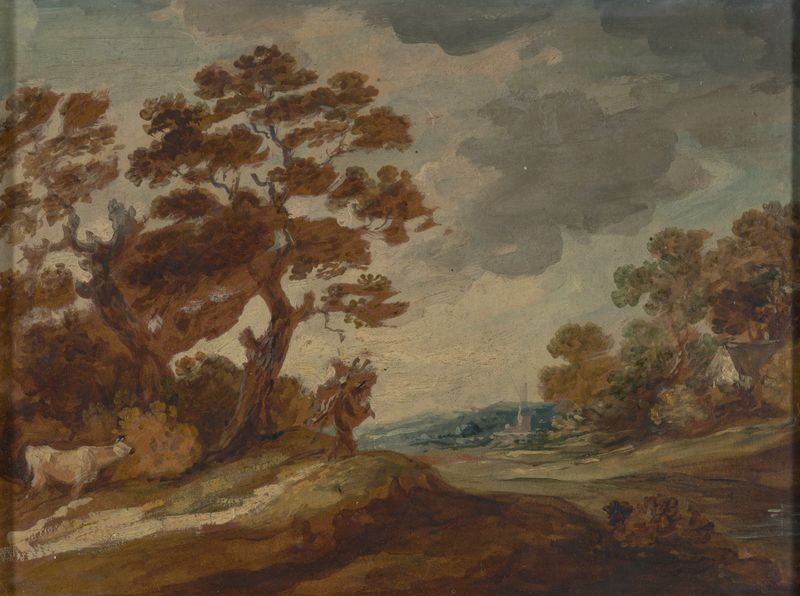
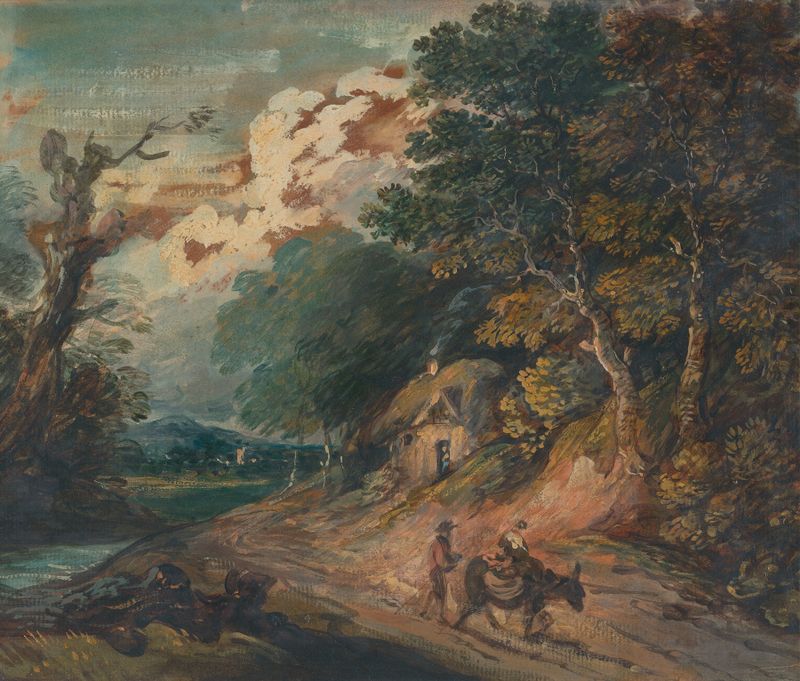
This reflection resonates deeply when contemplating the layers of memory intertwined within the landscape depicted here. The imagery calls forth the essence of labor, resilience, and the quiet stories embedded in the natural world. Look to the left, where the sun casts a soft golden light over rolling hills, creating a harmonious blend of greens and earth tones that beckon the eye. Notice the figure, a solitary man burdened with faggots, his posture a testament to toil and endurance.
The gentle strokes of the brush create a sense of movement, as if the scene breathes with the weight of his labor while the trees seem to sway in silent acknowledgment of his struggle. The tension between the idyllic landscape and the man's labor hints at a deeper narrative—one of sacrifice overshadowed by beauty. The contrast of vibrant colors against the muted browns of the faggots speaks to the complex relationship between nature and human effort. There’s a quiet poignancy in the way the landscape radiates tranquility, while the figure’s presence serves as a reminder of the hard realities that often underpin serene moments. Created during an undetermined period in Gainsborough Dupont’s career, this piece reflects a time when he was developing his artistic voice and exploring the balance between realism and impressionistic style.
Influenced by the pastoral themes prevalent in the 18th century, he immersed himself in capturing the essence of rural life, bringing a personal touch to the broader artistic movements of his time.