Landscape: Man Carrying Faggots — History & Facts
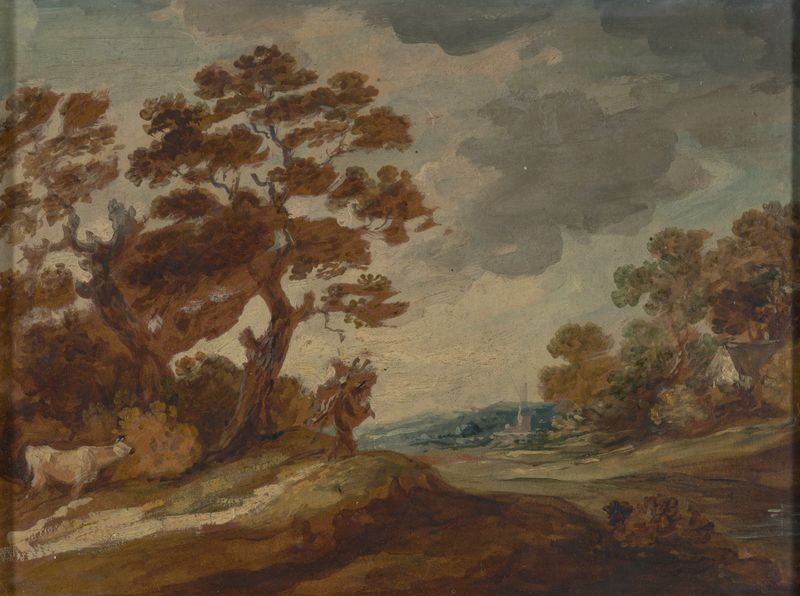
Could beauty survive in a century of chaos? This question echoes through the rich landscape captured by this timeless work, suggesting a deep obsession with the fleeting nature of both nature and humanity. Look to the left at the figure of the man, hunched beneath the weight of his burden. His form is grounded, yet almost ethereal against the expansive backdrop of lush greens and delicate blues. The painter’s deft brushstrokes create a sense of movement in the swaying trees while the light dapples the ground, casting flickers of illumination that dance across the scene.
The contrast between the heavy load he carries and the lightness of the surrounding environment becomes a compelling visual dialogue. Beneath the surface, the work speaks of perseverance amidst hardship. The faggots symbolize labor and the struggles of rural life, yet the vibrant colors and gentle strokes remind us of the beauty inherent in toil. There’s a profound sense of solitude in the man’s posture, suggesting an obsession with duty that may overshadow the allure of nature around him.
It compels the viewer to question whether beauty can truly thrive where burden persists, and what costs come with such dedication. Created during a period when Gainsborough Dupont was navigating the art world’s shifting tides, this piece reflects the influences of Romanticism, emphasizing emotion over strict representation. Painted in England, likely in the late 18th century, the work reveals Dupont’s commitment to capturing the essence of rural life, a moment suspended in time amidst the burgeoning Industrial Revolution’s chaos. With it, he invites us to reflect on our relationship with labor, beauty, and the natural world.