
Landscape Study — History & Facts
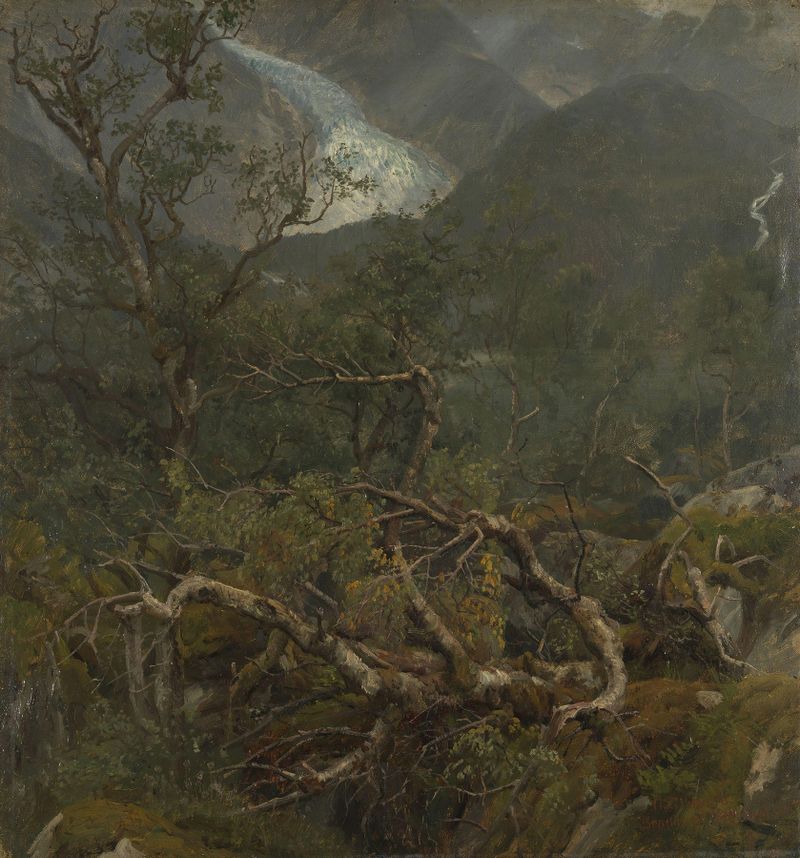
Can beauty exist without sorrow? In the delicate interplay of light and shadow in this landscape, one can sense the quiet ache of mortality amidst the serene splendor. Look to the left at the sweeping hills, gently caressed by a light that dances across their surfaces. The soft greens and earthy browns create a harmonious blend that invites the eye to wander deeper into the canvas. Notice how the clouds, painted with subtle strokes, form a soft contrast against the vibrant sky, lending both dynamism and stillness to the scene.
The artist's choice of composition, with the horizon line resting low, emphasizes the expansive nature of the landscape, evoking a sense of boundless possibility tempered by an undercurrent of transience. Here, the tension between the idyllic beauty of nature and the inevitable passage of time unfolds. The meticulously rendered foliage hints at life thriving, yet it stands in stark contrast to the vast, unyielding sky above. This duality speaks to our own existence, where joy is often tinged with the awareness of loss.
Each element in the scene, from the delicate brushwork to the thoughtful arrangement, resonates with an unspoken narrative about the fragility of beauty. In 1869, the artist found himself amidst the changing currents of the art world, residing in Norway where Romanticism was giving way to a more personal reflection of nature. This era, marked by burgeoning movements and an exploration of individual expression, influenced his work profoundly. Askevold painted Landscape Study during a time of introspection, seeking to capture both the breathtaking beauty of his surroundings and the inherent melancholy they invoked.
More Artworks by Anders Askevold
Browse all →
Fjordlandschaft
Anders Askevold
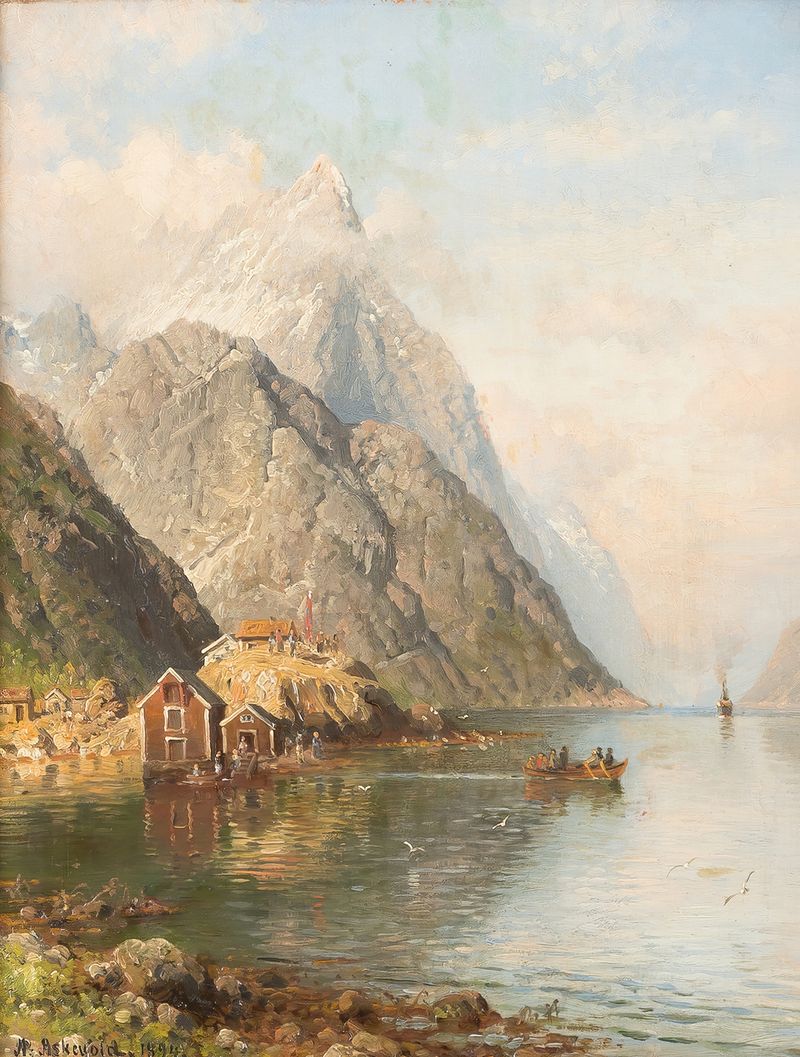
Geirangerfjord
Anders Askevold

Norwegischer Fjord (Sognefjord)
Anders Askevold
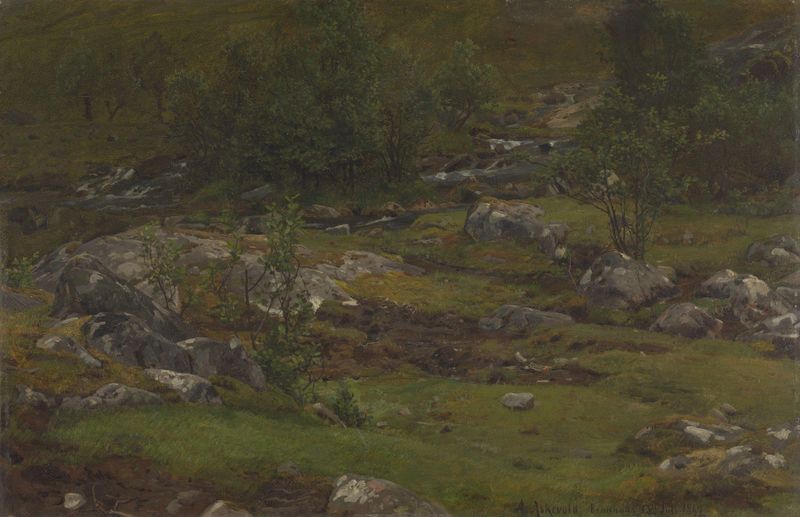
Landscape Study
Anders Askevold
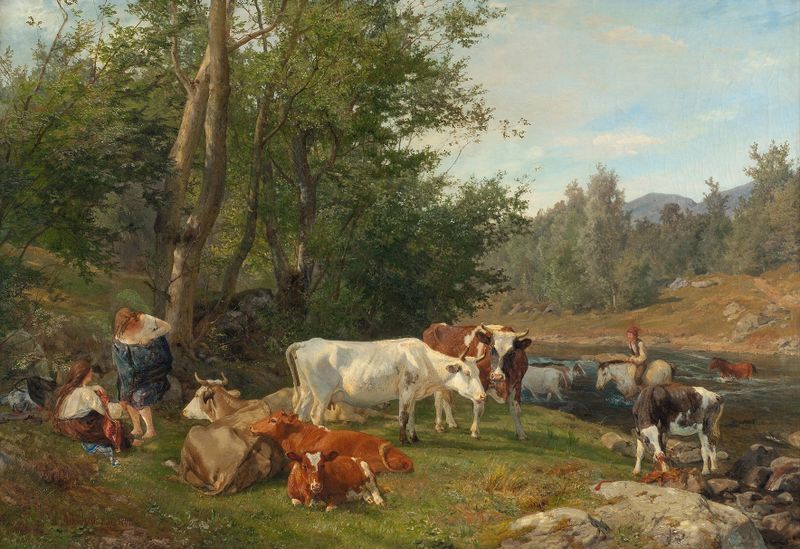
Landscape with Cattle
Anders Askevold
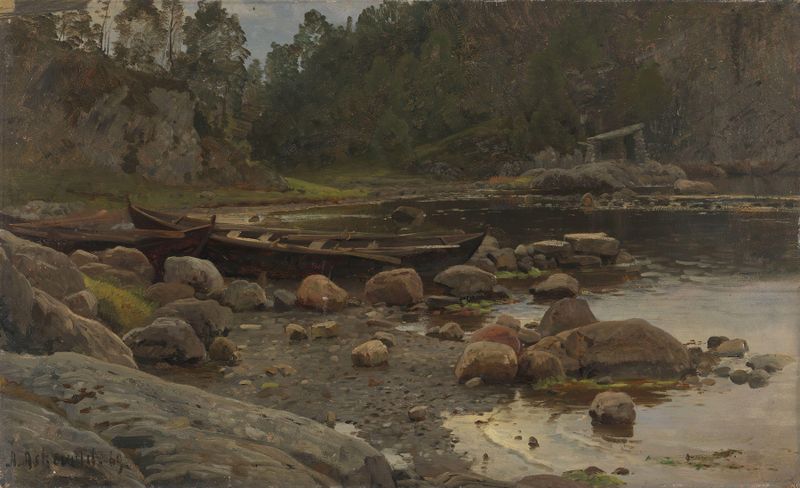
Waterside with Boats
Anders Askevold
The Bondhus Glacier
Anders Askevold

From Hammerhaug
Anders Askevold

Study of a Treebucket with Potatoes
Anders Askevold





