
The Bondhus Glacier — History & Facts
Can paint confess what words never could? In the swirling hues and ethereal textures of The Bondhus Glacier, movement transcends the boundaries of brush and canvas, beckoning the viewer into a world where silence speaks volumes. Look to the left at the vibrant blues and greens that swirl together, suggesting the glacier's icy facade. The artist masterfully layers pigment, capturing the dynamic interplay of light on the water's surface, while the jagged peaks seem to rise and fall with a breath of their own. Notice the delicate strokes that outline the clouds, hinting at the chill in the air and the vastness of the sky above—each detail meticulously rendered to evoke the majesty and fragility of nature. Within this serene yet powerful landscape lies a tension between permanence and transience.
The glacier, both immovable and ephemeral, reflects the inevitable changes within the natural world, serving as a metaphor for human experience. The striking contrasts in color not only illustrate the physical features but also evoke emotions—wonders of beauty entwined with the awareness of time's relentless march, where even the mightiest of glaciers will one day surrender. In 1858, Anders Askevold was immersed in the Romantic movement, exploring the sublime beauty of nature as it related to human emotion. Having painted this work during his time in Norway, his experiences in the breathtaking landscapes of his homeland profoundly shaped his artistry.
This period in Askevold's life coincided with a growing interest in depicting the grandeur of untamed nature, which was mirrored by broader artistic trends across Europe.
More Artworks by Anders Askevold
Browse all →
Fjordlandschaft
Anders Askevold
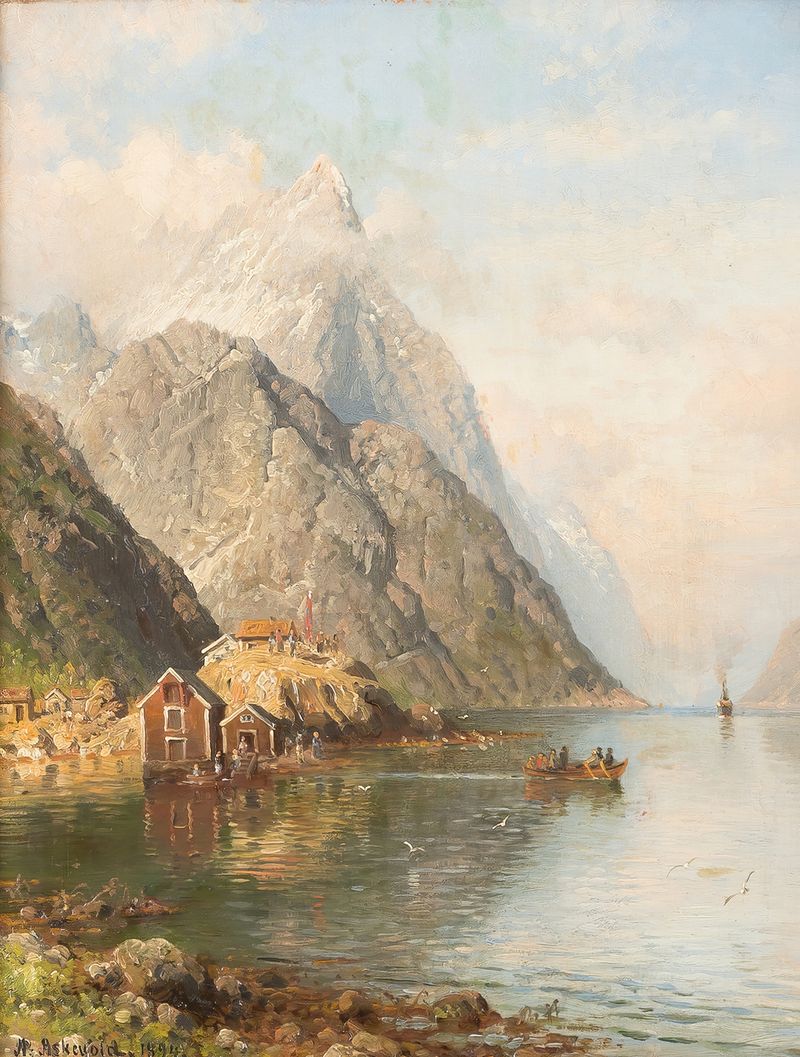
Geirangerfjord
Anders Askevold

Norwegischer Fjord (Sognefjord)
Anders Askevold
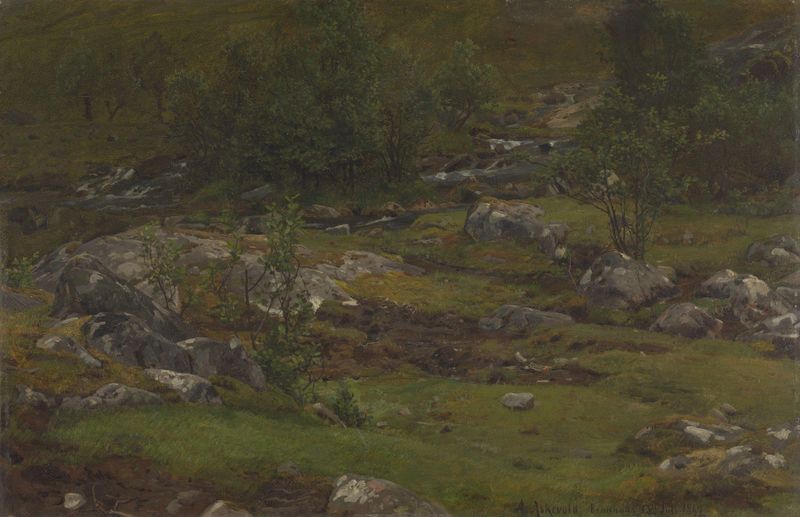
Landscape Study
Anders Askevold
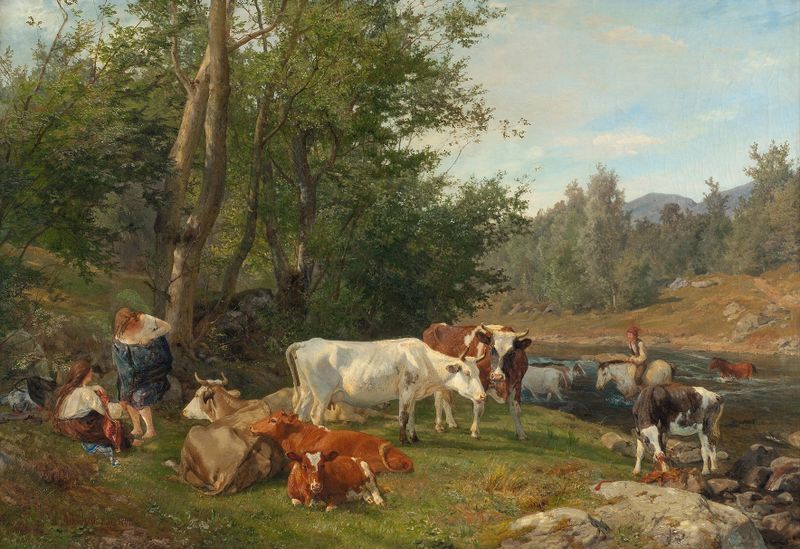
Landscape with Cattle
Anders Askevold
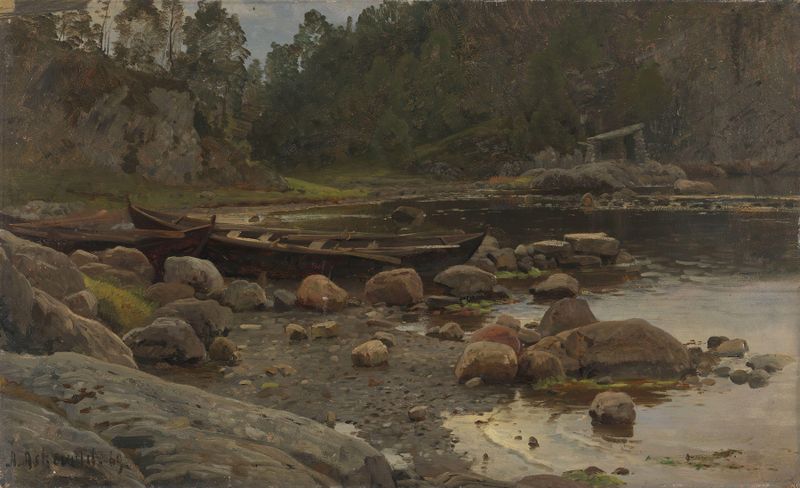
Waterside with Boats
Anders Askevold

Landscape Study
Anders Askevold

From Hammerhaug
Anders Askevold

Study of a Treebucket with Potatoes
Anders Askevold





