Landscape, Trinidad — History & Facts
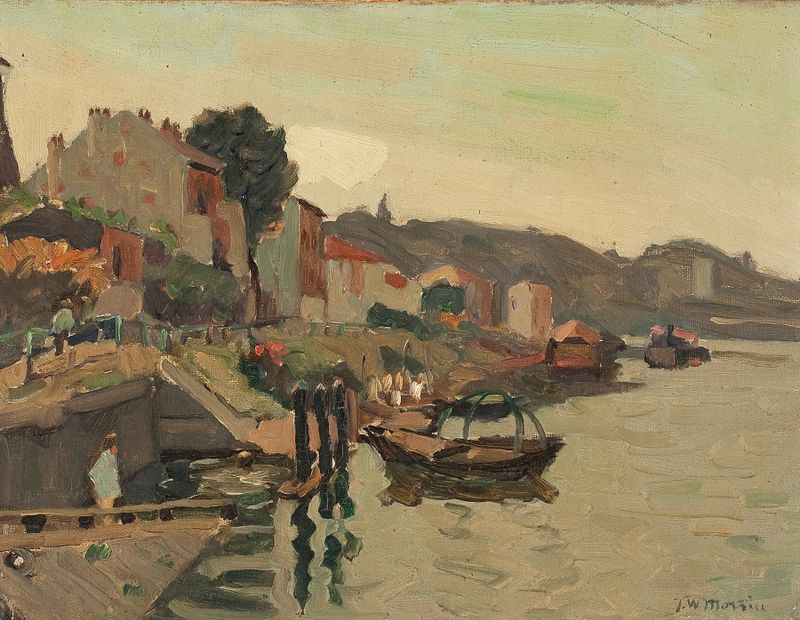
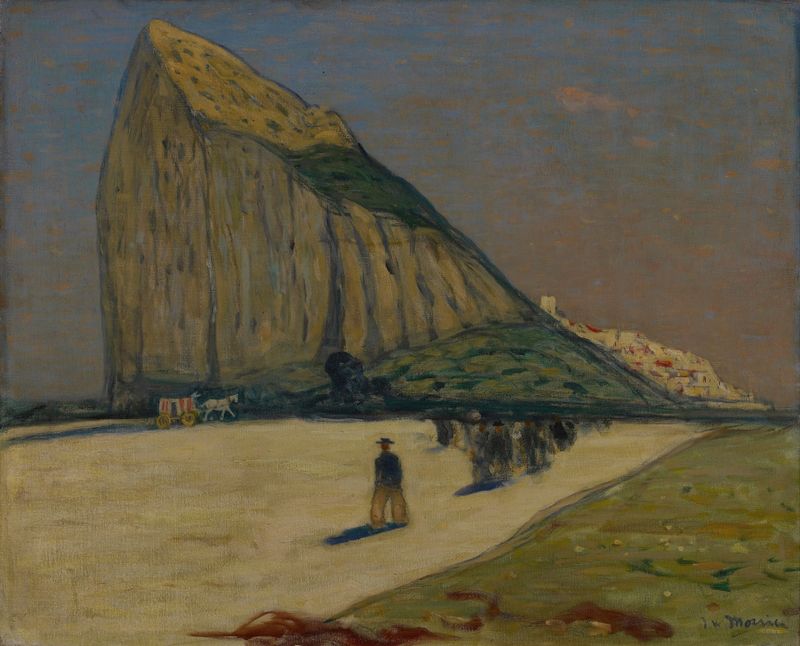
In a world ever-changing, art becomes a vessel, preserving fleeting moments that slip through our fingers like sand. Look to the top left of the canvas, where the vibrant blue sky sprawls above, dotted with soft, white clouds. The horizon stretches wide beneath it, a subtle interplay of greens and browns that invites the viewer to explore the lush landscape. Notice how the brushstrokes weave together—each stroke a testament to the artist's sensitivity to light and shadow, illuminating the textured foliage and reflecting the warmth of the sun on the earth.
The palette sings with the quiet energy of Trinidad, suggesting both tranquility and the vibrancy of life. Underlying the surface charm of this piece lies an emotional complexity, a dance between serenity and dynamism. The gentle undulations of the land mirror the quiet pulse of nature, yet there is a tension in the colors—a blend of cooling greens and warm earthy tones that hints at the duality of existence. This landscape is not just a serene escape; it grapples with memory and the passage of time, evoking nostalgia for a world that is both present and lost. During the years 1916 to 1926, the artist created Landscape, Trinidad while navigating both personal trials and the broader challenges of post-war life.
Residing in Canada and frequently traveling, Morrice was influenced by the Impressionist movement, which emphasized capturing light and color in a moment. It was a period marked by a search for both identity and solace in art, as societal upheaval intertwined with the artist's inner sentiments.