Landscape with a Cottage — History & Facts
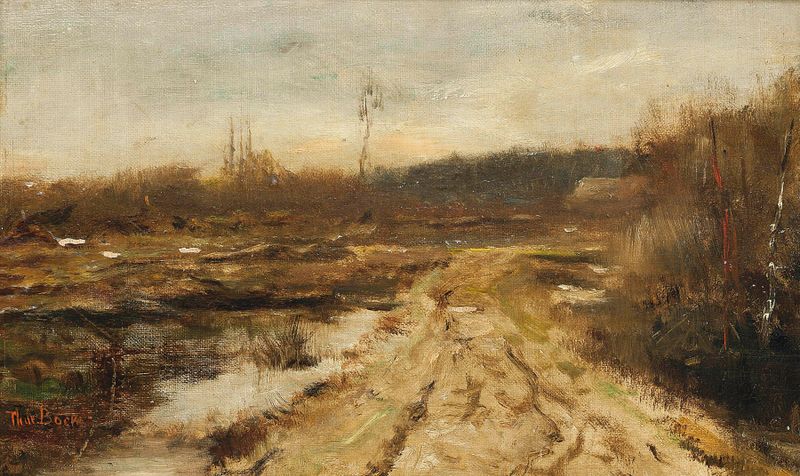
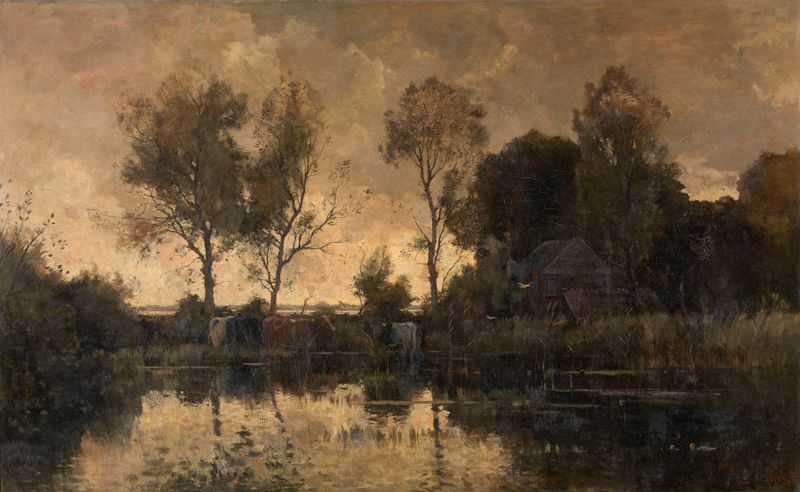
Can paint confess what words never could? In Landscape with a Cottage, the brush reveals a dialogue between earth and sky, a communion of nature that stirs the soul. Look to the left at the quaint cottage, nestled harmoniously within the verdant embrace of rolling hills. The brushstrokes are soft yet deliberate, capturing the textured thatch roof and the rugged stone walls that speak of time and toil. Notice how the light dances across the landscape, casting gentle shadows that cradle the scene in a serene warmth.
Each color choice, from the muted greens to the soft blues of the sky, creates an atmosphere of tranquility, inviting viewers to linger in this pastoral refuge. Within this idyllic setting lies an inherent tension—between the charm of rustic life and the quietness of solitude. The cottage, though inviting, suggests a story unwritten, evoking a longing for connection amidst nature's vastness. The sky hangs heavy with clouds, hinting at an impending storm, juxtaposing the peacefulness of the land and the inevitability of change.
This duality reflects the beauty and fragility of existence, reminding us that even the most serene landscapes are marked by impermanence. Théophile de Bock painted this work during a period marked by the rise of the Impressionist movement in the late 19th century. Living in the Netherlands, he sought to capture the essence of the Dutch landscape, influenced by both realism and the luminous qualities of light. His focus on rural scenes during this time speaks to both a deep appreciation for nature and a desire to escape the rapidly industrializing world around him.