View in the Woods — History & Facts
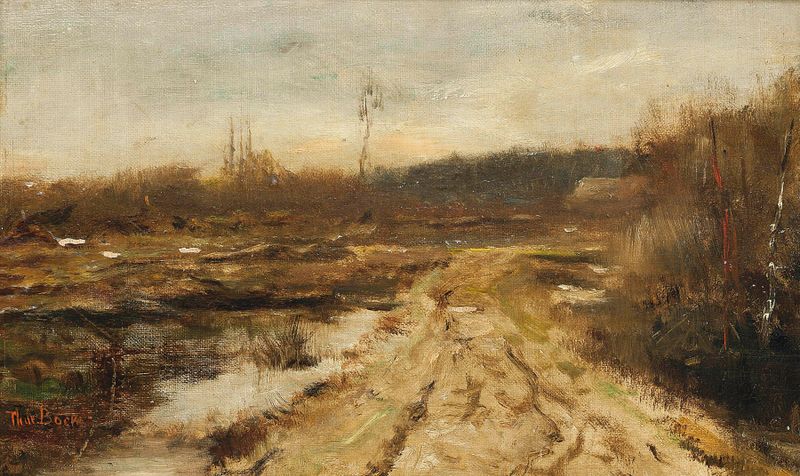
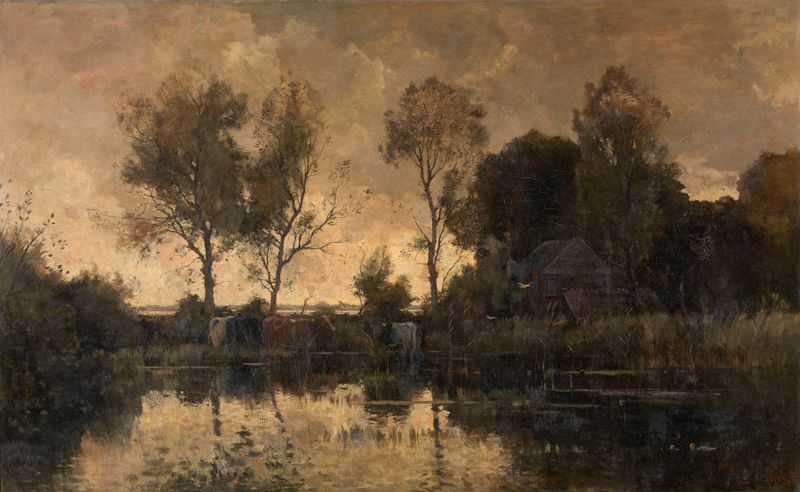
Could a single brushstroke hold eternity? In View in the Woods, the ambiance of solitude reverberates through the lush greenery and dappled light, each stroke conveying a whisper of the woods’ quiet enigma. Look to the left at the towering trees, their trunks standing like sentinels guarding secrets from the world. Notice how the light filters through the leaves, casting soft, intricate patterns on the ground below, inviting you to step closer yet holding you at bay. The palette of earthy greens and browns harmonizes with the golden hues of sunlight, crafting a serene sanctuary that feels both inviting and isolating.
The composition, with its rich depth and perspective, draws the viewer into a space that feels both familiar and deeply personal. Within this tranquil scene lies a profound sense of loneliness, as if the woods themselves are witnesses to an unspoken longing. The juxtaposition of the vibrant life around with the empty path ahead suggests a journey, yet one never taken. The subtle details—perhaps a fallen leaf or a distant rustle—evoke thoughts of what it means to be alone in nature, where beauty coexists with introspection. Théophile de Bock painted this evocative scene around the turn of the 20th century, a time when he was exploring the Dutch landscapes that inspired him.
Living in the Netherlands during a period of artistic transition, he sought to capture the essence of nature’s tranquil beauty, reflecting a broader shift toward realism in art. This piece stands as a testament to his mastery of color and form, bridging the gap between impressionism and a more structured depiction of the natural world.