
Landscape with a Windmill — History & Facts
What if beauty was never meant to be finished? In Landscape with a Windmill, we are invited to linger in a moment where nature and human endeavor intertwine, marked by vibrant hues and a gentle embrace of form. Look to the left at the windmill, its blades poised gracefully against a backdrop of lush greens and soft blues. The artist's mastery of color is evident; each stroke breathes life into the landscape, as the warm sunlight filters through the trees, casting dappled shadows that dance across the meadow. Notice how the contrasting colors—rich ochres, serene aquamarines, and fleeting whites—convey a sense of tranquility, inviting the viewer into a world that seems almost tangible. In this serene tableau, there lies a tension between the man-made and the natural.
The windmill stands resolute, a symbol of industriousness, while the surrounding flora sways in an unseen breeze—their movement suggesting an eternal cycle of life and rebirth. The delicate balance of light and shadow speaks of fleeting time, hinting at the ephemeral nature of beauty where no moment is truly complete, yet all are profoundly captivating. Created in 1876, this work reflects Herzog's life in America after his move from Europe. The artist was deeply influenced by the American landscape, capturing its essence in ways that resonated with both realism and romanticism.
During this period, the art world was embracing the plein air technique, which encouraged artists to paint outdoors, capturing the dynamic interplay of light, color, and atmosphere—an exploration Herzog embraced wholeheartedly in this evocative piece.
More Artworks by Hermann Ottomar Herzog
Browse all →
Snow-Capped Peaks
Hermann Ottomar Herzog
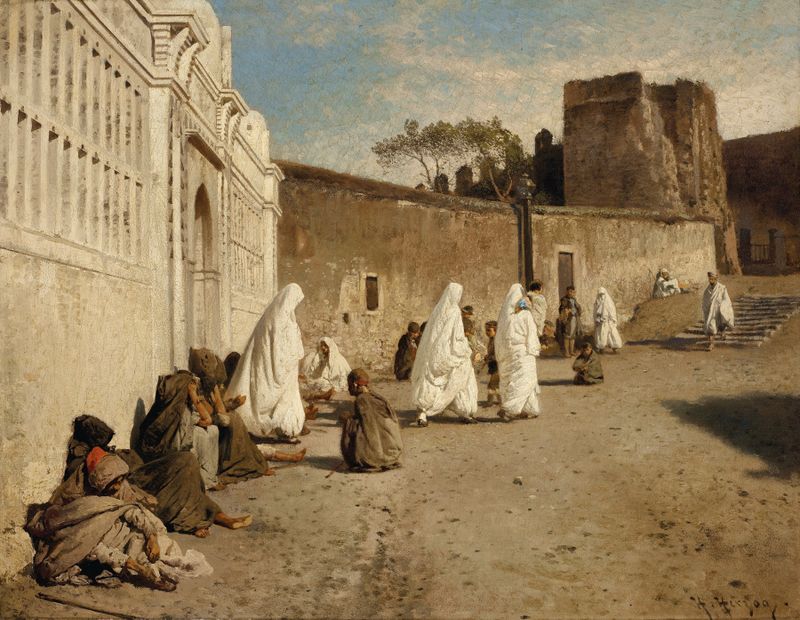
Entrance into the Alhambra, Spain
Hermann Ottomar Herzog

Hafen in Ostende
Hermann Ottomar Herzog
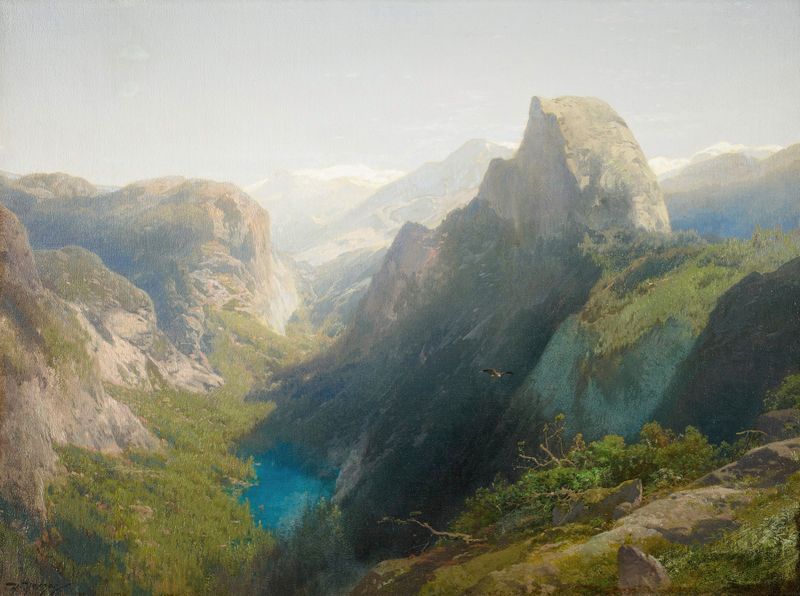
Mirror Lake, Yosemite
Hermann Ottomar Herzog
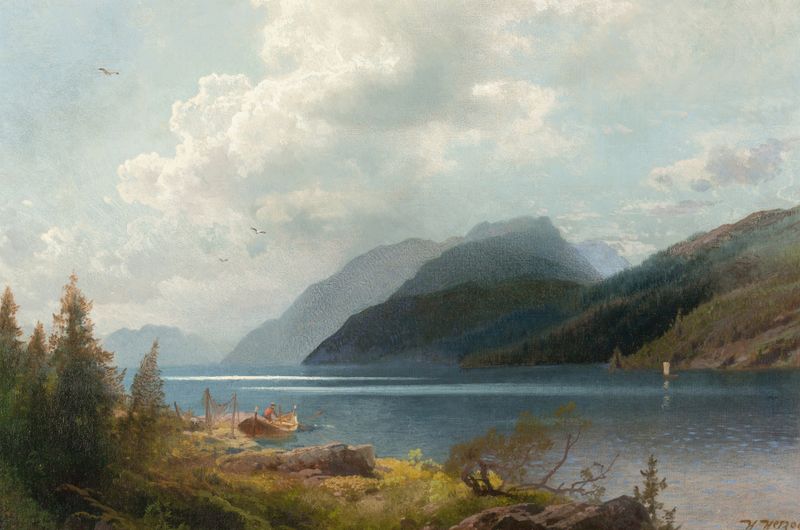
Mountain Lake, Sagne Fjord, Norway
Hermann Ottomar Herzog
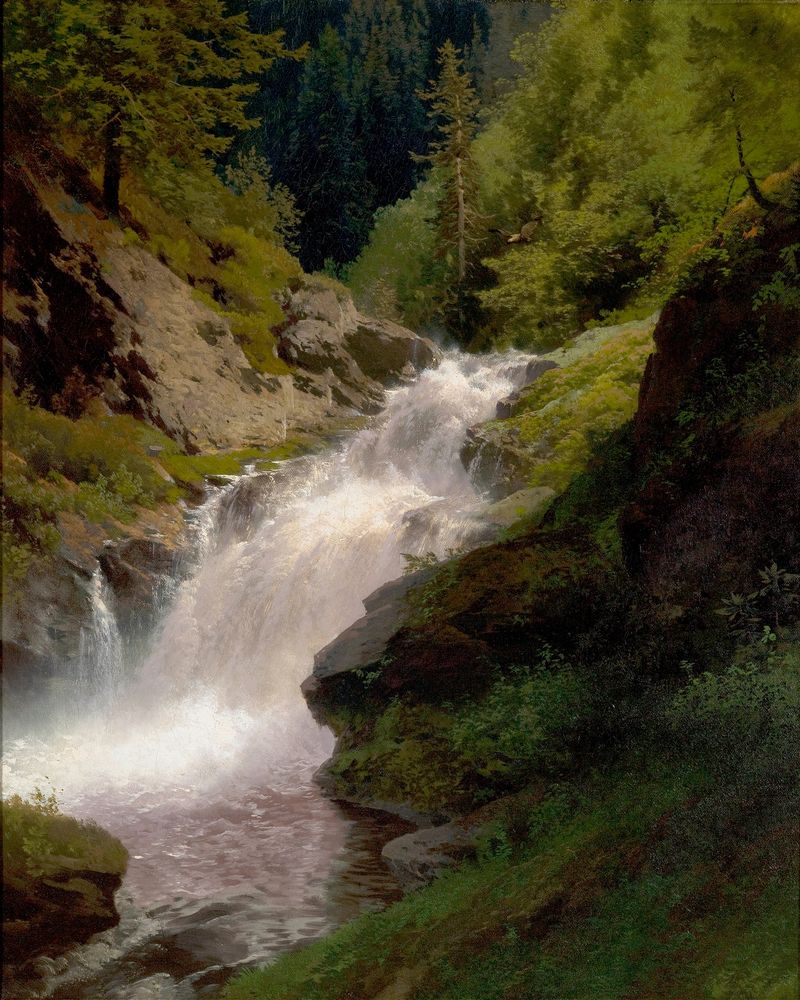
Winona Falls
Hermann Ottomar Herzog
A Moonlit Harbor
Hermann Ottomar Herzog
Mill on a Torrent
Hermann Ottomar Herzog

The Rippling River
Hermann Ottomar Herzog

Alpine Landscape Mountain Hut
Hermann Ottomar Herzog





