Landscape with Ancient Ruins — History & Facts
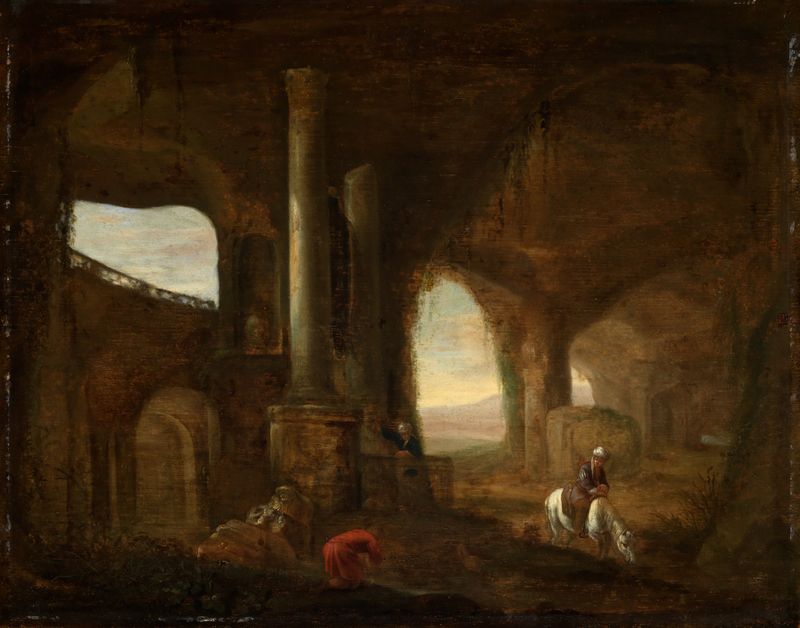
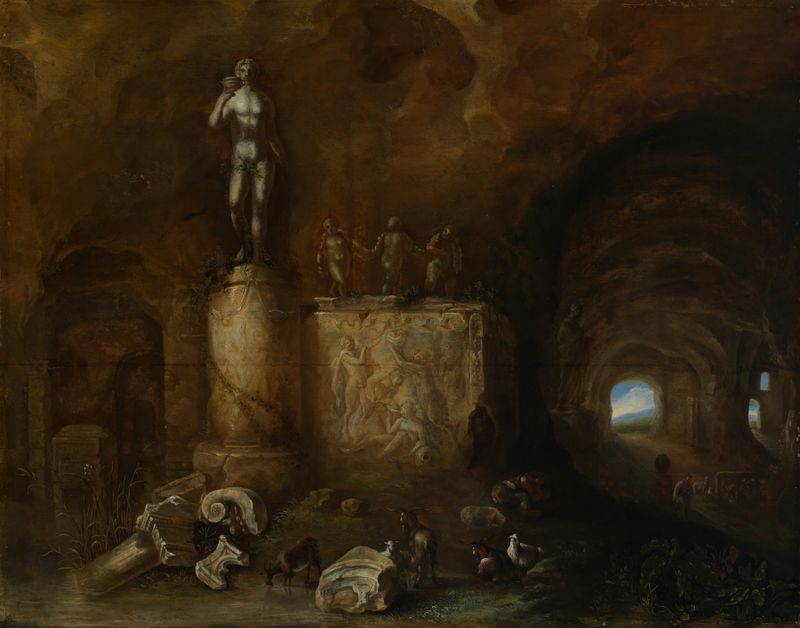
In the stillness of Landscape with Ancient Ruins, echoes of the past linger, weaving a narrative steeped in hope and nostalgia. This artwork invites viewers to reflect on the remnants of what once was, hinting at the possibilities still hidden within the ruins. Look to the left at the crumbling columns, their weathered surfaces contrasting against a vibrant sky that hints at dawn. The artist’s brushstrokes capture the delicate interplay of light and shadow, illuminating the verdant landscape that surrounds the ancient structures.
Notice how the rich greens of the foliage breathe life into the scene, while the golden hues of the sun suggest the promise of new beginnings. This balance between decay and rejuvenation pulls the viewer into a world where history and nature coexist harmoniously. Delve deeper, and you’ll find layered meanings within the ruins. Each stone tells a story of resilience, while the creeping vines symbolize nature's relentless ability to reclaim what was lost.
The composition creates a dialogue between the beauty of the landscape and the stoic presence of the ruins, evoking a sense of melancholy intertwined with hope. The artist’s use of light not only highlights the ruins but also embodies the desire for renewal, suggesting that from the fragments of the past, a brighter future may emerge. In 1643, van Cuylenborch painted this scene in the Netherlands, a time when artists were increasingly exploring landscapes infused with emotional depth. This period also witnessed a growing interest in the interplay between nature and history, as the world around them was undergoing significant transformations.
Emerging from a backdrop of societal change and artistic evolution, van Cuylenborch captured not just a moment in time, but a sentiment that resonates across centuries.