Grotto with ancient sculptures and bathing women — History & Facts
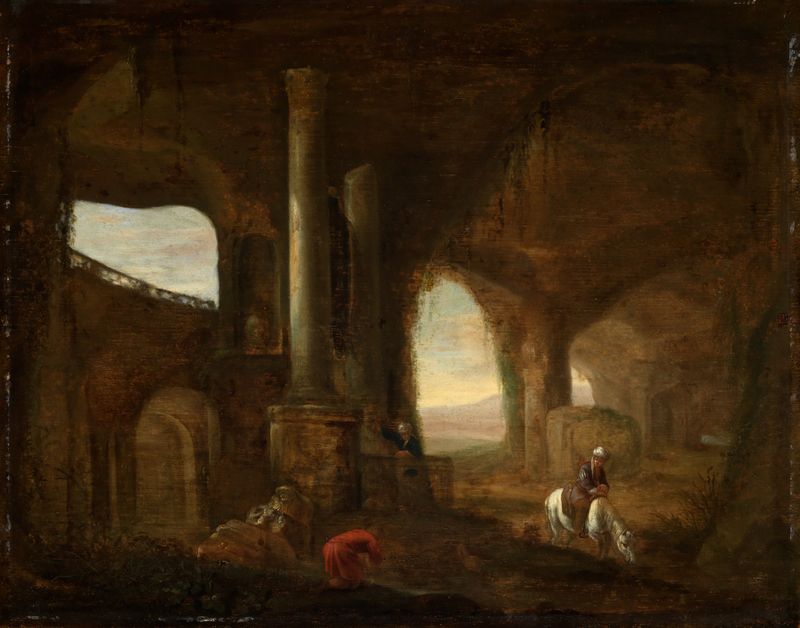
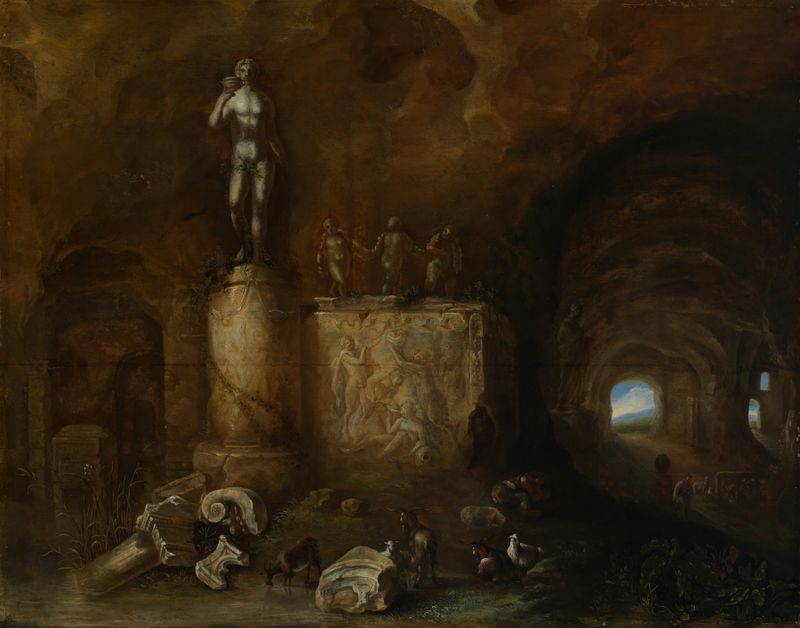
In the quiet depths of a grotto, secrets whisper through the shadows, a haunting reminder of time's relentless march. The interplay of light and darkness invites contemplation, urging us to question the boundaries between sanity and madness, both in the ancient sculptures that watch over the scene and in the women who occupy the water’s edge. Look to the left, where a cluster of statues rises from the rocky terrain, their weathered faces carved with expressions that seem to convey caution and wisdom. The soft light filtering through the grotto’s opening casts ethereal reflections, illuminating the delicate ripples around the bathing women.
Notice how the cool blues and greens of the water contrast with the warm, earthy tones of the stone, creating a visual dialogue between the human form and the permanence of stone. Each figure, both living and sculpted, occupies a space that feels suspended in time. Yet, beneath this serene tableau lies a tension that hints at madness, where the beauty of the bathing women is juxtaposed with the haunting gaze of the ancient statues. The women's gestures carry an air of ritual, suggesting a connection to the past, while their vulnerability underscores a delicate balance between chaos and harmony.
This intricate interplay evokes a sense of longing and nostalgia, suggesting that both beauty and madness are interwoven in the fabric of existence. The artist created this piece in an uncertain time, possibly during the late Renaissance when fascination with antiquity coalesced with emerging humanist ideals. Van Cuylenborch’s work reflects a period of artistic exploration, where the boundaries of imagination and reality blurred. The cultural landscape was defined by a resurgence of classical themes, grappling with humanity’s place within the grand tapestry of history and the fragility of reason.