Interior of a grotto with sculptures and a sleeping shepherd — History & Facts
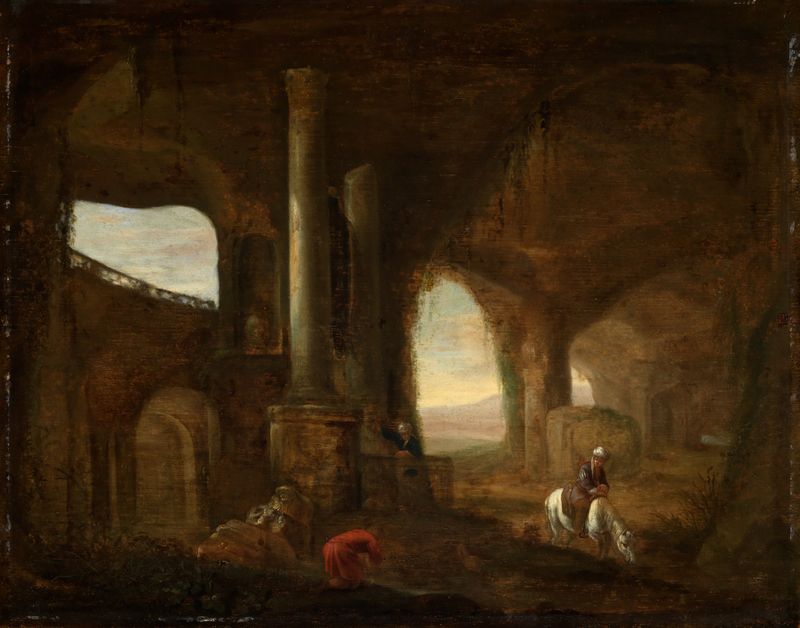
In the depths of a grotto, where echoes of dreams drift like shadows, moments of loss transform into ethereal beauty. Here, in a secluded world, serenity and sorrow intertwine in delicate whispers. Look to the center, where a sleeping shepherd reclines, his form a study in vulnerability against the backdrop of rugged stone and elegantly carved sculptures. The soft light filtering through cracks in the cave’s structure illuminates his peaceful face, highlighting the gentle curve of his cheek and the weariness etched into his brow.
Notice how the earthy palette of browns and greens envelops him, grounding his tranquility amidst the surreal. The contrast between the stone figures—stoic, eternal—and the shepherd’s fleeting human presence speaks volumes. Beneath the serene surface lies a profound tension; the once-vibrant life of the grotto is now a memory, preserved in the stillness that surrounds the man. The intricate sculptures, remnants of artistry and devotion, serve as poignant reminders of moments past, evoking the bittersweet nature of nostalgia.
Each detail—the gentle folds of the shepherd's cloak, the haunting expressions of the sculptures—whispers of a world that has experienced loss and love, interwoven in the fabric of time. In 1643, Abraham van Cuylenborch was immersed in the Baroque art movement, a period characterized by emotional depth and dramatic contrasts. Living in the Netherlands amidst a flourishing art scene, he captured the essence of human experience, using his brush to explore themes of solitude and reflection. This piece emerges from a time when art was not only a reflection of reality but also a profound exploration of the human condition.