Landscape with Ancient Ruins, a Resting Flock in the Front — History & Facts
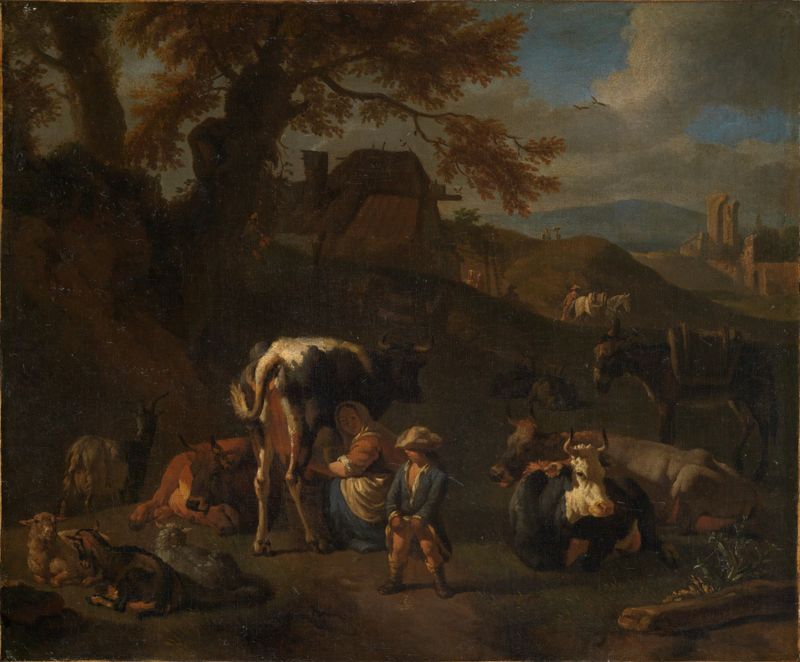
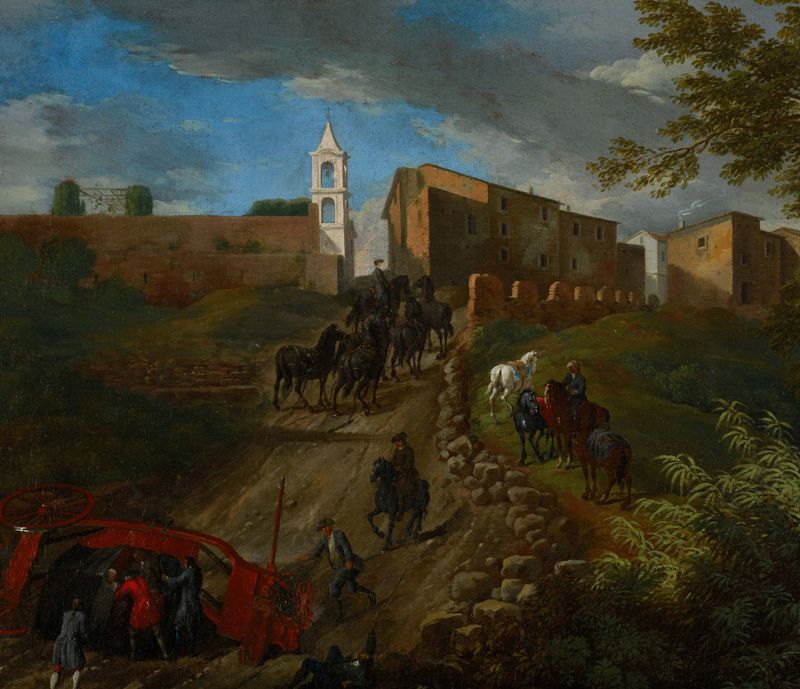
Who listens when art speaks of silence? In Landscape with Ancient Ruins, a Resting Flock in the Front, the gentle presence of nature cradles forgotten remnants of human ambition, inviting contemplation and hope amid decay. Look to the foreground where a flock of sheep grazes peacefully, their woolly forms softly illuminated by the warm light of a late afternoon sun. The ancient ruins rise behind them, their weathered stones standing in solemn testimony to a civilization once vibrant. Notice how the artist employs a delicate palette of greens and browns, allowing the sheep to blend harmoniously with the landscape while the ruins are rendered in a contrasting, muted gray, symbolizing the passage of time and the resilience of nature. As you explore the distant hills, the contrast between the serene flock and the crumbling architecture unfolds deeper narratives.
The juxtaposition hints at the eternal cycle of life and decay—while human achievements may fade, the quiet persistence of nature remains unyielding. The stillness of the scene conveys a sense of hope; amidst the ruins, life continues, suggesting that even in decline, there is beauty to be found. Pieter van Bloemen painted this work in the early 18th century, a period marked by significant shifts in European art and society. Working from his studio in Antwerp, he captured the harmonious relationship between nature and human history at a time when the Baroque style was giving way to the more serene and introspective tones of the Rococo.
This painting reflects both personal contemplation and the broader cultural dialogue about the passage of time, urging viewers to find solace amidst the remnants of the past.