Coach and Travelers at Madonna del Riposo Near Rome — History & Facts
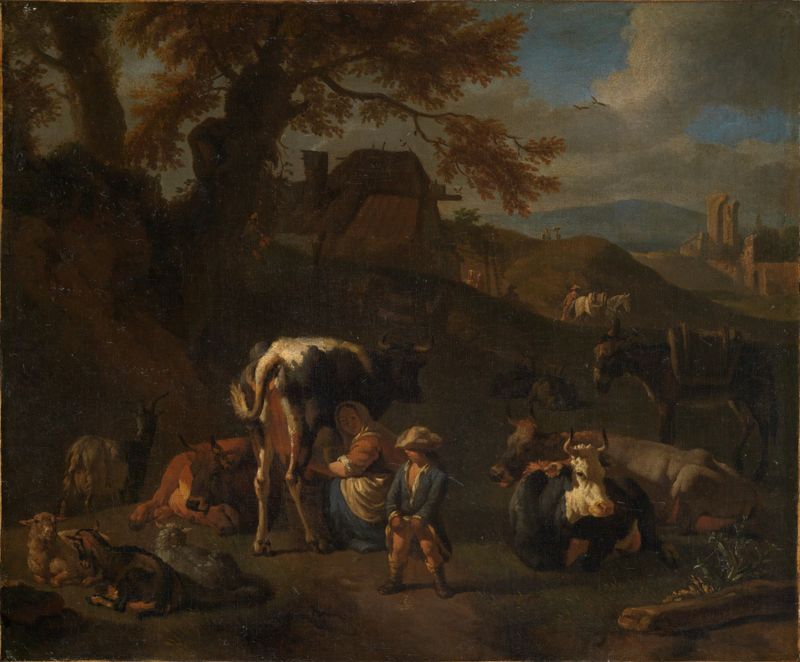
In this vibrant tableau, we are invited into a world where past and present intermingle, evoking the idea of rebirth through travel and connection. Look to the center of the canvas, where a coach stands poised under a gentle archway, its wooden frame gleaming with a soft luster. Notice the travelers—each figure distinct, wrapped in the rich colors of their attire, engaged in animated conversation as shadows dance across their faces. The bright sunlight filters through the trees, illuminating the scene with a warmth that speaks of hope and new beginnings, while the lush greenery surrounding them whispers of nature renewing itself with every season. Amidst the bustle, the coach acts as a vessel, symbolizing the journey of life, laden with both expectation and uncertainty.
Observe the contrast between the travelers’ animated gestures and the serene backdrop of the Madonna—a protective figure watching over the scene, suggesting that comfort and guidance accompany every adventure. The harmonious blend of colors, from earthy browns to bright greens, captures a moment suspended in time, where life's transitions are embraced and cherished. Pieter van Bloemen created this work in the late 17th to early 18th century, a period marked by significant change in Europe. Settling in Rome, the artist became immersed in the lively artistic community of the time, reflecting a burgeoning interest in themes of travel and pastoral beauty.
His dedication to capturing the essence of these moments mirrors the evolving landscape of art, where the mundane was transformed into the poetic through the lens of daily life.