Hirtenszene — History & Facts
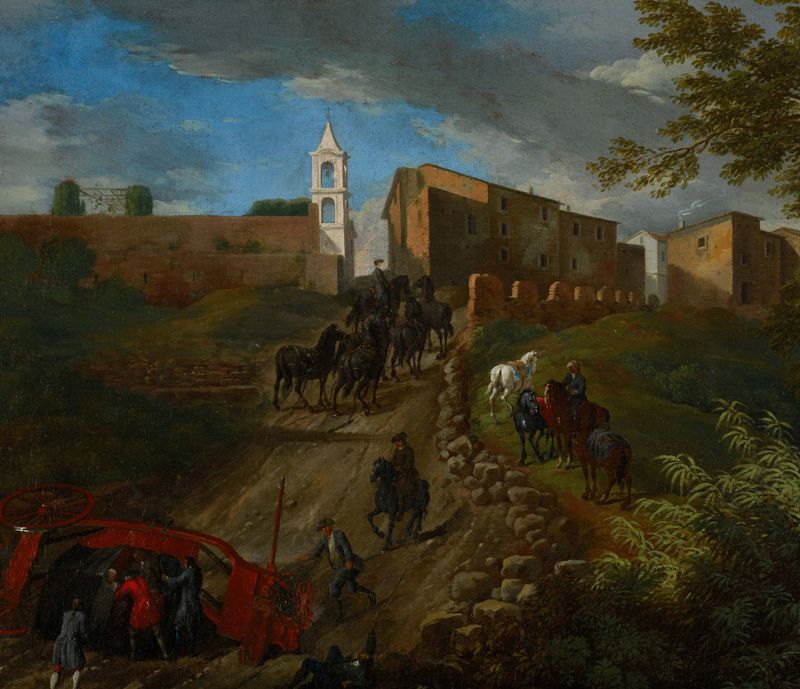
Did the painter know this moment would outlive them? In Hirtenszene, chaos and serenity intertwine, capturing an ineffable truth about the passage of time. Look to the left at the shepherd, his tranquil expression contrasting sharply with the scattered sheep in disarray, a visual metaphor for life’s unpredictable nature. Notice how the muted greens and browns of the landscape create a harmonious backdrop, while the soft play of light atop the rolling hills adds warmth, inviting the viewer into this pastoral scene. The composition draws your eye to the interplay between the shepherd's calm demeanor and the animated movements of the flock, skillfully rendered through delicate brush strokes. Yet beneath this idyllic exterior lies a deeper tension.
The apparent chaos of the sheep, straying from their path, speaks to inherent unpredictability in life, while the shepherd's steady gaze suggests a quiet acceptance of this disorder. The distant mountains loom, their grandeur highlighting the transience of the moment, creating a juxtaposition between the fleeting and the eternal. In this balance, the painting poses a subtle question: can one find peace amidst turmoil? During the period between 1673 and 1720, Pieter van Bloemen was active in the vibrant art scene of the Dutch Golden Age, a time when landscape painting flourished.
Living in Antwerp, he specialized in pastoral scenes that reflected both the serenity of rural life and the complexities that accompanied it. As artists sought to capture the essence of nature with increasing accuracy, van Bloemen's work emerged, blending realism with an emotive understanding of life's chaotic beauty.