Landscape with Conversion of Saint Paul — History & Facts
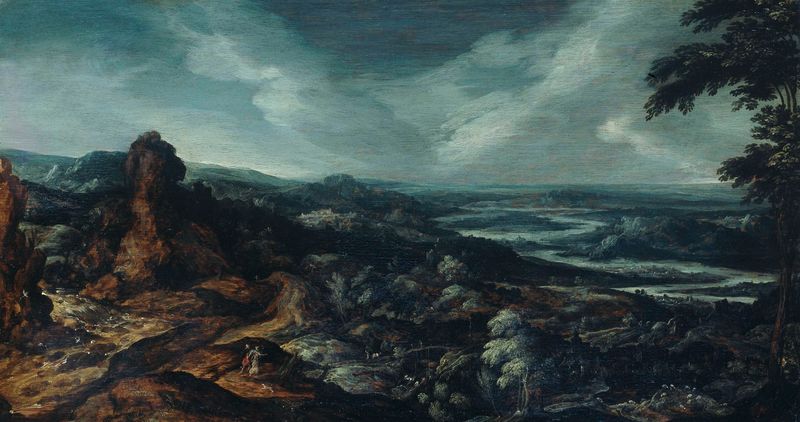
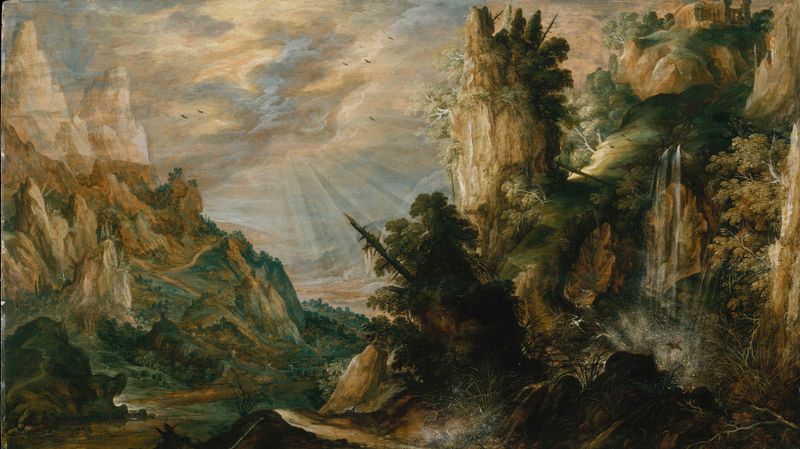
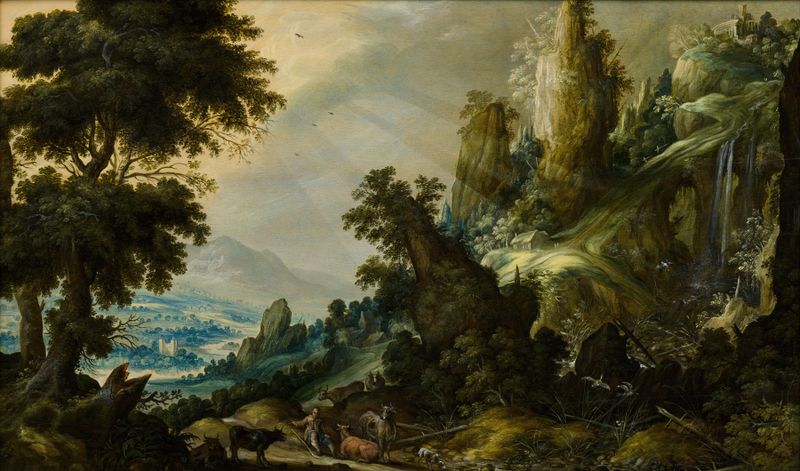
Can beauty exist without sorrow? In Landscape with Conversion of Saint Paul, a delicate balance unfolds, revealing the emotional depths hidden within a seemingly serene landscape. As the viewer gazes upon this scene, they are invited to explore the interplay of light and shadow, where the breathtaking vistas juxtapose the turmoil of human experience. Focus first on the dynamic sky, where the bright, swirling clouds contrast against the darkened foreground. The artist masterfully employs a palette of earthy greens and soft blues, drawing our eyes toward the figures of Saint Paul and his companions.
Notice how the light bathes the central figure, creating a divine aura that suggests a moment of profound revelation amid the tranquil backdrop—a visual dialogue between the sacred and the mundane. Within the landscape, echoes of emptiness resonate through the meticulously rendered details. The expansive terrain, though beautiful, feels haunting in its isolation, emphasizing the solitary journey of faith and transformation. The figures seem dwarfed by nature, hinting at the insignificance of humanity in the grand tapestry of existence.
This tension between the vast, empty landscape and the pivotal moment of conversion underscores a paradoxical yearning for redemption amid an overwhelming sense of solitude. Kerstiaen de Keuninck painted this work between 1600 and 1625, during a time when the Baroque movement was gaining momentum in Europe. Living in a rapidly evolving artistic world, de Keuninck sought to blend realism with emotional depth, capturing moments of intense spiritual significance. The societal and religious upheavals of the period undoubtedly influenced his vision, as he navigated the complexities of faith and human experience in his art.