A Mountainous Landscape with a Waterfall — History & Facts
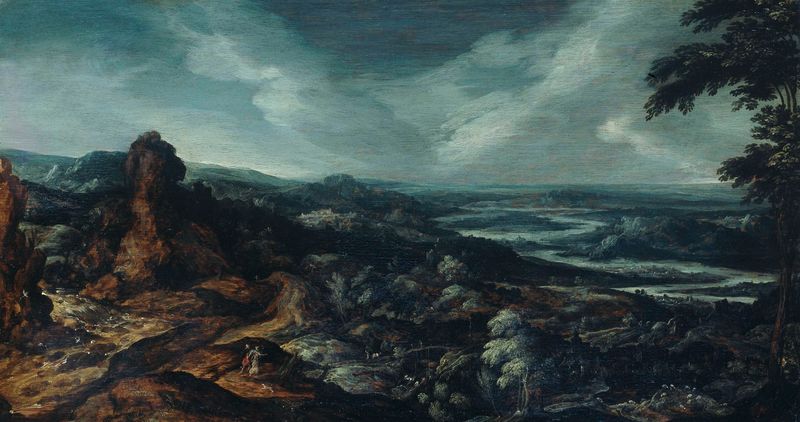
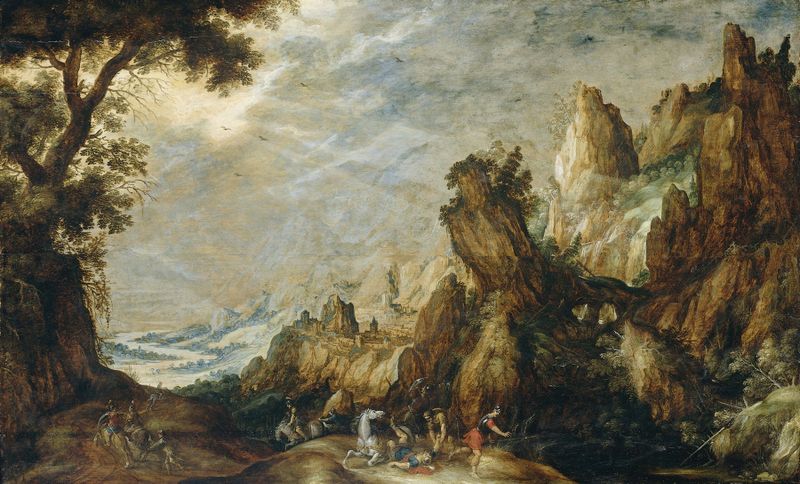
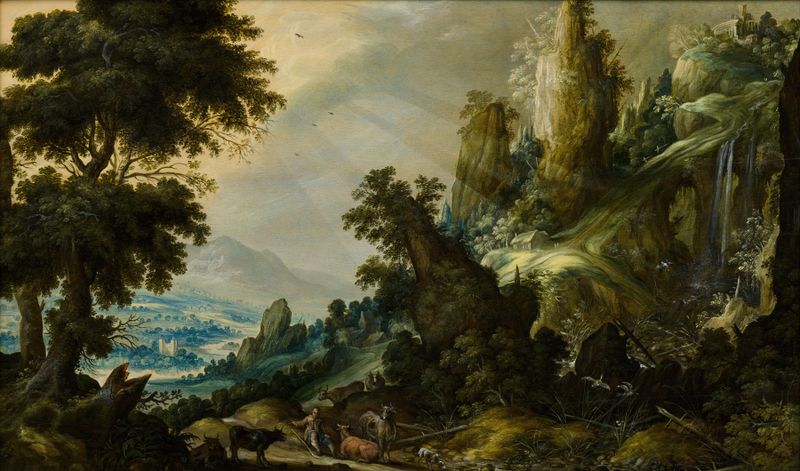
The fragility of existence is laid bare in the serene embrace of nature, where each element speaks volumes beyond the visible. In this mountainous landscape, the interplay of light and shadow composes a delicate symphony, urging viewers to listen to what lies beneath the surface. Focus on the cascading waterfall, its gentle flow drawing your eye downwards. Notice how the sunlight breaks through the heavy clouds, illuminating the vibrant greens of the foliage and the rich browns of the earth.
The composition leads you through a labyrinth of towering mountains and lush valleys, each detail meticulously rendered. Rich hues blend harmoniously, creating a tranquil atmosphere that invites contemplation. Amidst this grandeur, hidden tensions emerge—the juxtaposition of the solid mountains against the transient waterfall evokes a sense of impermanence. The stillness of the landscape, punctuated by the movement of water, reflects the duality of strength and vulnerability inherent in nature.
It speaks to the fragility of life, where moments of beauty are often fleeting, yet profoundly impactful. Kerstiaen de Keuninck painted this work in 1600, during a time when the Northern Renaissance was flourishing. Residing in the Netherlands, he was influenced by the naturalistic approach of his contemporaries, striving to capture the essence of the landscape around him. This period was marked by a growing appreciation for the sublime qualities of nature, setting the stage for future explorations of the sublime in art.