Landscape with Figures — History & Facts
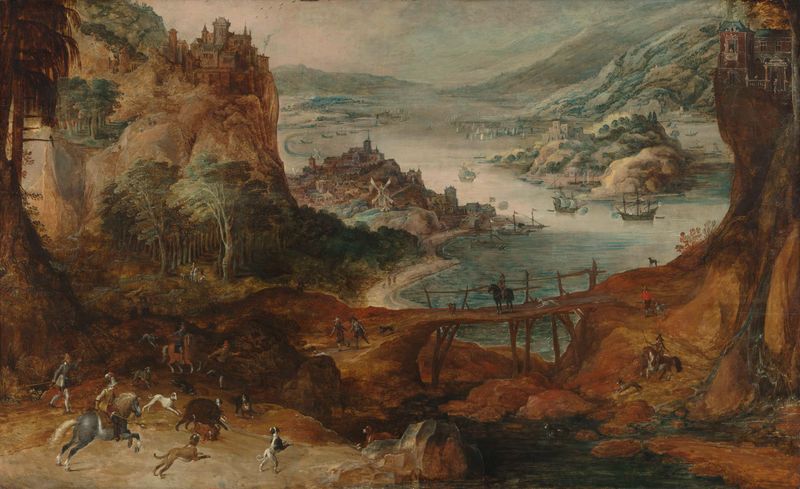
Where does light end, and longing begin? This question lingers in the air as one gazes upon a tranquil yet haunting landscape, where nature and humanity intertwine in delicate harmony. Focus your attention on the luminous sky that dominates this composition. Notice how the soft hues of dawn blend seamlessly into the cool twilight, casting an ethereal glow across the rolling hills. To the left, a cluster of figures meanders through the verdant underbrush, their small forms dwarfed by the expansive landscape, inviting you to ponder their thoughts and aspirations.
The brushwork is meticulous, with each stroke capturing the essence of the trees and the fluid motion of the clouds, creating an illusion of depth that pulls the viewer into a serene yet contemplative world. Beneath the surface of this idyllic scene lies a tension between reality and aspiration. The figures, seemingly lost in conversation, evoke a sense of longing, each connected to the landscape yet separated by their own narratives. The gentle contrast between the lush greenery and the distant, barely visible mountains symbolizes the human desire for connection and the often unattainable nature of dreams.
The light that bathes the scene serves as a metaphor for hope, illuminating the figures’ path yet reminding us of the shadows that linger in the corners of their lives. Created around 1610, this work emerged during a pivotal moment for its creator, who was deeply influenced by the burgeoning genre of landscape painting. Working in the vibrant artistic community of Antwerp, he explored new techniques that blurred the lines between reality and illusion, reflecting the broader artistic trends of his time. This period saw a fascination with nature as both a subject and a backdrop, allowing him to express not only the beauty of the world but also the complexities of human emotion.