Mountain Landscape — History & Facts
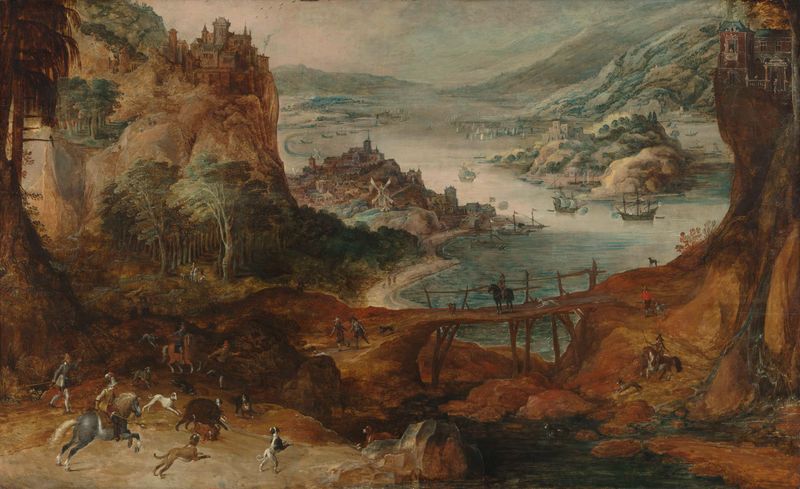
In the realm of mountain landscapes, time stands still, and yet, it pulses with the energy of endless possibilities. Look to the foreground, where towering pines rise majestically against a backdrop of rugged peaks. The artist’s meticulous brushwork brings the foliage to life, each stroke revealing the variations in green that hint at the changing seasons. Notice how the light falls upon the mountains' craggy surfaces, bathing them in hues of blue and gray, while a golden glow from the horizon indicates the sun's imminent descent.
This interplay of light and shadow creates a rhythm, inviting the viewer to journey deeper into the scene. The composition evokes a sense of both grandeur and isolation. The expansive sky, a tapestry of soft pastels, contrasts sharply with the dark, earthy tones of the trees and rocks below, reflecting the duality of nature—its beauty and its harshness. Hidden within the layers of color lie whispers of time, suggesting that these mountains have witnessed countless moments, the silence of their presence echoing through history.
The viewer is left contemplating their own place in this timeless expanse, pondering what stories these towering giants might tell. Joos de Momper II painted this landscape around 1610, during a time when the Northern Renaissance was flourishing. Working in Antwerp, he developed a distinctive style that combined realism with a romanticized view of nature. His works often reflected the growing interest in landscape painting, capturing the essence of a world that was expanding in both knowledge and aesthetic appreciation.
In this period of artistic transition, de Momper’s reverence for nature stands as a testament to the era's evolving values.