Landscape With Hiker — History & Facts
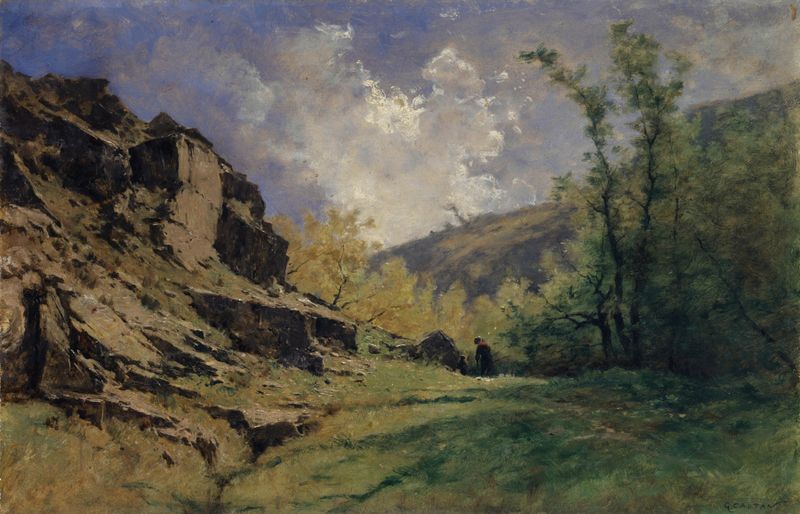
This sentiment captures the essence of a world on the brink of transformation, where nature and human endeavor intertwine. What does it mean to seek solace in the wild, to find oneself amidst the tumult of change? In this painting, the landscape speaks of revolution—not just in societal terms, but in personal journeys as well. Look to the center of the canvas, where a solitary hiker navigates through a vibrant tableau of rolling hills and dramatic skies. The soft, swirling brushstrokes create a sense of movement, drawing your eye along the path the figure takes.
Notice how the light dances across the peaks, casting shadows that evoke both mystery and promise. The lush greens and earthy browns are punctuated by splashes of golden sunlight, illuminating the hiker's form and inviting you into the expansive wilderness. Upon closer inspection, the contrasts in the painting reveal deeper emotional tensions. The hiker's solitude amidst the vast landscape speaks to both freedom and vulnerability—the dual nature of embarking on a journey of self-discovery.
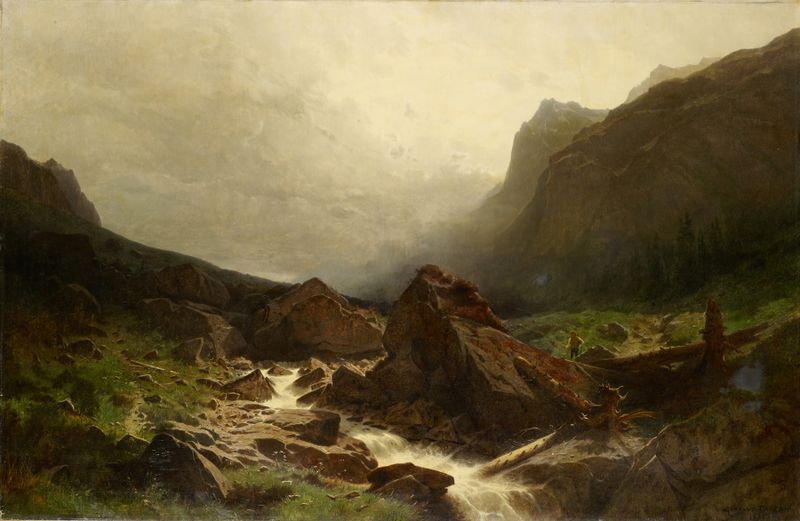
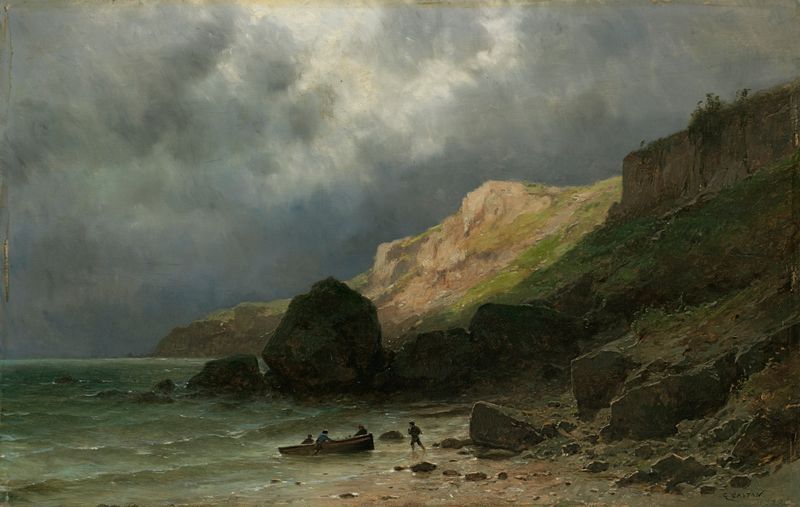
Meanwhile, the turbulent clouds overhead hint at the unrest felt in the world outside this serene moment, a juxtaposition between inner peace and external chaos. These subtle details resonate with the viewer, urging contemplation of one's place in an ever-changing world. Gustave Castan created this work amidst a shifting artistic landscape in the late 19th century. While little is known about the precise date, his engagement with naturalism and the exploration of human emotion reflected broader trends in the art world, where artists began to celebrate the individual experience against the backdrop of societal upheaval and transformation.
Castan’s work invites us to reflect on our own paths through such landscapes of change.