Harvest at the Border of a Forest — History & Facts
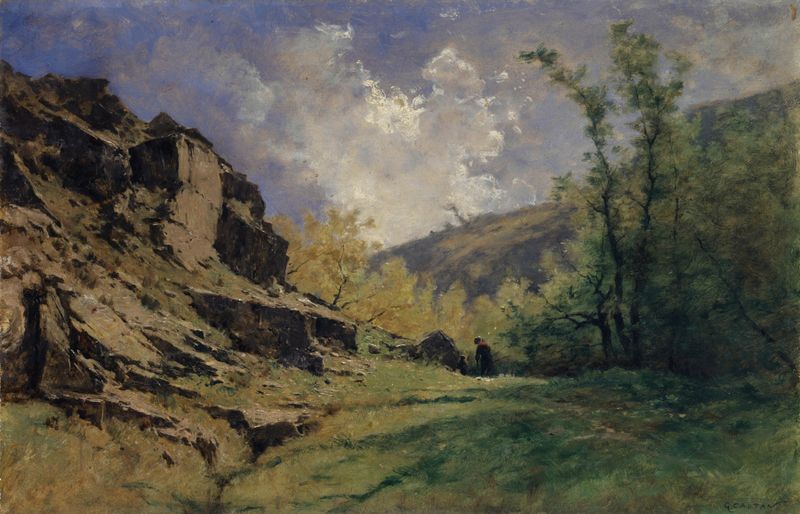
In that delicate balance between preservation and decay lies the essence of awakening, captured with fervor and intent. Look to the vibrant colors of the field, where golden wheat sways like waves in a sea of sunlight. The brushstrokes evoke movement and life, guiding the eye to the figures laboring amid nature's bounty. Notice how the dappled light filters through nearby trees, casting intricate shadows that dance across the earth, hinting at the passage of day and the cyclical nature of harvest.
Each element is meticulously rendered, revealing Castan's mastery of texture and form. The painting speaks to the contrasts of labor and tranquility, the diligent workers finding solace in their toil. The juxtaposition of the foreground's vibrant activity against the stillness of the forest behind enhances an emotional depth; it suggests a moment of connection between mankind and nature. The forest, a symbol of both mystery and refuge, looms quietly, evoking a sense of timelessness, while the harvest signifies the fruits of hard work and the essential rhythm of life. In 1872, Castan painted this piece during a time of burgeoning realism in art, as artists sought to capture the authenticity of modern life.
Working in France, he was influenced by the naturalism movement that emphasized everyday subjects and the beauty of the ordinary. This period marked a significant shift away from romantic ideals, and Castan's approach reflected a growing appreciation for the simple yet profound moments found in the landscape and the human experience.