Rocky Landscape — History & Facts
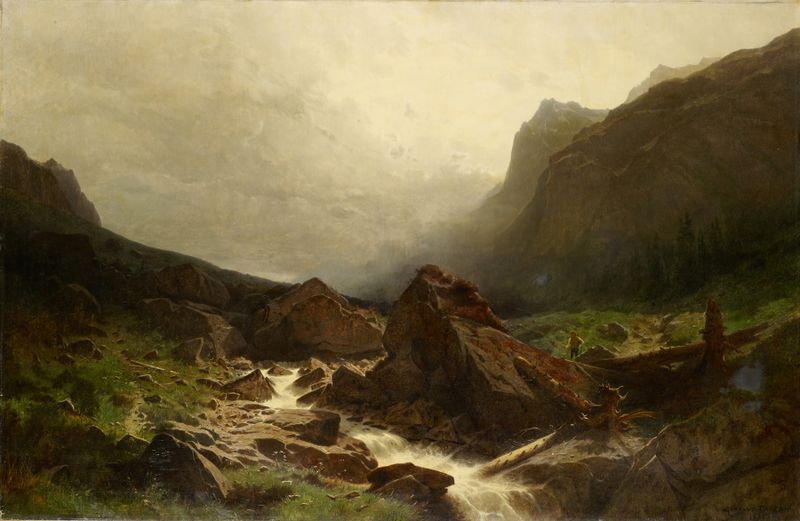
Did the painter know this moment would outlive them? In the solitude of a rocky expanse, there lies a world where time stands still, inviting contemplation on mortality and legacy. Look to the foreground, where jagged stones rise defiantly against a backdrop of muted earth tones. The textures are palpable; the artist's brushwork captures every crevice and shadow with a tactile precision that seems to breathe life into the landscape. Notice how the light filters through the clouds, casting a gentle glow that highlights both the resilience of the rocks and the fragility of the fleeting moments they encapsulate. Beneath the surface of this rugged beauty, deeper meanings resonate.
The stark contrasts between light and shadow evoke the duality of existence—the struggle between permanence and transience. Each rock, a monument to endurance, stands in stark opposition to the ephemeral clouds that drift lazily above, suggesting that while the mountains may endure, the skies—and time—are forever changing. This tension invites viewers to ponder their own place in the continuum of life. Created during a period of personal introspection, Rocky Landscape emerged as Gustave Castan grappled with his artistic identity.
Working in the late 19th century, in a time of shifting artistic paradigms, he found comfort in the natural world, expressing a profound connection to the landscapes that surrounded him. This period in his life marked a pivotal moment of exploration, as he sought to convey not just the physicality of nature, but its enduring legacy—an echo that resonates even today.