Landscape With Pheasants — History & Facts
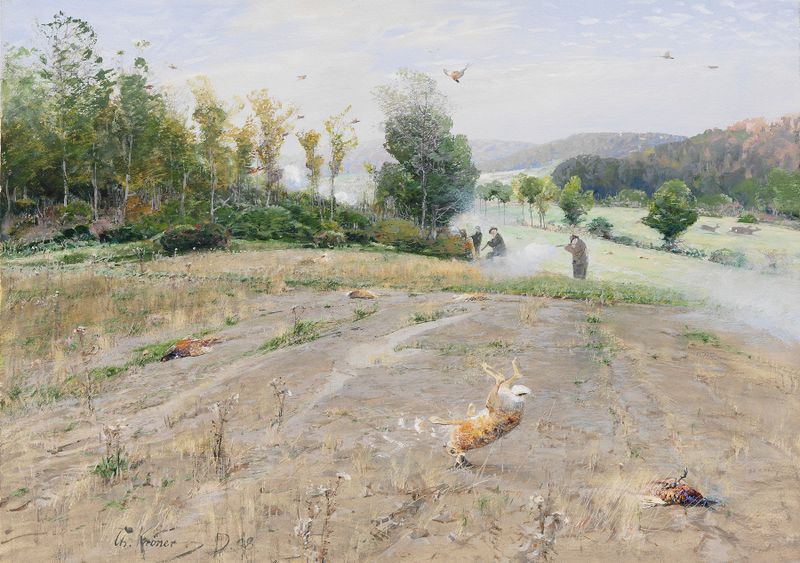
In Landscape With Pheasants, the divine unfolds through the tender embrace of nature, inviting viewers to reflect on the unseen connections that bind us to the earth. Look to the foreground where a pair of vibrant pheasants strut beneath a gentle canopy of trees. Their feathers burst forth in radiant hues of gold and emerald, contrasting with the muted greens and browns of the landscape. The brush strokes are deliberate yet soft, capturing the essence of the moment while hinting at the tranquility that envelops the scene.
Notice how the dappled sunlight filters through the leaves, creating a mosaic of light and shadow that dances across the ground. Delve deeper into the serene atmosphere conveyed by the artist. The pheasants, symbols of beauty and grace, seem to remind us of the divine presence in everyday life. Their peaceful coexistence against the backdrop of nature may evoke themes of harmony and fragility, reflecting a world that often overlooks the sacred in the mundane.
The calm waters in the distance act as a mirror, suggesting introspection and the hidden depths of existence. Christian Kröner created this painting in 1906 while living in Germany, a time when the art movement was shifting towards a more emotional and expressive approach. Influenced by the naturalist tradition, he sought to capture the interplay between wildlife and the landscape, all while navigating the complexities of modern life. This piece reflects his commitment to portraying the beauty of the natural world, as well as his dedication to exploring the spiritual dimensions of nature.