Landscape with Procession — History & Facts
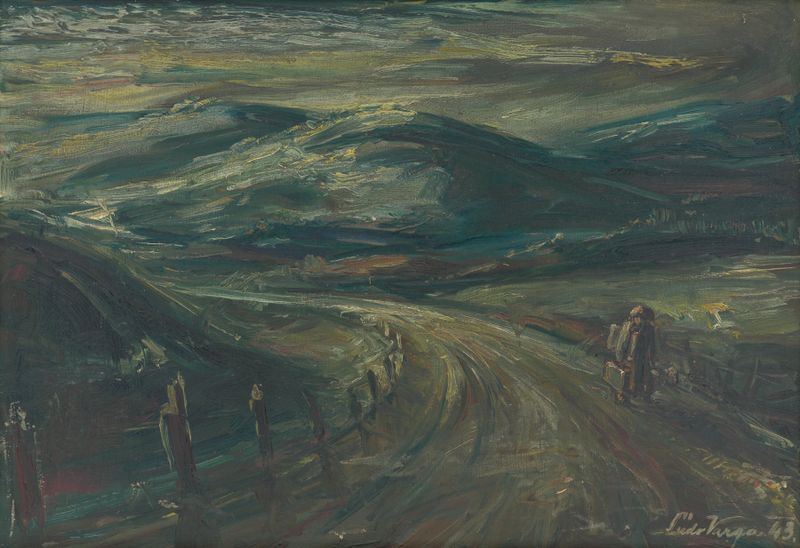
A quiet village path winds through the landscape, flanked by solemn trees that stand as silent witnesses to a procession unfolding. Figures shrouded in dark clothing move slowly, their heads bowed, casting long shadows in the fading light of dusk. The air is thick with unspoken sorrow, as if the earth itself mourns with them, wrapping the scene in a cloak of melancholy. Look to the left, where the procession begins, and notice how the muted palette of grays and deep greens captures the somber mood.
The figures, rendered with a delicate touch, seem almost ghostly against the backdrop of a waning sun. Focus on the way the light catches the edges of their garments, creating a halo effect that highlights their collective grief. The composition leads the eye along the path, inviting viewers to follow the marchers deeper into the landscape—an uncomfortable journey through shared loss. Delve into the contrasts in this work: the stillness of the trees versus the slow movement of the procession, the rich, dark colors of the figures against the lighter hues of the sky.
Each element draws parallels between nature and human emotion, suggesting a deep connection between the two. The quiet, almost oppressive atmosphere resonates with a sense of inevitability, as if the participants are bound to their fate, moving together through pain and memory. In 1943, when this piece was created, Ľudovít Varga found himself amid the turbulent realities of World War II in Europe. Living in an era marked by turmoil, loss, and instability, the artist poured his reflections on grief and communal sorrow into this poignant landscape.
It reflects both his personal experience and the broader human condition, as art sought meaning amidst chaos.