Landscape with Travellers — History & Facts
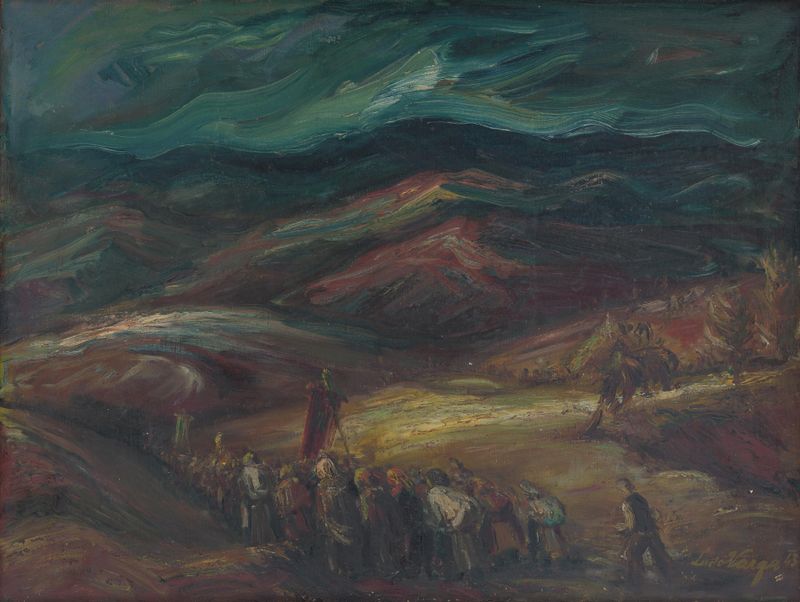
Could a single brushstroke hold eternity? The longing depicted in Landscape with Travellers captures a profound desire for connection, movement, and exploration amidst the vastness of the world. Look to the sweeping horizon, where soft greens meet the gentle blues of the sky. The travelers, clad in muted tones, are positioned on the left, their figures small against the grand landscape. Notice how the light dances across the undulating hills, creating a sense of depth and inviting the viewer to wander alongside them.
The composition is deftly structured, guiding the eye through a rhythmic interplay of color and form, symbolizing both journey and hope. The emotional tension in the painting lies in its contrasts: the travelers, symbolizing human aspiration, against the expansive backdrop representing nature's indifference. Their small stature suggests vulnerability yet evokes a sense of freedom, hinting at the bittersweet nature of ambition. Delve into the brushwork; each stroke is deliberate, echoing the pulse of their desires as they traverse a path that seems both inviting and perilous. In 1943, Ľudovít Varga painted this work during a tumultuous time in Europe, marred by war and strife.
Working in Czechoslovakia, he was influenced by the shifting dynamics of his surroundings, grappling with the themes of displacement and longing. This artwork stands as a testament to the resilient spirit of humanity amid uncertainty, capturing a moment of quiet yearning in a world fraught with chaos.