Landscape with Ruined Castle on the Esk — History & Facts
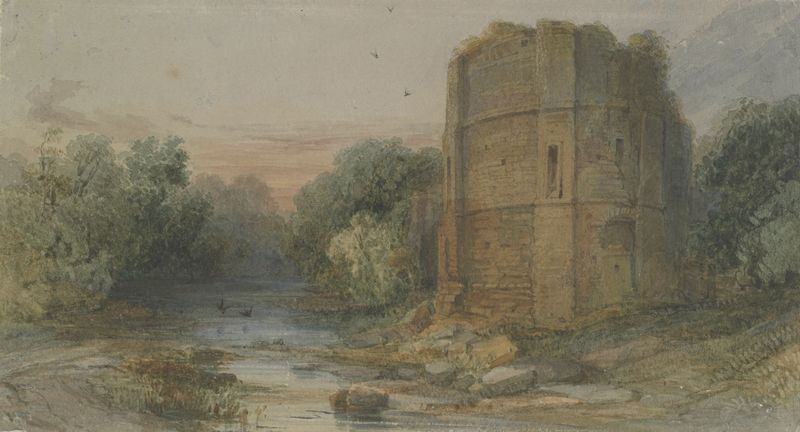
Within this stillness lies a haunting madness, echoing the remnants of history and the weight of time. Here, a landscape unfolds, where nature and decay entwine, revealing the fragile thread between beauty and ruin. Look to the left at the crumbling structure that rises starkly against the verdant backdrop, a testament to a once-mighty castle now surrendering to elements. The muted greens and browns dominate the canvas, interspersed with muted blues that hint at a somber sky.
Notice how the light subtly caresses the stone, casting shadows that dance with the whispers of the past, creating an interplay between the vibrancy of life and the inevitability of decay. Amidst the tranquil scenery, hidden meanings unravel. The ruined castle serves as a poignant metaphor for the fragility of human ambition, a reflection on the madness of progress that leads to inevitable decline. The surrounding flora, lush yet encroaching, suggests nature’s relentless reclamation, presenting a contrast between human achievement and the inexorable passage of time.
The serenity of the landscape belies an underlying tension, evoking questions of legacy and the insanity of forgetting history. Richard Principle Leitch painted this mesmerizing work in 1874, during a period when the Romantic movement was giving way to the Impressionist influence in Britain. He was captivated by the picturesque ruins that dotted the landscape, channeling his fascination into canvases that merged the enchanting with the eerie. The world was witnessing a transformation, and within this shift, Leitch found solace in capturing the interplay between the enduring and the ephemeral.