Ruins by a stream — History & Facts
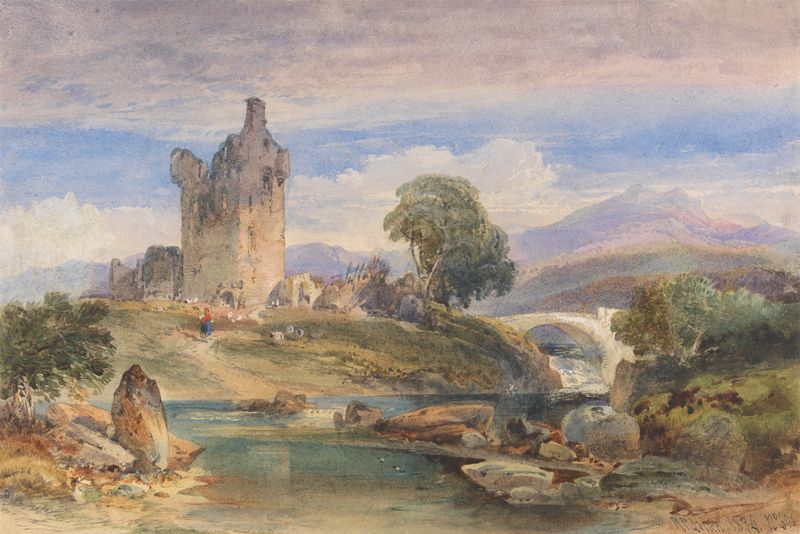
When did color learn to lie? In the delicate interplay of hue and shadow, a world of awakening lies beneath the surface, waiting for the keen observer to discover its secrets. Look to the center of the canvas where a gentle stream winds through the remnants of ancient stone structures, their crumbling forms softened by the caress of greenery. Notice how the light cascades through the leaves, casting dappled reflections on the water, contrasting the vitality of nature with the stillness of decay. The artist employs a muted palette, with earthy tones that suggest both the passage of time and the resilience of life. As you explore the edges of the painting, consider the emotional tension between the vibrant greens of the foliage and the somber browns of the ruins.
This juxtaposition speaks to the theme of rebirth amidst destruction, where nature reclaims its territory, breathing life into the remnants of human achievement. The stillness of the water mirrors a sense of introspection, inviting viewers to contemplate the impermanence of existence and the cycles of renewal. Created during a period when the artist was grappling with personal and societal change, the artwork reflects a broader movement towards Romanticism in the late 19th century. Though the specific date remains uncertain, it is clear that Ruins by a stream embodies a contemplative moment where the artist sought to capture not just a scene, but a philosophical statement about life, memory, and the inevitability of change in both nature and humanity.