
Landscape with Sheaves — History & Facts
Can beauty exist without sorrow? In Landscape with Sheaves, the answer unfolds in a delicate interplay between the vibrant and the subdued, revealing layers of emotion woven into the fabric of creation. Look to the left, where golden sheaves of wheat emerge, their rich hues glowing under a sun dappled by drifting clouds. The horizon rolls gently, inviting the eye to explore the depth of the landscape. Notice how the textured brushstrokes capture the essence of the wind whispering through the fields, while soft blues and greens cradle the earth, creating a sanctuary for both growth and reflection.
The overall composition balances warmth and tranquility, yet hints at an undercurrent of yearning. Beneath the pastoral beauty lies a tension between abundance and transience. The sheaves, standing proudly, suggest the fruits of labor, yet their vulnerability is palpable—each moment of harvest a fleeting triumph. The light dancing across the scene evokes the passage of time, each ray illuminating not just what is present but also what is inevitably lost.
This duality serves as a poignant reminder that creation is often intertwined with loss, and the joy we glean from life is forever shadowed by its impermanence. Painted in 1903 during a period of artistic exploration, Landscape with Sheaves reflects Alfred Delaunois's immersion in the Post-Impressionist movement. At this time, artists were engaging with color and form in revolutionary ways, seeking to express the emotional resonance of the world around them. Delaunois's approach emphasizes a connection to nature, rooted in both personal experience and broader societal changes, marking a crucial juncture in his artistic journey.
More Artworks by Alfred Delaunois
Browse all →
View of a Premonstratensian Monastery
Alfred Delaunois
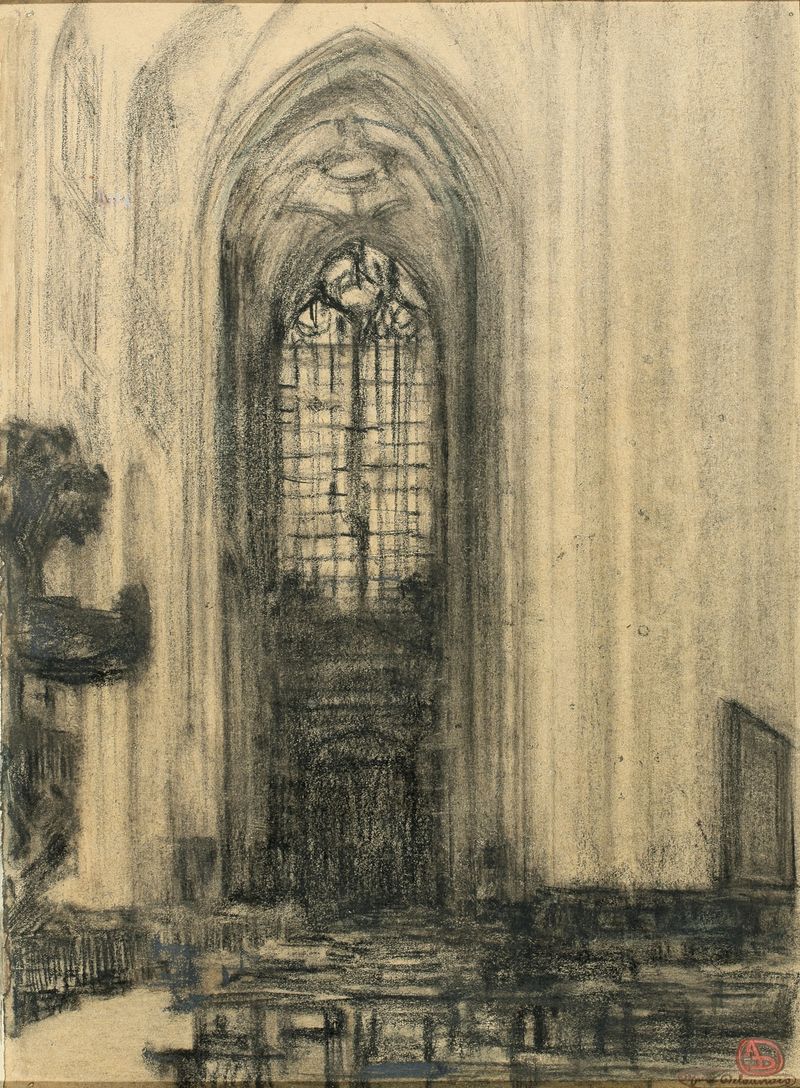
Interior of Saint-Peter’s Church in Louvain
Alfred Delaunois
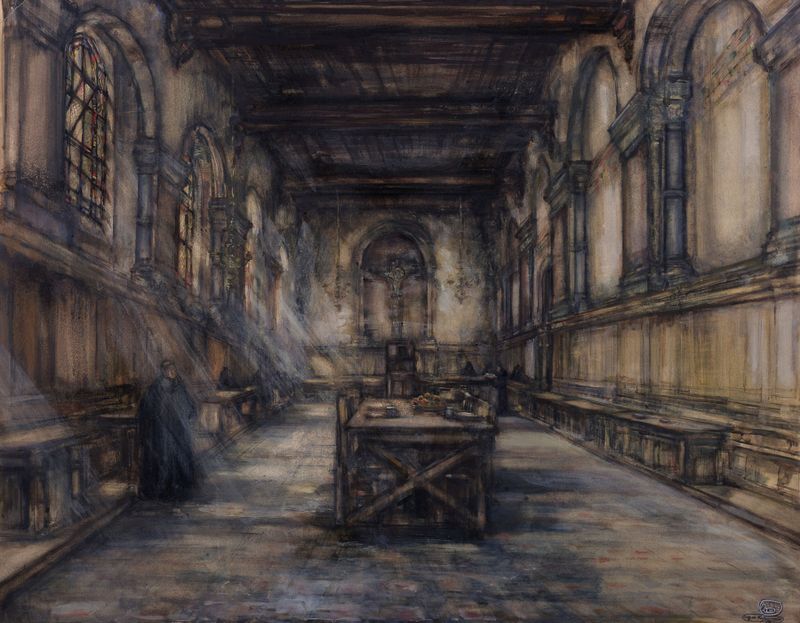
Refectory of the Keizersberg Abbey at Louvain
Alfred Delaunois
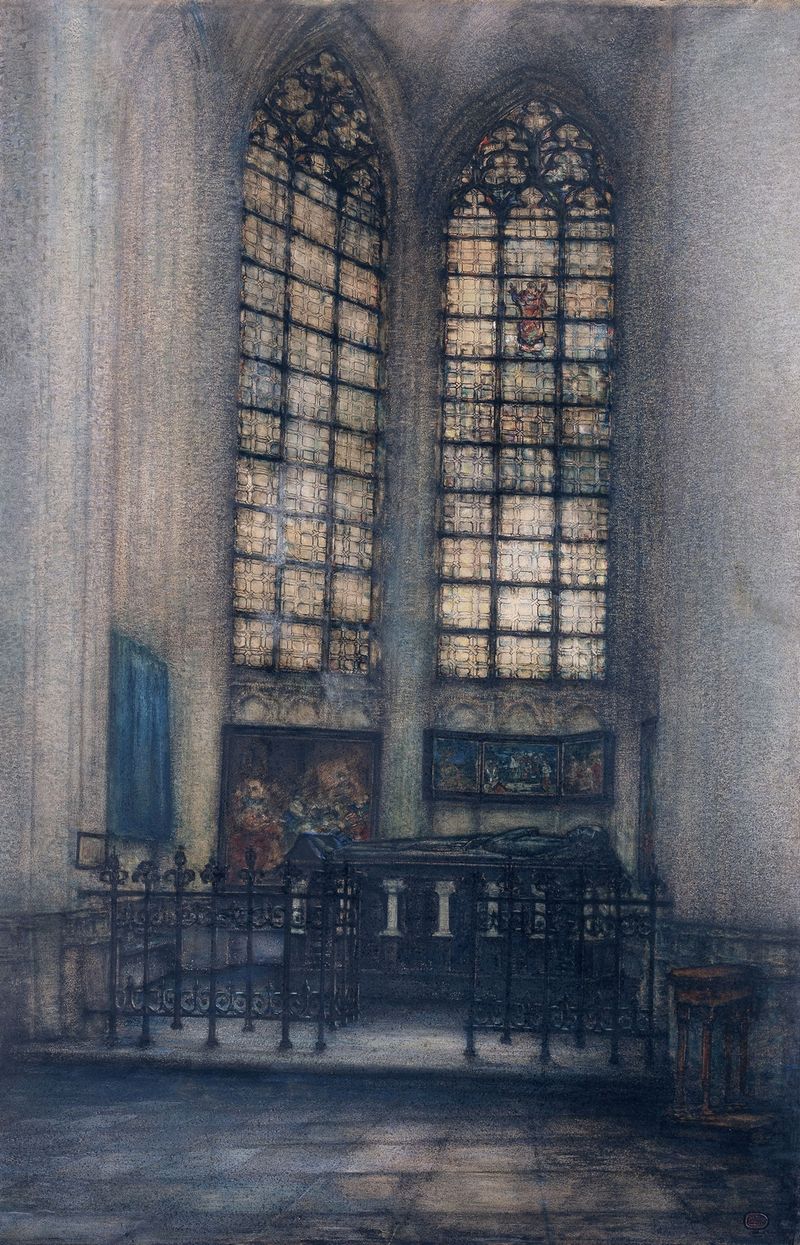
The Tomb of Henry I, the Count of Brabant, in Saint Peter’s Church in Leuven
Alfred Delaunois
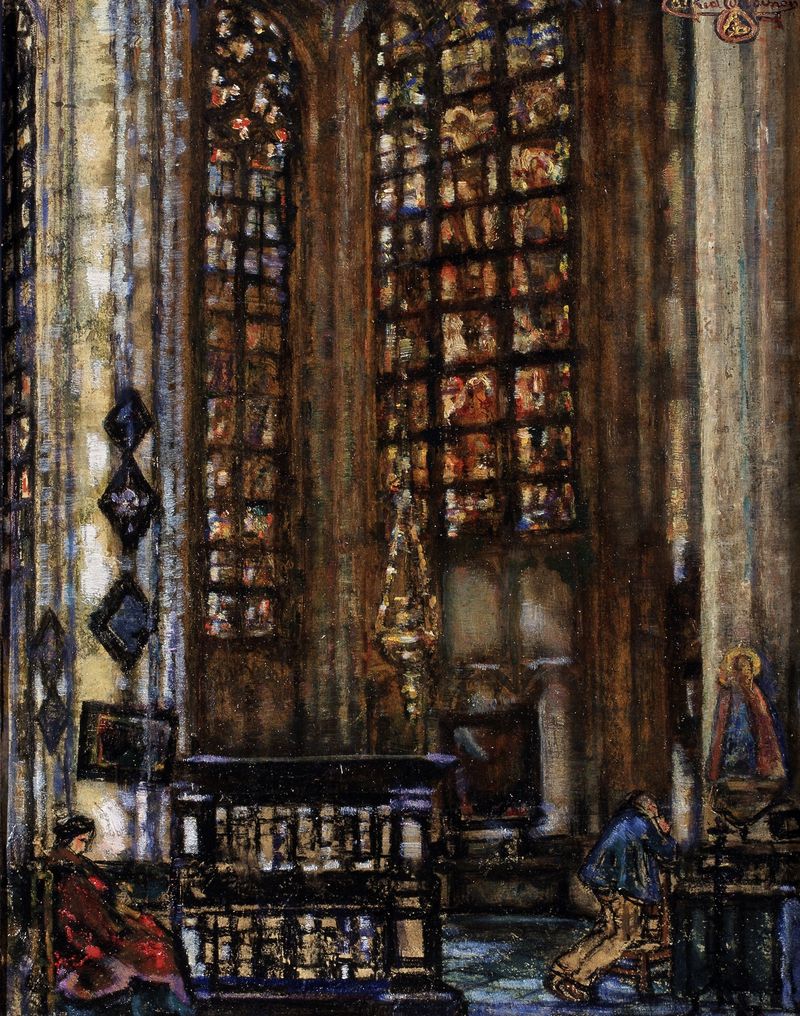
Interior of Saint Anne’s Chapel at Saint Peter’s Church in Louvain
Alfred Delaunois
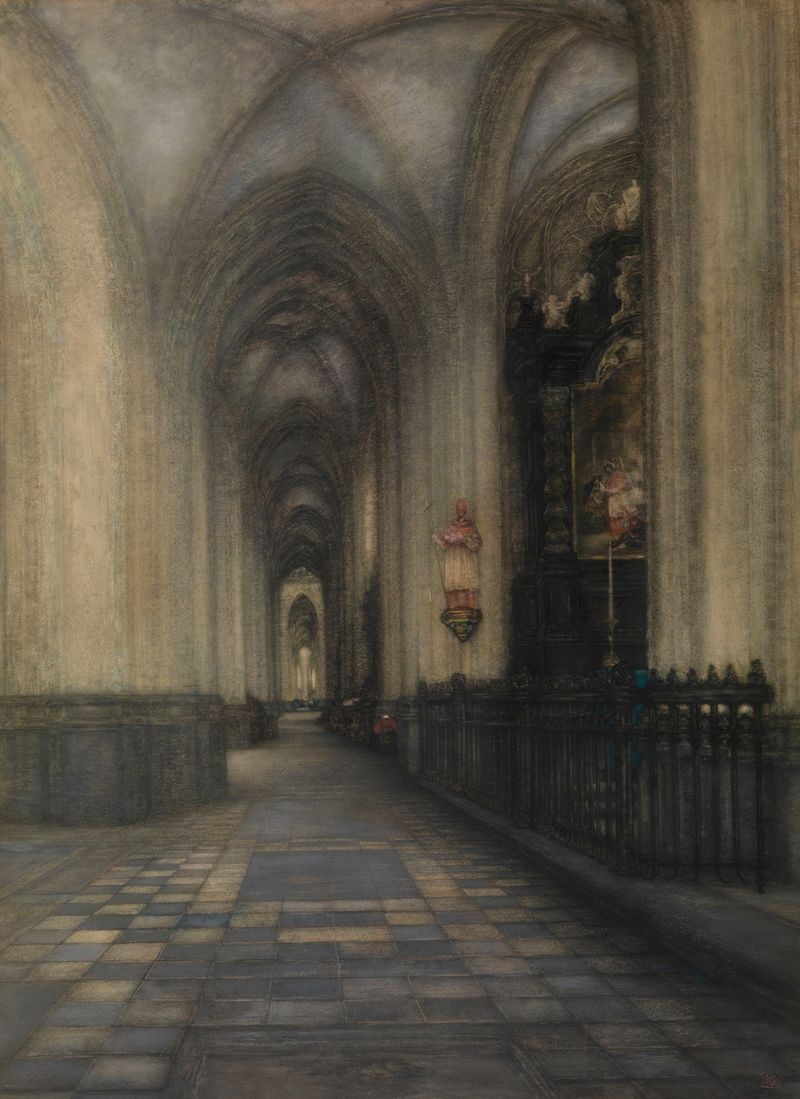
The St. Bartholomew’s Nave in the St. Peter’s Church in Leuven
Alfred Delaunois





