
The Tomb of Henry I, the Count of Brabant, in Saint Peter’s Church in Leuven — History & Facts
Could beauty survive in a century of chaos? The question lingers, echoing through time like a whisper in the stillness of a church, where art stands as a timeless testament to both loss and hope. In the face of encroaching uncertainty, The Tomb of Henry I, the Count of Brabant emerges, a shrine to longing and remembrance. Look first at the intricate details of the tomb, where delicate carvings dance across the stone surface. Notice the play of light on the soft, muted hues, illuminating the solemn figure of the count, forever at rest.
The composition draws your eye across the solemnity of the monument, the juxtaposition of grandeur against the weight of mortality, evoking a sense of reverence that encompasses the entire space. As you delve deeper, observe the emotional tension between permanence and transience that the artwork encapsulates. The surrounding foliage, carved with meticulous care, speaks of life continuing in the shadow of death, while the somber expression evokes an unfulfilled longing for what once was. Here lies a resonance with history—an acknowledgment of the legacies left behind amidst the turmoil of the 20th century. Alfred Delaunois created this piece in the early 20th century, a time marked by profound change and upheaval across Europe.
Living in Belgium, Delaunois was influenced by both the rich artistic heritage of his homeland and the conflicts that surrounded him. This work reflects not just an artistic endeavor, but a poignant response to the chaos of the era—an assertion that beauty can endure, even as history unfolds its harsh narratives.
More Artworks by Alfred Delaunois
Browse all →
View of a Premonstratensian Monastery
Alfred Delaunois
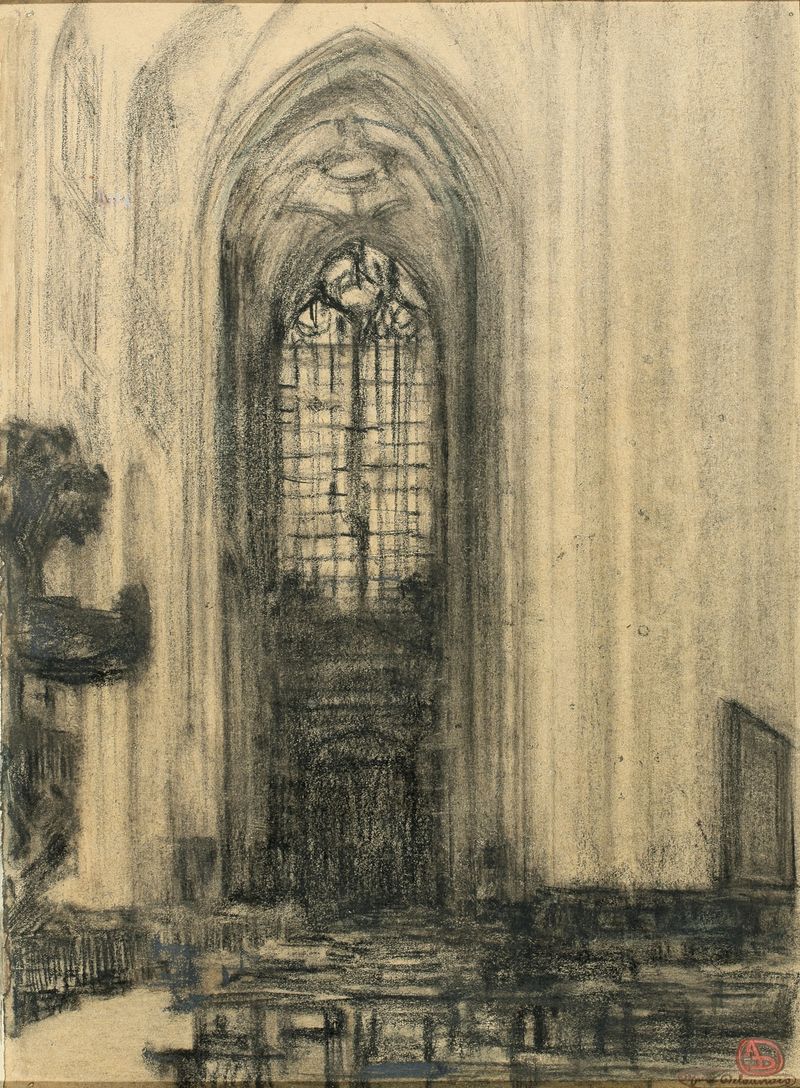
Interior of Saint-Peter’s Church in Louvain
Alfred Delaunois
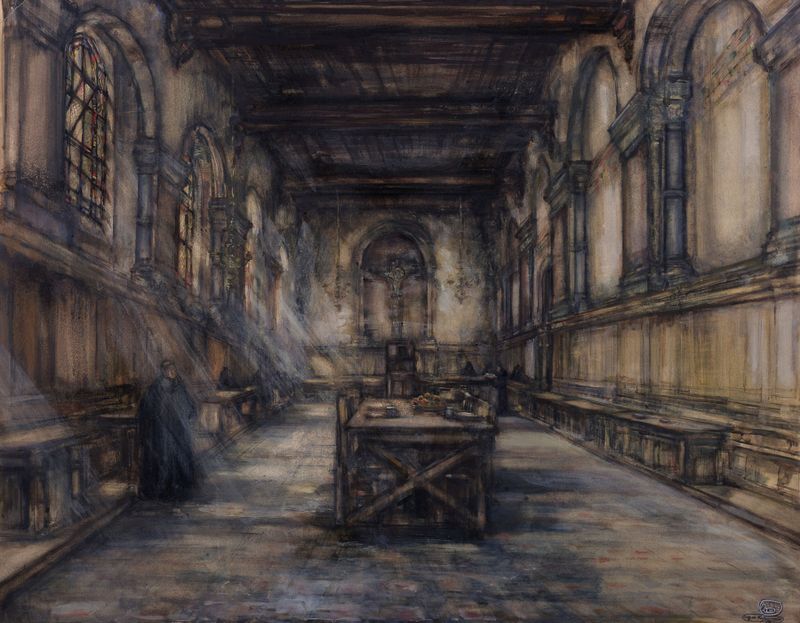
Refectory of the Keizersberg Abbey at Louvain
Alfred Delaunois
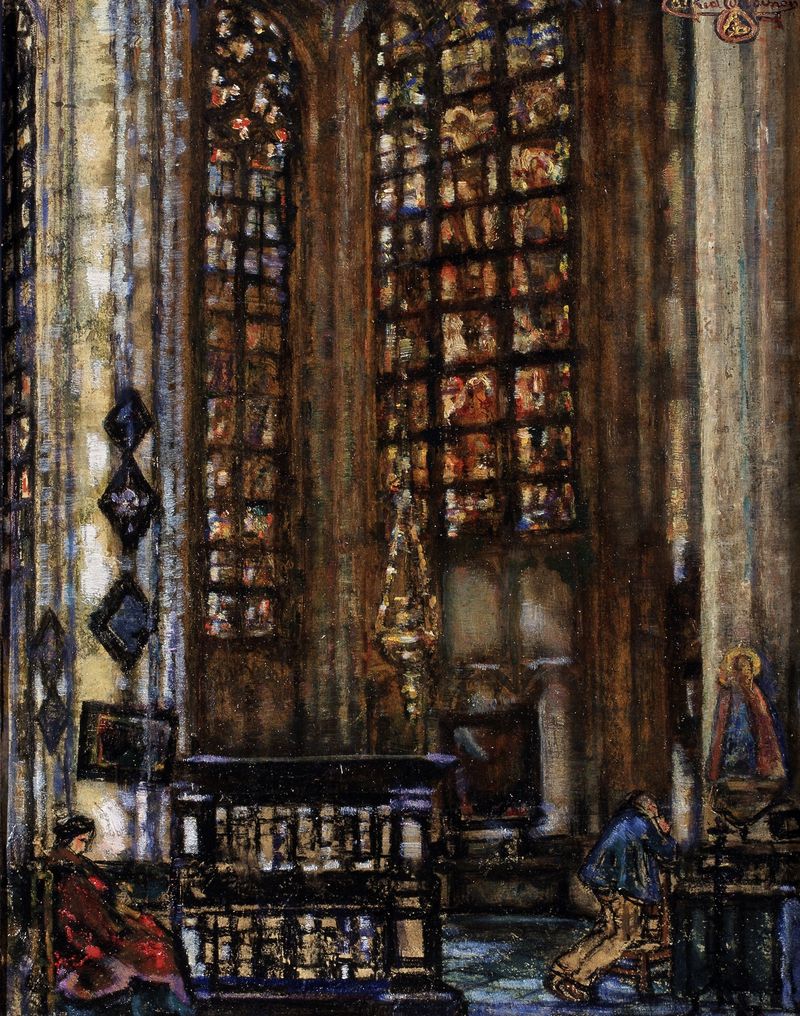
Interior of Saint Anne’s Chapel at Saint Peter’s Church in Louvain
Alfred Delaunois
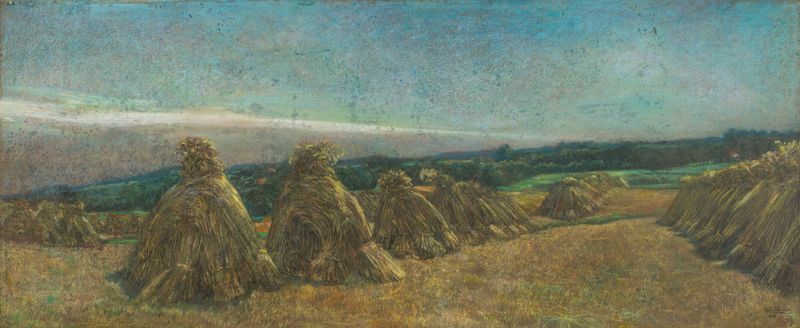
Landscape with Sheaves
Alfred Delaunois
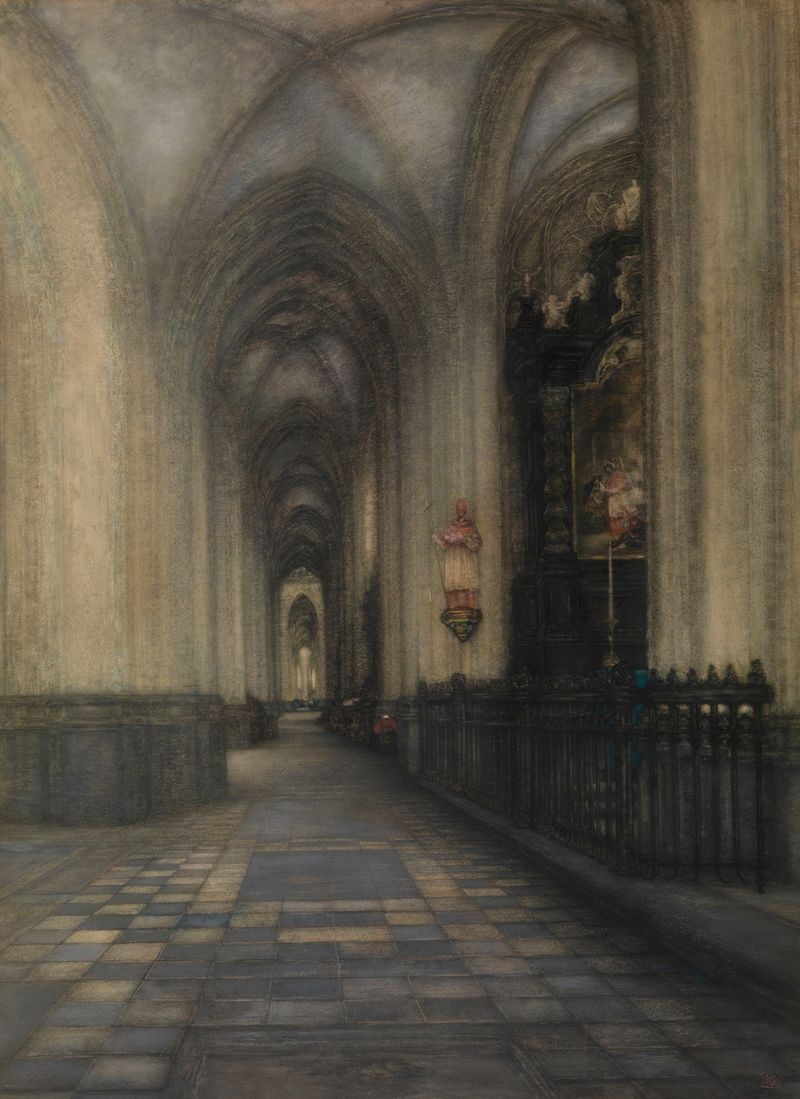
The St. Bartholomew’s Nave in the St. Peter’s Church in Leuven
Alfred Delaunois
More Architecture Art
Browse all →
The statue of Liberty
Frédéric Auguste Bartholdi

View of Houses in Delft, Known as ‘The Little Street’
Johannes Vermeer

View of Houses in Delft, Known as ‘The Little Street’
Johannes Vermeer

The Cathedral in Rouen. The portal, Grey Weather
Claude Monet

The yellow house
Vincent van Gogh

The Church in Auvers-sur-Oise, View from the Chevet
Vincent van Gogh