Landscape with the Judgement of Paris — History & Facts
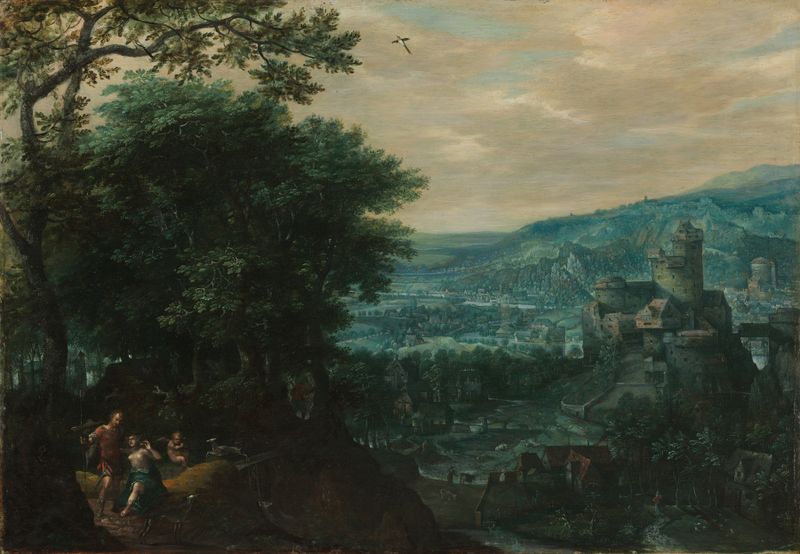
In the quiet embrace of shadows, the essence of our desires and choices often reveals itself. Look to the left of the composition, where the rich greens of the landscape cradle a scene of mythological significance. The light filters through the treetops with an ethereal glow, highlighting the vibrant figures engaged in their fateful decision. To the right, notice the subtle interplay of dark and light that creates a rhythm within the painting, guiding the eye toward the central moment of judgment.
Coninxloo’s palette is a harmonious blend of earthy tones, where the dappled sunlight creates both warmth and depth, inviting viewers to linger. At first glance, the immediate tableau of the three goddesses begs attention, yet it is the shadowy figures standing aside that convey a deeper narrative about the interplay of fate and choice. The contrast between the illuminated bodies and the muted figures around them suggests an underlying tension: the burdens of decision-making weighed against the allure of divinity. Here, the act of choosing is enveloped in ominous shadows, hinting at the inevitable consequences that follow.
Each stroke imbues a sense of foreboding, as the viewer realizes that beauty can yield both a gift and a curse. This work emerged from the brush of Gillis van Coninxloo during a time of transformation in the late 16th century. He was known for his landscapes that seamlessly intertwined the natural world with allegorical themes. Living in the Southern Netherlands, Coninxloo was influenced by the emerging trends of Mannerism and the Northern Renaissance, capturing an era filled with both artistic innovation and turbulent societal change.