
Landschaft bei Paris — History & Facts
What if silence could speak through light? In Landschaft bei Paris, the divine whispers of nature unfold in a tranquil embrace, capturing the essence of serenity in the swirling hues of the landscape. Look to the horizon where soft, muted greens blend seamlessly with delicate blues, inviting the viewer’s gaze to travel into an expanse that feels both infinite and intimate. Notice how the light cascades gently over rolling hills, casting a warm glow that highlights the textured brushstrokes of the foliage. The composition breathes with harmony, each element harmoniously arranged, while the subtle sky looms overhead, a celestial canvas that envelops the earth below. Deeper meanings linger within the layers of this peaceful view.
The juxtaposition of the lush greenery against the ethereal quality of the light evokes a sense of divinity, as if the landscape is a sacred space untouched by the chaos of human life. The quietude captured in the painting serves as a poignant reminder of nature’s tranquility, urging viewers to pause and reflect upon their own existence within the vastness of the world. Georges Michel painted Landschaft bei Paris between 1820 and 1830 during a time when Romanticism was flourishing. Living in France, Michel was engaged with a movement that emphasized the beauty of nature and the sublime.
His works often reflected a personal connection to the landscapes he portrayed, offering a response to the rapid industrial changes of his time and a longing for the pastoral ideal that seemed increasingly distant.
More Artworks by Georges Michel
Browse all →
The Approaching Storm
Georges Michel

Landschap met zandweg
Georges Michel
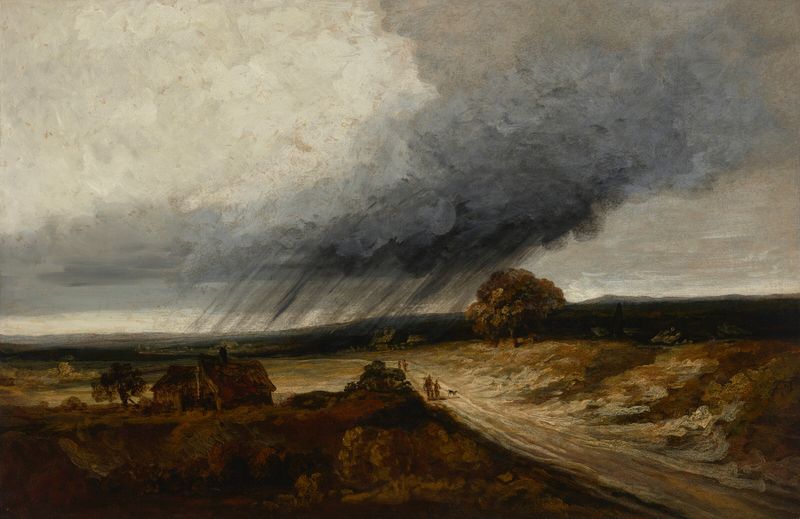
The Approaching Storm
Georges Michel

Landschap met overtrekkende bui
Georges Michel
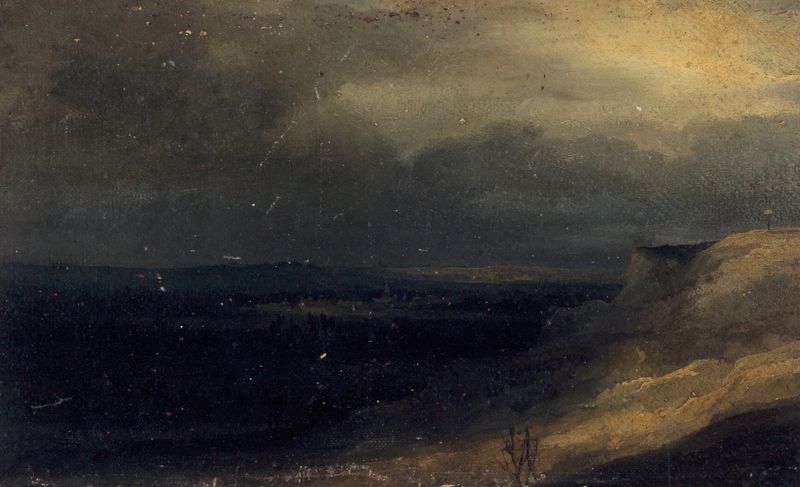
Vue présumée de Montmartre.
Georges Michel

Landschap met figuren en vee
Georges Michel

Approaching Storm
Georges Michel
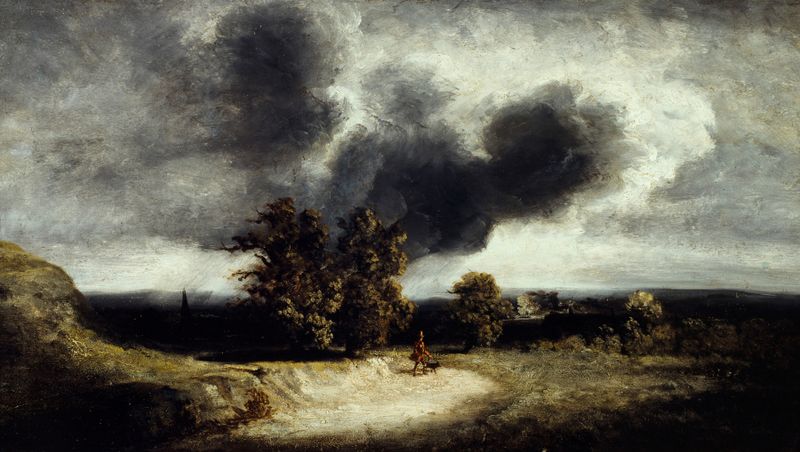
Paysage des environs de Paris.
Georges Michel

Gezicht op de Dome des Invalides uit de Champ de Mars
Georges Michel

Chaumière à la lisière d’un bois
Georges Michel





