
Landschap met zandweg — History & Facts
This sentiment echoes through the endless horizons of Landschap met zandweg, where nature’s splendor hardly conceals the weight of treachery lingering beneath its surface. Look to the left, where a winding sandy path cuts through a vibrant landscape, drawing the eye toward a distant horizon painted in soft, golden hues. The sky is a canvas of gentle blues and creams, while whispering clouds hover like secrets waiting to be uncovered. The artist's brushwork captures a moment of tranquil beauty, inviting the viewer to explore the delicate interplay of light and shadow that dances across fields teeming with life. Yet, beneath this serene facade lies an emotional tension that speaks of disillusionment.
The sandy road, while inviting, suggests a journey fraught with uncertainty, perhaps even a betrayal of the idyllic promise of nature. The lush greenery on either side contrasts with the barren path, evoking feelings of isolation amidst beauty. Every stroke seems to question: Is this serene landscape a refuge or a facade hiding deeper scars? Georges Michel created this landscape in 1800, during a time when the Romantic movement began to shift perceptions of nature and emotion in art.
Living in France amidst political upheaval and evolving artistic norms, he sought to capture the sublime beauty surrounding him while hinting at the complexities of human experience. This work reflects the transitional essence of his burgeoning career, as he sought to balance his admiration for nature with the looming shadows of a changing world.
More Artworks by Georges Michel
Browse all →
The Approaching Storm
Georges Michel

Landschaft bei Paris
Georges Michel
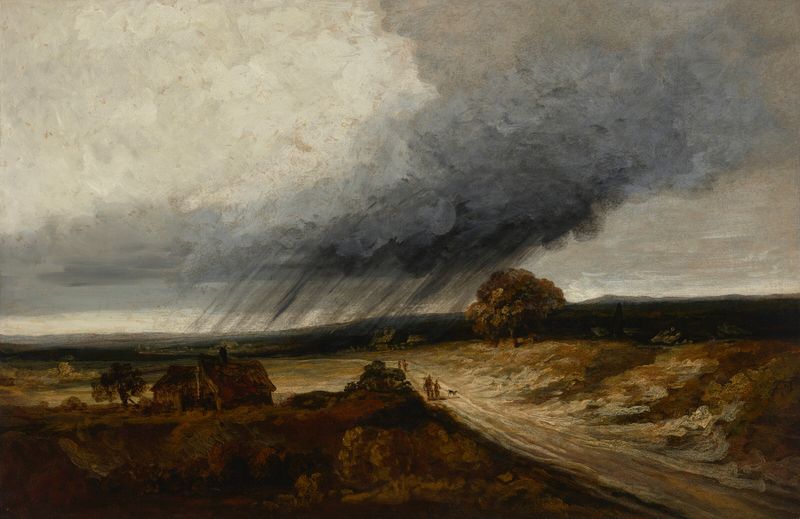
The Approaching Storm
Georges Michel

Landschap met overtrekkende bui
Georges Michel
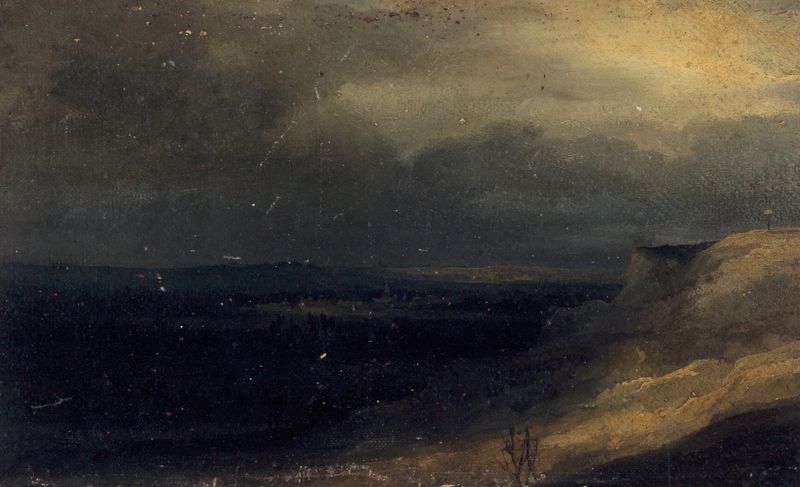
Vue présumée de Montmartre.
Georges Michel

Landschap met figuren en vee
Georges Michel

Approaching Storm
Georges Michel
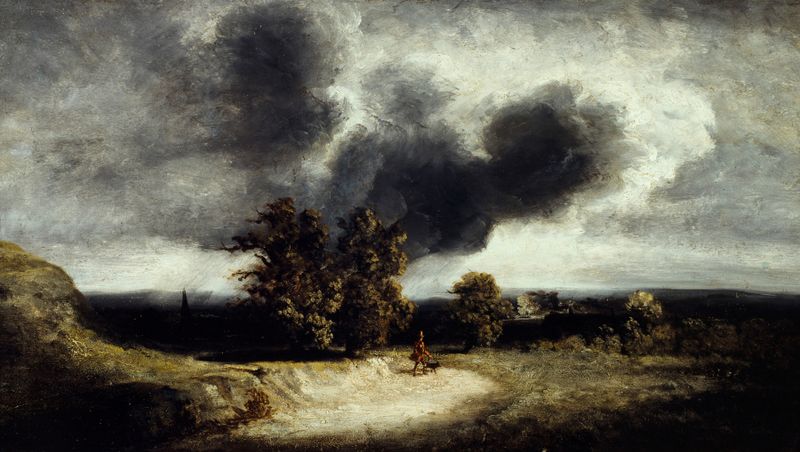
Paysage des environs de Paris.
Georges Michel

Gezicht op de Dome des Invalides uit de Champ de Mars
Georges Michel

Chaumière à la lisière d’un bois
Georges Michel





