Landschaft mit Bäumen, Weidegatter und Figuren — History & Facts
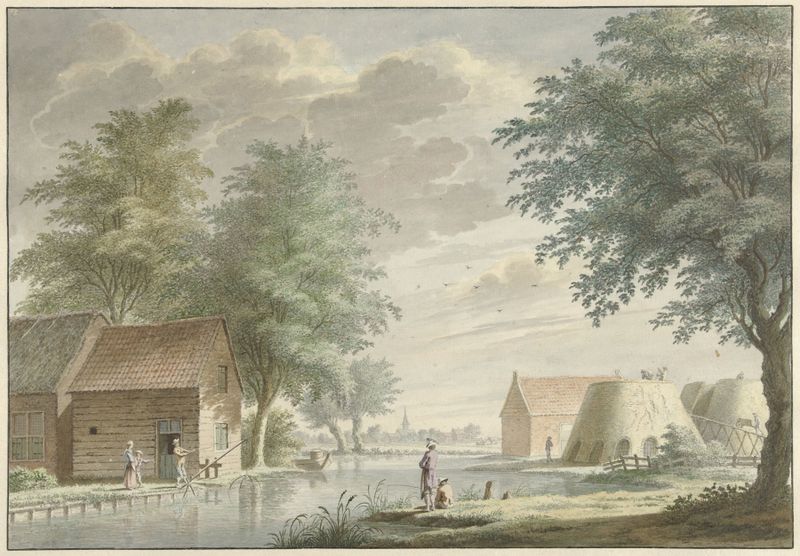
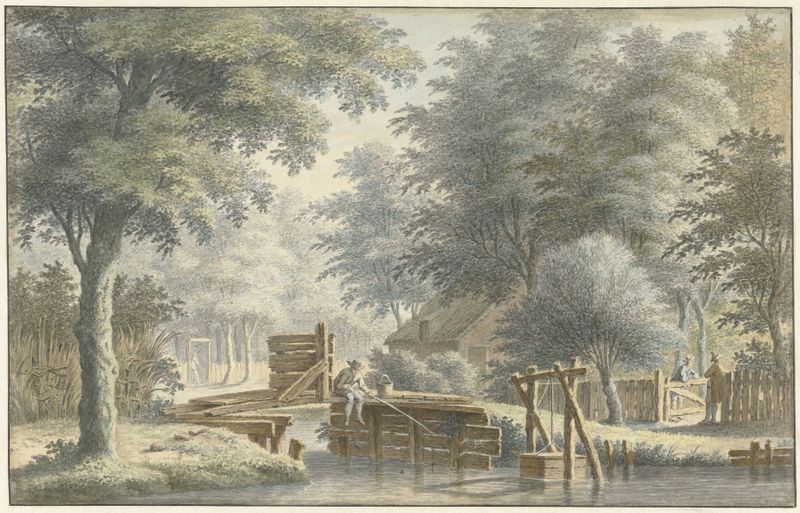
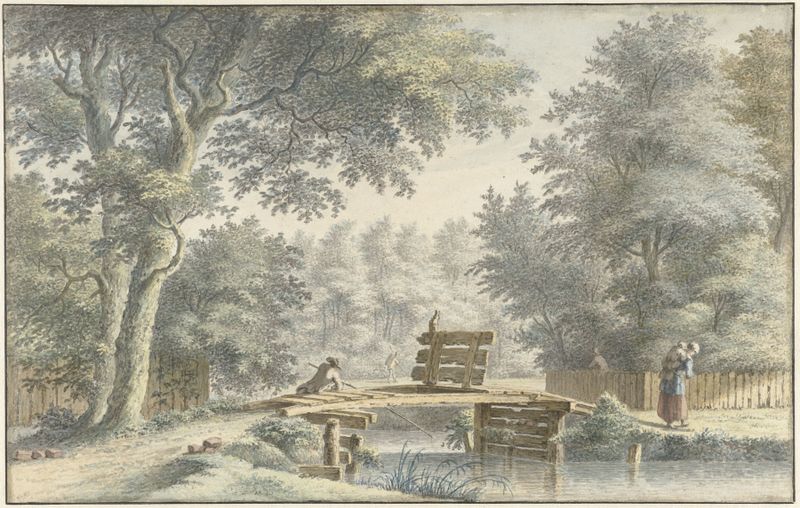
Could beauty survive in a century of chaos? In Landschaft mit Bäumen, Weidegatter und Figuren, the serene landscape whispers an answer that echoes through time. Look to the left at the gentle undulations of the hills, where rich greens intermingle with soft earth tones. Notice the figures—two travelers, absorbed in their quiet conversation—drawing the eye towards the intricately woven fence that stands as a boundary in this idyllic setting. The light filters through the trees, casting a dappled glow that enhances the tranquility of the scene, while the meticulous brushwork brings life to every leaf and blade of grass. Yet beneath this picturesque surface lies a profound tension between the idealized beauty of nature and the vulnerability of innocence.
The travelers, seemingly oblivious to the world outside this pastoral refuge, represent the fleeting nature of peace in an era marked by unrest and uncertainty. The juxtaposition of their calm demeanor against the looming shadows of the trees hints at the fragility of joy, suggesting that even in beauty, there is an awareness of inevitable change. Created in 1761, this painting emerged during a period when Gerard van Rossum was exploring the landscapes of his homeland in the Netherlands. The rococo style was gaining popularity, emphasizing elegance and grace, while the socio-political landscape was shifting toward a more turbulent future.
In this context, the work reflects not just an artistic pursuit, but a quiet testament to the enduring allure of innocence amidst the chaos of the world.