Landschap met een brug waarop een hengelaar — History & Facts
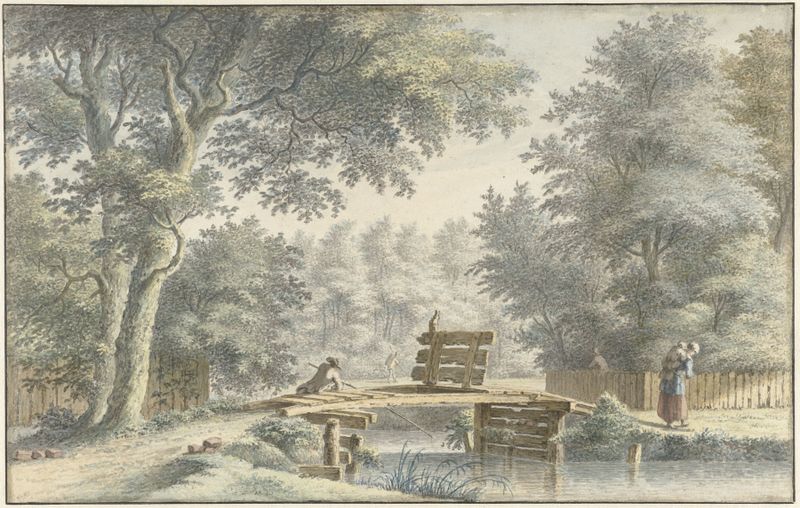
The calm waters reflect a world poised on the edge of madness, where the vibrant hues of nature clash with fleeting moments of introspection and chaos. Look to the center of the canvas, where the bridge beckons the viewer's gaze. The intricate arch of the structure stands resilient against the backdrop of a dynamic sky, its brushstrokes a symphony of greens and blues that breathe life into the scene. Notice how the river glistens, mirroring the dappled sunlight that filters through the trees, creating an interplay of light and shadow that invites contemplation. Delve into the hidden tensions underlying this serene landscape.
The solitary fisherman, poised on the bridge, becomes a symbol of isolation amidst the tranquility, his focused demeanor hinting at a deeper madness lurking beneath the surface. The vibrant vegetation surrounding him not only celebrates nature’s beauty but also serves as a reminder of the chaos that exists just beyond the peaceful waters. This contrast between serenity and solitude captures a psychological landscape that reflects the turbulent thoughts of the human experience. In 1763, during a time when the art world was embracing naturalism and a focus on landscape painting, Gerard van Rossum created this work in the Netherlands.
The artist was influenced by the burgeoning Romantic movement, which sought to express emotion and individuality, positioning this painting as a moment of transition in his career. As Europe grappled with the complexities of modern life, van Rossum’s portrayal of the landscape becomes a mirror to the madness of the era, resonating with the viewer's own inner turmoil.