
Landschaft mit Schlossruine und Pferdewagen — History & Facts
Did the painter know this moment would outlive them? In Landschaft mit Schlossruine und Pferdewagen, a landscape unfolds, suggesting both a serene beauty and the whispers of a looming revolution. Look to the foreground where a weathered horse-drawn cart stands still, its wheels sinking slightly into the lush grass. The cart’s muted colors harmonize with the earth tones of the landscape, while the towering, crumbling ruins behind it evoke a sense of nostalgia and decay. Notice how the sunlight bathes the scene, casting elongated shadows that create a delicate tension between the past and the present, the tranquil life of the countryside and the remnants of history framing it. Hidden within this idyllic tableau are reflections of change.
The ruins suggest a once-mighty stronghold, now vulnerable and fading, possibly echoing the societal shifts brewing during the mid-18th century. The horse and wagon symbolize humanity’s enduring relationship with the land, yet they also hint at the precariousness of existence — a quiet reminder that even the most stable structures can succumb to time and turmoil. Each brushstroke carries an unspoken story of resilience amidst impending upheaval. Christian Hilfgott Brand painted this scene in 1746 while living in Germany, a time marked by both artistic flourishing and political unrest.
The Rococo period was underway, characterized by ornate expression and decorative arts, yet whispers of revolution were stirring across Europe. As Brand captured this moment, he was not just painting a landscape; he was also reflecting a world on the brink of transformation.
More Artworks by Christian Hilfgott Brand
Browse all →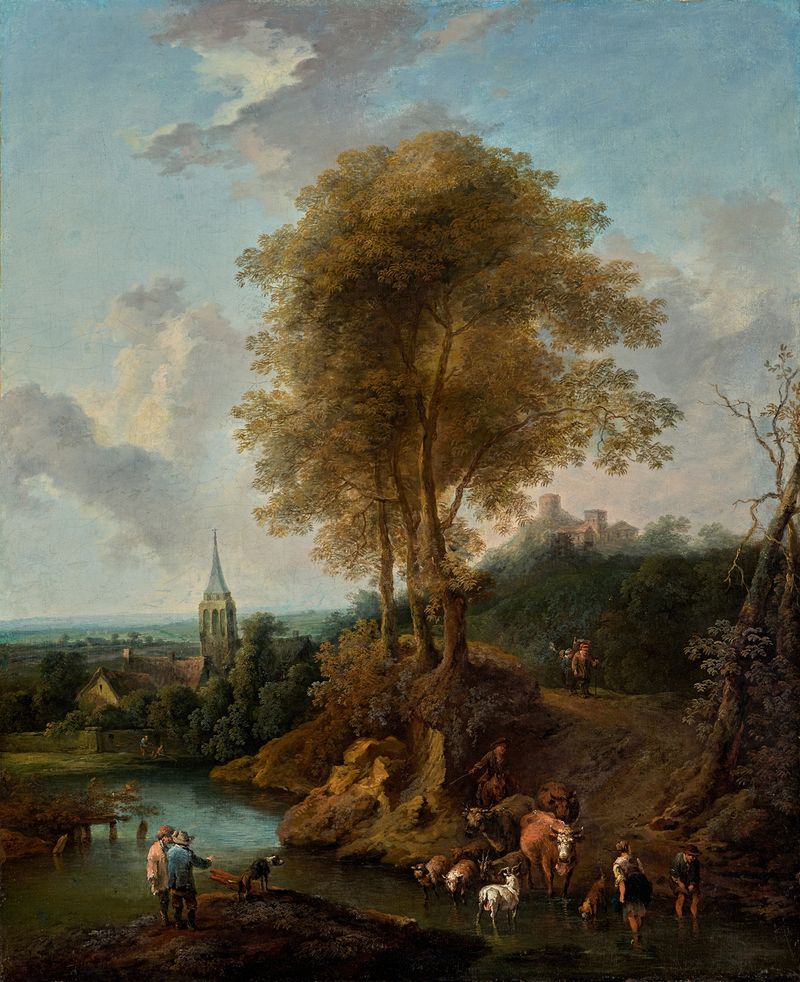
Landschaft mit drei Bäumen und Kirche
Christian Hilfgott Brand

Landscape
Christian Hilfgott Brand
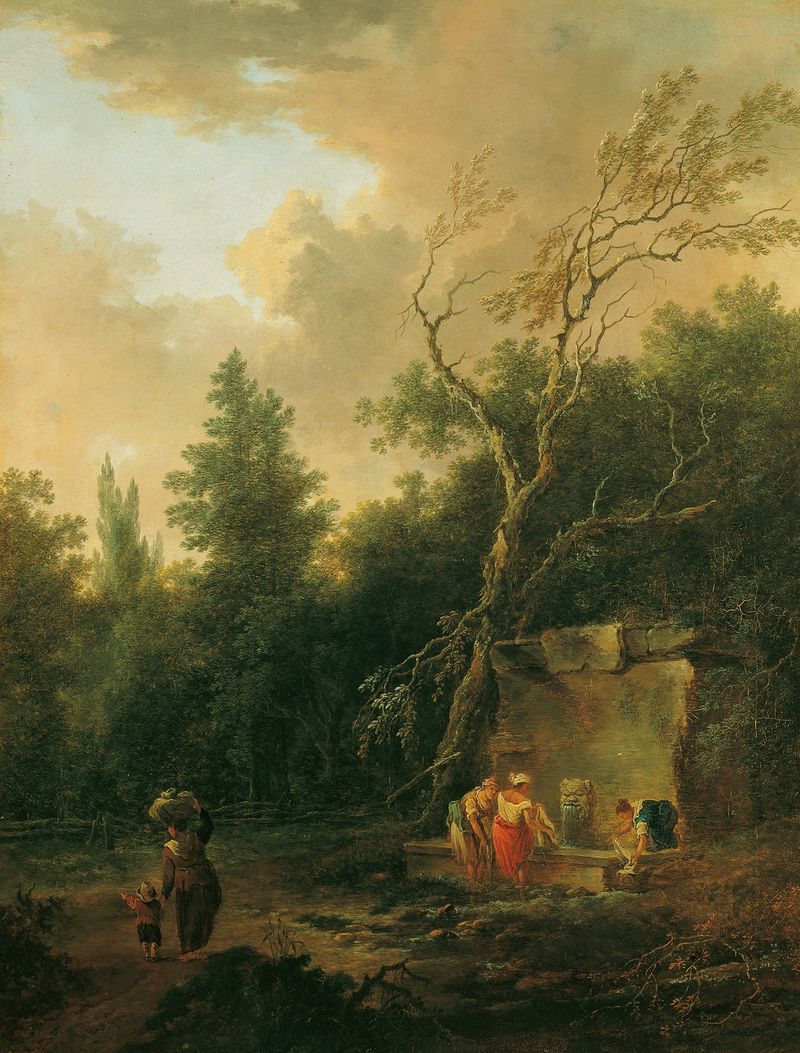
Baumlandschaft mit Brunnen
Christian Hilfgott Brand
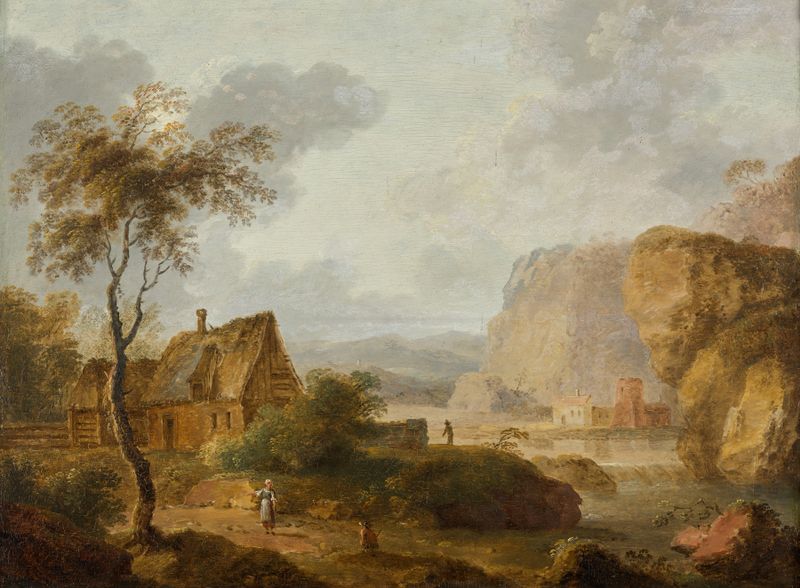
Gebirgslandschaft mit Fluss und Bauernhof.
Christian Hilfgott Brand

Landschaft mit Staffage
Christian Hilfgott Brand

Waldlandschaft mit Bildstock
Christian Hilfgott Brand

Gebirgslandschaft mit Fluss und Bauernhof
Christian Hilfgott Brand

Landschaft mit Postament
Christian Hilfgott Brand

Landschaft mit Säule
Christian Hilfgott Brand
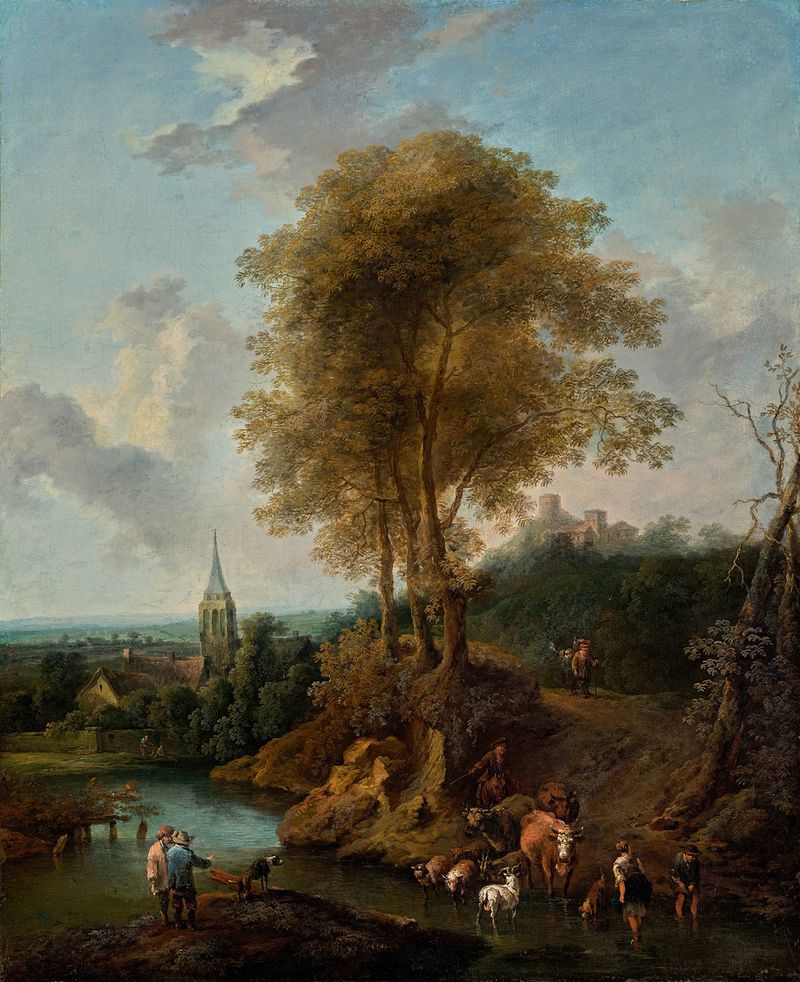
Landschaft mit drei Bäumen und Kirche
Christian Hilfgott Brand





