
Landschaft mit Postament — History & Facts
Can paint confess what words never could? In Landschaft mit Postament, chaos and serenity intertwine, inviting the viewer to explore the profound depths of an unspoken narrative. Look to the left at the towering trees, their leaves a vibrant tapestry of greens and yellows, dancing in the gentle breeze. They frame the composition, leading your gaze toward the center where a grand pedestal stands, stark against the natural landscape. The earthy tones of the foreground contrast beautifully with the ethereal blues and whites of the sky, creating a harmonious balance that draws you into the scene.
Notice how the play of light highlights the intricacies of the pedestal, transforming it into both a focal point and a symbol of human ambition amidst nature’s overwhelming tranquility. Delve deeper, and you’ll find a tension between the natural chaos of the surrounding wilderness and the rigid structure of the pedestal. The pedestal, devoid of a statue, evokes a sense of longing or absence, hinting at aspirations that remain unfulfilled. This duality reflects the artist's contemplation of civilization's imprint on untamed landscapes, where beauty and disorder coexist, revealing the fragility of human endeavors in the face of nature's enduring power. Christian Hilfgott Brand painted this work in 1753, a time when he was immersed in the Rococo movement, characterized by its ornate styles and light-hearted themes.
Working in Germany, he sought to convey a blend of natural beauty and structured design. The period was marked by a growing fascination with landscapes, as artists sought to capture the sublime interplay of nature and human presence, reflecting the cultural shifts of the Enlightenment era.
More Artworks by Christian Hilfgott Brand
Browse all →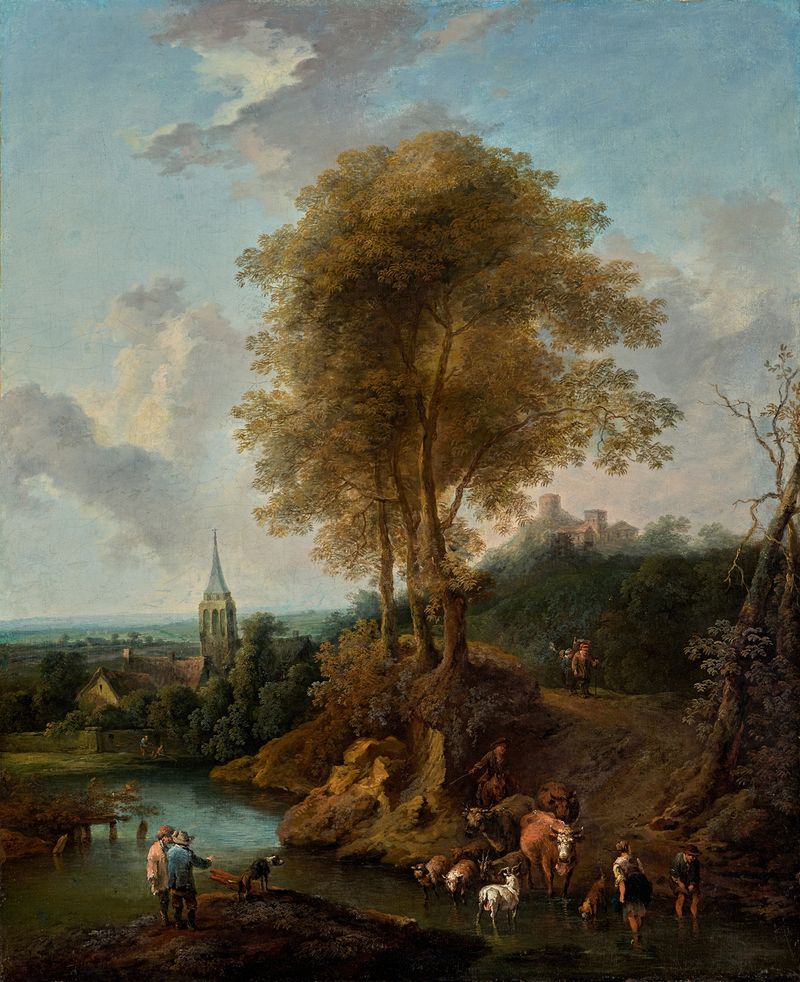
Landschaft mit drei Bäumen und Kirche
Christian Hilfgott Brand

Landscape
Christian Hilfgott Brand
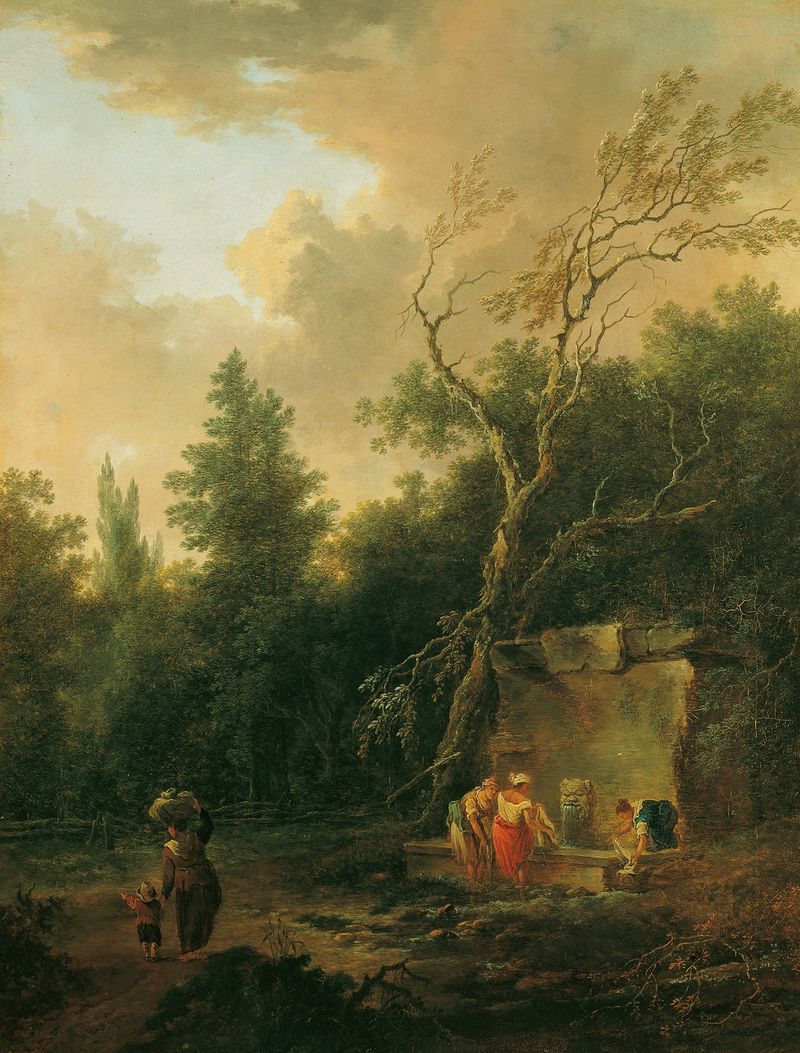
Baumlandschaft mit Brunnen
Christian Hilfgott Brand
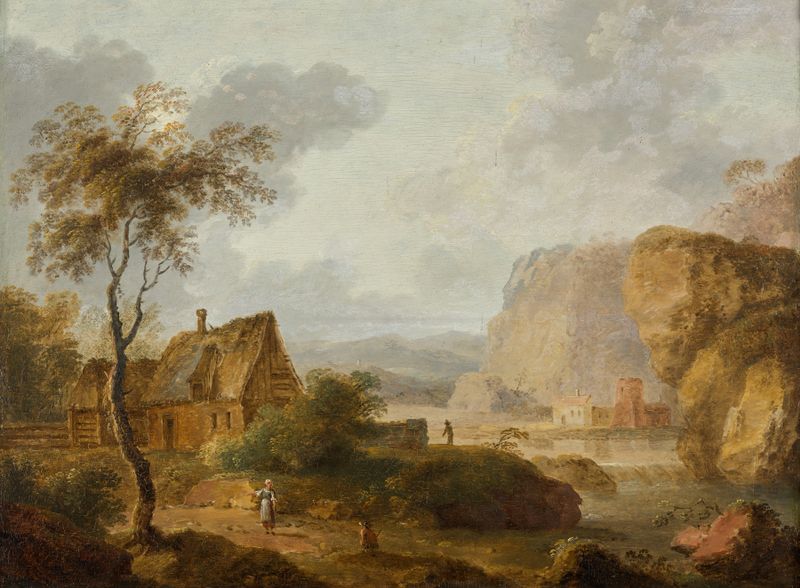
Gebirgslandschaft mit Fluss und Bauernhof.
Christian Hilfgott Brand

Landschaft mit Staffage
Christian Hilfgott Brand

Waldlandschaft mit Bildstock
Christian Hilfgott Brand

Gebirgslandschaft mit Fluss und Bauernhof
Christian Hilfgott Brand

Landschaft mit Schlossruine und Pferdewagen
Christian Hilfgott Brand

Landschaft mit Säule
Christian Hilfgott Brand
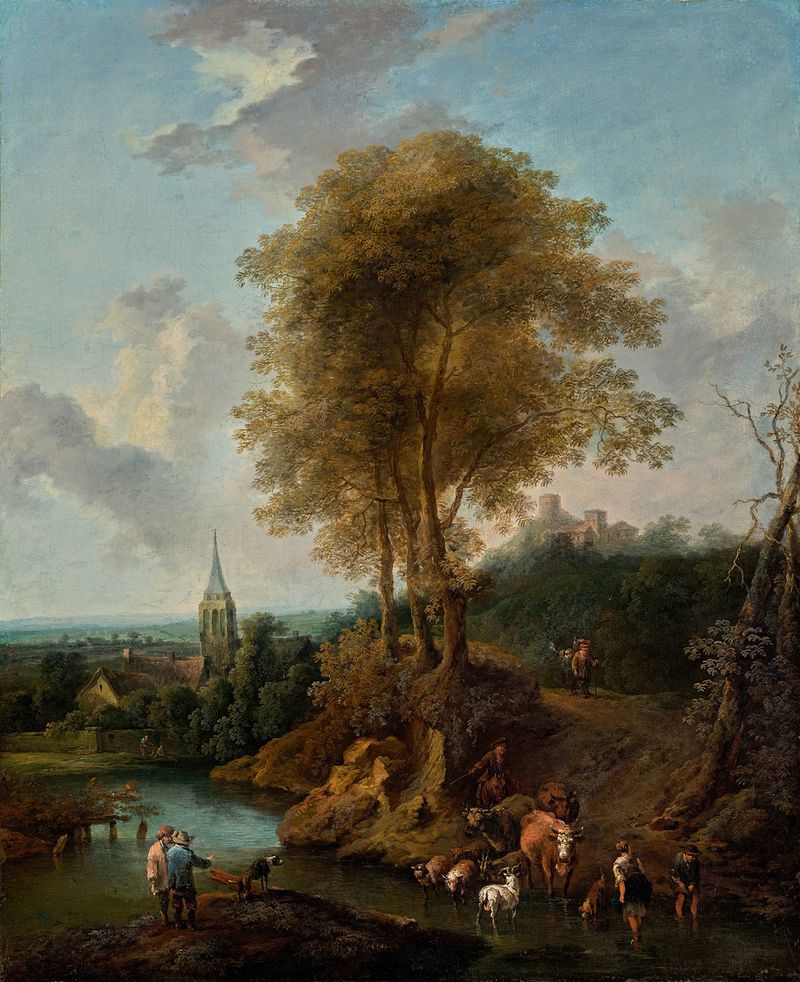
Landschaft mit drei Bäumen und Kirche
Christian Hilfgott Brand





