Landschap bij Septeuil — History & Facts
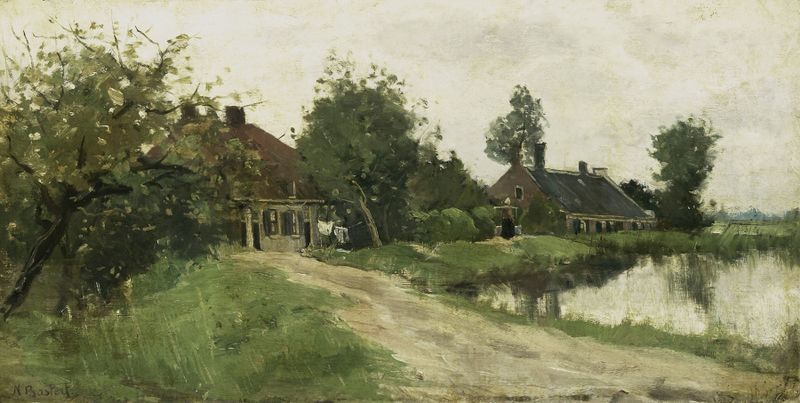
What if silence could speak through light? In Landschap bij Septeuil, the canvas vibrates with a subtle dialogue between nature and memory, inviting viewers to listen closely. Look to the left at the muted earth tones that ground the landscape, a harmonious blend of rich browns and soft greens. Notice how the light plays delicately across the canvas, illuminating patches of grass while shadowy recesses whisper secrets of the past. The brushwork is fluid yet deliberate, allowing for a profound sense of stillness that feels almost tangible, as if the viewer could step into the scene and feel the cool air. Delve deeper into the layers of emotion, where each element tells a story.
The distant hills, cloaked in mist, evoke feelings of nostalgia, suggesting a yearning for the simplicity of days gone by. Meanwhile, the scattered trees stand sentinel, their forms a poignant reminder of resilience in the face of time's passage. These contrasting elements—vitality and stillness, light and shadow—capture the essence of fleeting moments, as if the artist is urging us to savor our own memories. Nicolaas Bastert painted this work in 1897, during a period when he was deeply immersed in the Impressionist movement.
Working in the Netherlands, he sought to blend the techniques of his contemporaries with his own observations of the Dutch landscape. The art world was experiencing a shift towards capturing the transient effects of light and atmosphere, and Bastert's mastery of this approach helped to define his unique voice within the era's vibrant artistic tapestry.