
Landschap met boerderij bij een plas — History & Facts
What if silence could speak through light? In Landschap met boerderij bij een plas, a tranquil hush envelops the pastoral scene, inviting the viewer to pause and reflect on the harmony of nature. Look to the left at the soft, muted greens of the fields, where gentle brushstrokes create a sense of movement in the grass. Focus on the serene water’s surface, a mirror reflecting the sky, while the farmhouse sits stoically, its warm tones contrasting with the cool blues and greens surrounding it. The careful interplay of light and shadow hints at the time of day, drawing your gaze to the quiet yet vibrant life within the landscape. Delve deeper into this bucolic tableau, where the stillness of the water belies the underlying tension of the human presence indicated by the farmhouse.
Notice how the distant hills cradle the scene, suggesting both protection and isolation. The artist’s choice of color palette evokes not just the beauty of nature, but also a profound sense of solitude, allowing silence to resonate throughout the composition. Weissenbruch created this piece in the late 19th century, a time when he was deeply inspired by the Dutch countryside. Working in his studio, he sought not only to capture the physical beauty of landscapes but also to express the emotional weight of the silence that permeated these spaces.
Amidst the broader movements in art toward impressionism, he remained rooted in a style that celebrated the quietude and simplicity of rural life.
More Artworks by Johan Hendrik Weissenbruch
Browse all →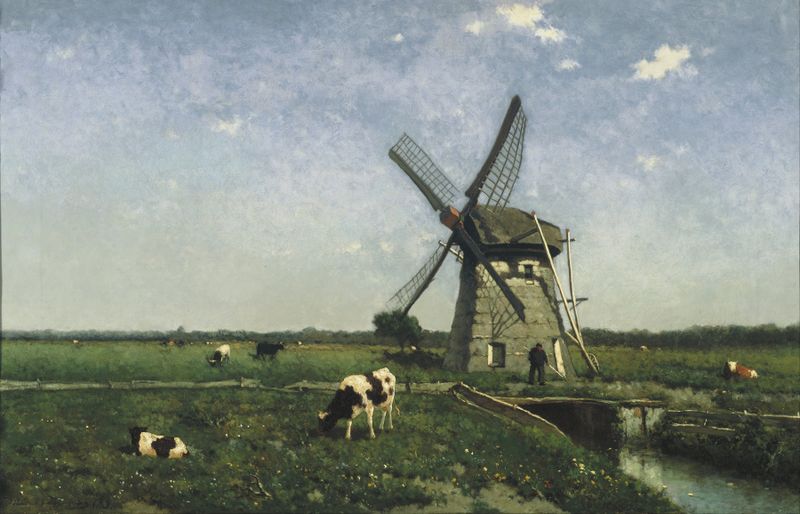
Landscape with Windmill near Schiedam
Johan Hendrik Weissenbruch
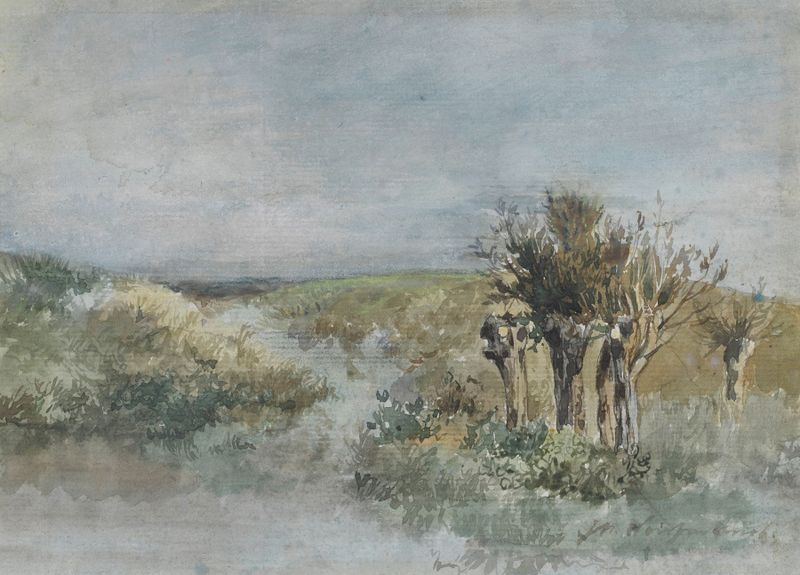
Landschap met knotwilgen langs een sloot
Johan Hendrik Weissenbruch
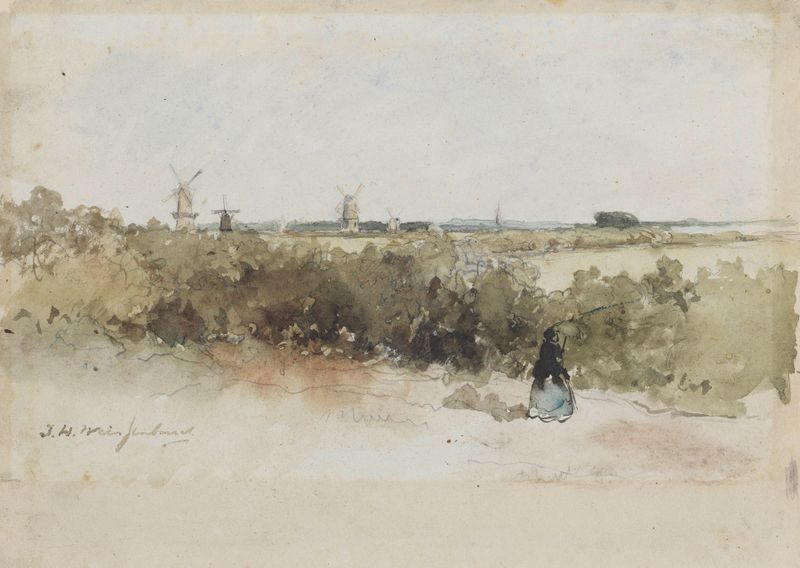
Landschap met windmolens
Johan Hendrik Weissenbruch
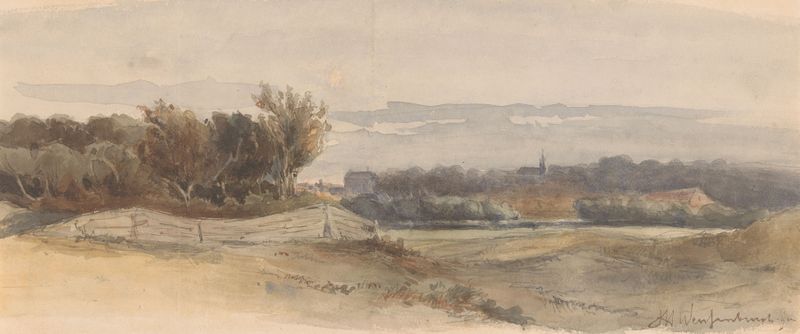
Panoramisch landschap
Johan Hendrik Weissenbruch
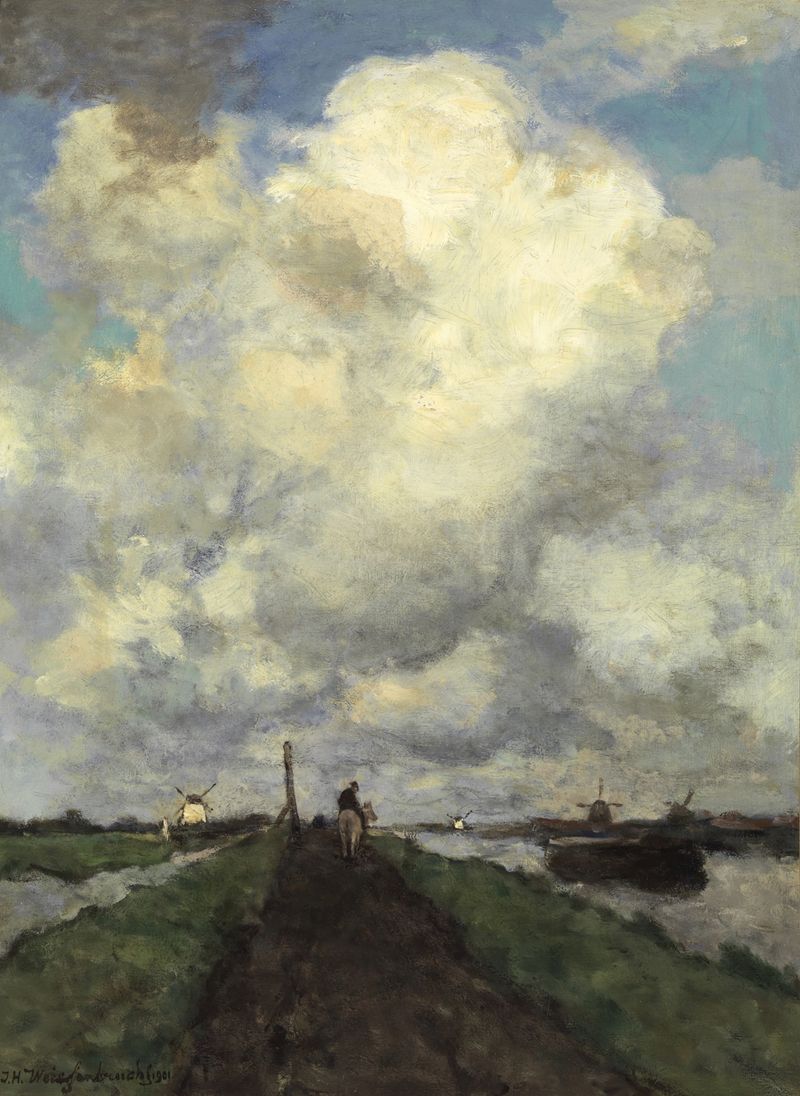
De witte wolk
Johan Hendrik Weissenbruch
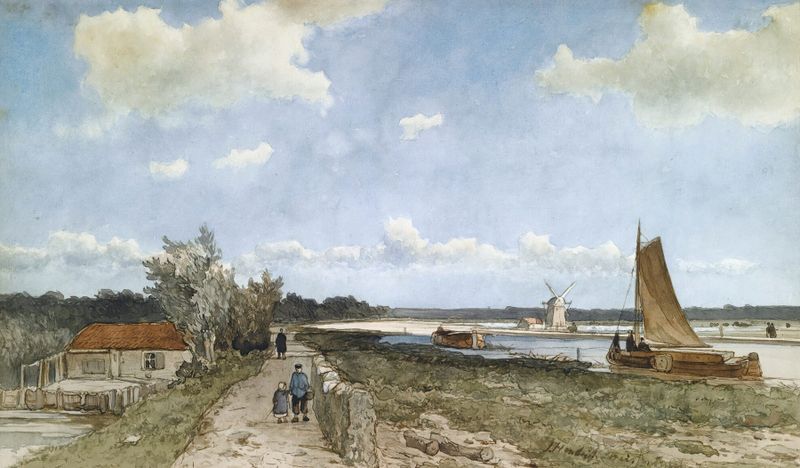
Along The Trekvliet Near The Geestbrug, Voorburg
Johan Hendrik Weissenbruch
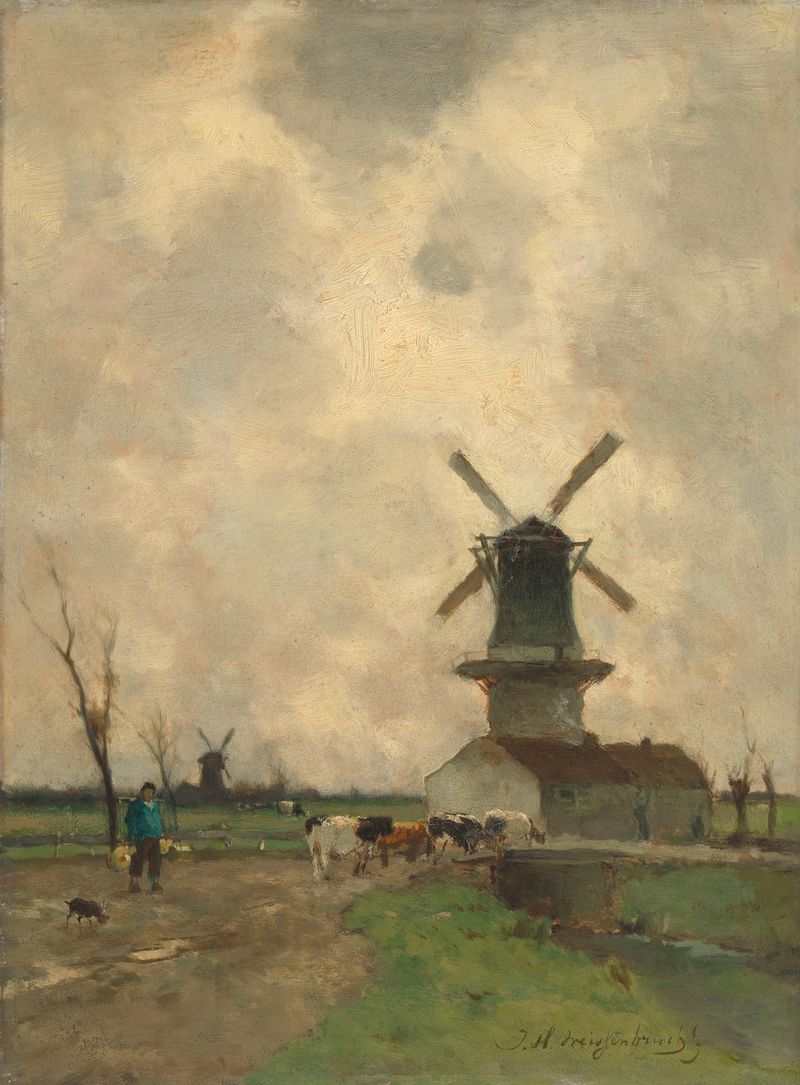
The Mill
Johan Hendrik Weissenbruch
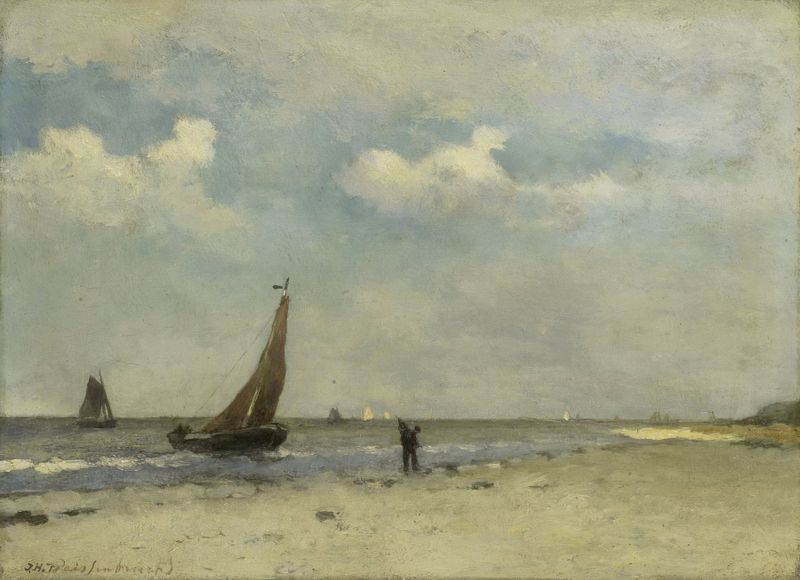
Beach Scene
Johan Hendrik Weissenbruch
Dutch Landscape with Boats
Johan Hendrik Weissenbruch
Drawbridge at Noorden
Johan Hendrik Weissenbruch





